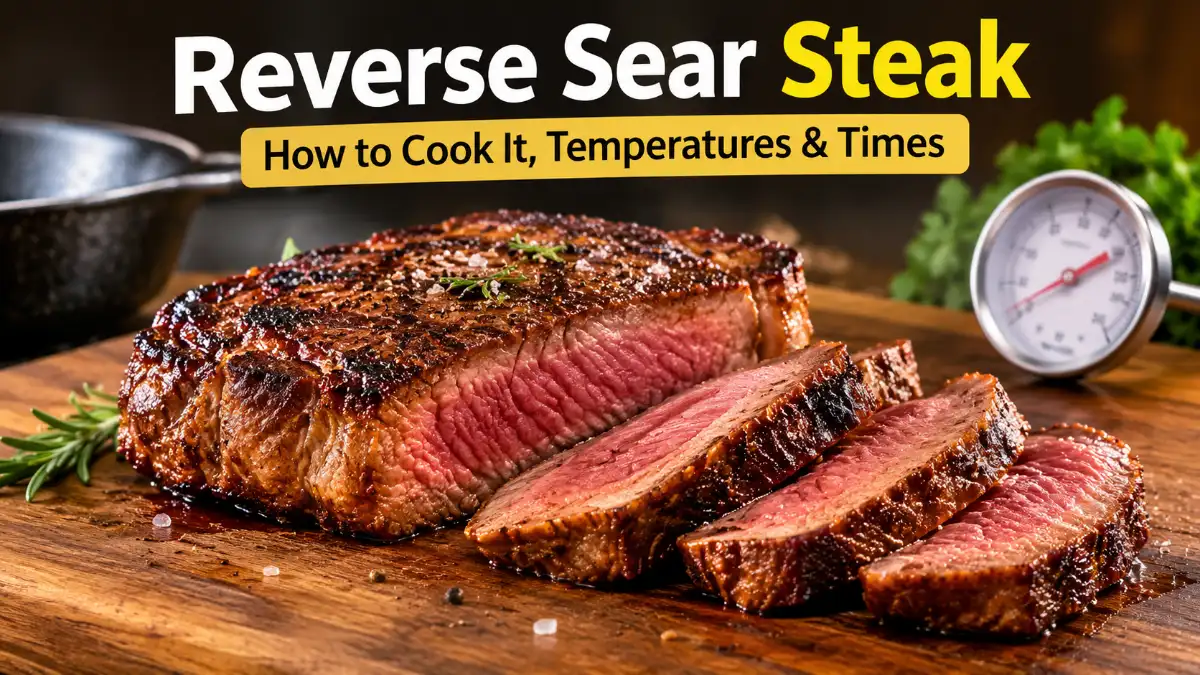
Reverse sear steak is a cooking method that starts with low heat and finishes with a quick, high-temperature sear. To reverse sear a steak, cook a thick-cut ribeye, New York strip, or filet mignon in a 250°F (121°C) oven until it approaches your desired internal temperature. Then sear it in a hot cast-iron skillet to develop a flavorful, browned crust while keeping the center evenly cooked.
The method works best with steaks about 1.5–2 inches (3.8–5 cm) thick. A meat thermometer is essential because cooking times vary with thickness, cut, and starting temperature. For food safety, the USDA recommends cooking whole beef steaks to an internal temperature of 145°F (63°C), followed by a three-minute rest.
What Is Reverse Searing a Steak?
Reverse searing flips the traditional steak-cooking process. Instead of browning the outside first and finishing over lower heat, you cook the steak gently before developing its crust.
Cooking at a lower temperature allows heat to spread more evenly through the meat. This helps reduce the thick gray band that can form around steaks cooked entirely over high heat.
The final sear creates a flavorful browned exterior through the Maillard reaction, which occurs when proteins and sugars react under heat. As explained in this reverse-seared steak cooking guide, the combination of gentle cooking and a dry surface helps produce an evenly cooked interior and well-browned crust.
Reverse searing works particularly well for thick steaks. Thin cuts can reach their desired internal temperature before there’s enough time to develop a proper crust.
Ingredients and Equipment for Reverse Sear Steak
You don’t need specialized cooking equipment beyond a reliable meat thermometer and a heavy skillet.
Ingredients
- 1 thick-cut steak (approximately 12–16 ounces), preferably 1.5–2 inches thick
- ½–1 teaspoon kosher salt, adjusted for steak size and salt type
- ½ teaspoon freshly ground black pepper, or to taste
- 1–2 teaspoons high-heat cooking oil
- Optional: butter, garlic, and fresh rosemary or thyme
Equipment
- Oven
- Cast-iron skillet or another heavy skillet
- Wire rack and rimmed baking sheet
- Instant-read or leave-in probe thermometer
- Kitchen tongs
- Paper towels
Ribeye is a popular choice because its marbling provides rich flavor. New York strip has a firmer texture, while filet mignon is especially tender. Each works well when cut thick enough.
For better seasoning, salt the steak several hours ahead and refrigerate it uncovered on a rack. This optional dry-brining step helps season the meat and dry its surface, making browning easier. The technique is also used in Alton Brown’s reverse-sear ribeye recipe.
How to Reverse Sear a Steak in the Oven and Cast Iron
The oven-to-skillet method gives you control over the steak’s internal temperature while allowing you to develop a browned crust at the end.
Step 1: Season and Prepare the Steak
Pat the steak dry with paper towels, then season both sides with salt and pepper.
Preheat your oven to 250°F (121°C). Set the steak on a wire rack inside a rimmed baking sheet so warm air can circulate around it.
Insert a leave-in thermometer into the thickest part of the steak, keeping the probe away from large pockets of fat or bone.
Step 2: Cook the Steak Slowly in the Oven
Place the baking sheet in the oven and monitor the steak’s internal temperature.
At 250°F, a 1.5-inch steak may take approximately 20–40 minutes, depending on its cut, starting temperature, and preferred doneness. A thicker steak can take considerably longer.
Use the temperature chart below for guidance, but let your thermometer determine when the steak is ready for searing.
For example, some medium-rare recipes remove the steak from the oven around 115°F (46°C) before searing toward a final temperature of approximately 130–135°F (54–57°C). These are culinary doneness preferences, not USDA-recommended safe temperatures.
To follow USDA food-safety guidance, continue cooking and checking the temperature through the searing stage until the steak reaches at least 145°F (63°C). Rest it for at least three minutes afterward.
Step 3: Sear in a Hot Cast-Iron Skillet
Remove the steak from the oven and pat away any surface moisture.
Heat a cast-iron skillet over medium-high to high heat until very hot, then add a thin layer of high-heat cooking oil.
Place the steak carefully in the skillet. Sear for approximately 45–60 seconds per side, turning as needed until a browned crust develops. Use tongs to briefly sear the fatty edges.
Check the internal temperature as you cook. The steak may gain several degrees during searing, but the increase depends on its thickness, the skillet’s temperature, and how long it stays over the heat.
Don’t assume the steak will gain a specific number of degrees. If the crust develops before the center reaches your intended temperature, lower the heat and continue cooking while checking the thermometer.
If you’re using butter, add it near the end of cooking to prevent burning.
Step 4: Rest, Slice, and Serve
Transfer the steak to a clean cutting board.
Some reverse-sear methods allow the steak to be served shortly after searing because it has already cooked gently. Others include a brief rest, depending on the cooking conditions.
For USDA-recommended food safety, the steak must reach 145°F (63°C) before removal from heat and rest for at least three minutes.
Slice against the grain where appropriate to shorten the muscle fibers and make the steak easier to chew.
Read Also: Snake River Farms: 7 Amazing Health Benefits, Nutrition Facts, and Safety Tips
Reverse Sear Steak Temperature and Cooking Time Chart
The following estimates apply to a steak approximately 1.5 inches thick cooked in a 250°F (121°C) oven. They reflect commonly used culinary doneness targets, similar to those in this reverse-sear temperature and timing guide.
| Doneness | Example oven removal temperature | Approximate oven time | Illustrative final temperature |
| Rare | 105°F | 20–25 min | 120–125°F |
| Medium-rare | 115°F | 25–30 min | 130–135°F |
| Medium | 125°F | 30–35 min | 140–145°F |
| Medium-well | 135°F | 35–40 min | 150–155°F |
Important: These figures are culinary estimates, not guaranteed cooking results or USDA-approved safe endpoints. USDA guidance recommends that whole beef steaks reach at least 145°F (63°C) before removal from heat, followed by a three-minute rest.
The final sear doesn’t produce a predictable temperature increase. A steak removed from the oven at 115°F won’t necessarily reach 130°F after a brief sear. Monitor the internal temperature and adjust your cooking as needed.
A 2-inch steak generally needs more oven time than a 1.5-inch steak. Rather than adding a fixed number of minutes, use the thermometer to decide when to begin searing.
How to Reverse Sear Steak on a Grill
You can use the same basic method on a grill by creating separate indirect- and direct-heat zones.
- Set up indirect heat: Heat one side of the grill and leave the other side cooler. Aim for approximately 225–275°F (107–135°C) in the indirect cooking area.
- Cook gently: Place the steak over indirect heat, close the lid, and monitor its internal temperature.
- Finish over direct heat: Move the steak to the hottest part of the grill and sear both sides until browned.
- Check doneness: Measure the final internal temperature instead of relying on searing time alone.
Two-zone cooking allows the steak to heat gradually before its surface is exposed to intense heat. For additional guidance, see these reverse-seared ribeye grilling instructions.
The same distinction between culinary doneness preferences and USDA food-safety recommendations applies when grilling.
Common Reverse Sear Steak Mistakes
Most reverse-searing problems come from excess surface moisture, inaccurate temperature readings, or poor heat control.
| Problem | Likely cause and solution |
| Weak or pale crust | Excess surface moisture. Pat the steak dry and make sure the skillet is properly heated. |
| Overcooked center | The steak remained in the oven too long or gained too much heat during searing. Monitor its internal temperature throughout cooking. |
| Excessive smoke | The skillet or oil is overheating. Use a suitable high-heat oil and adjust the heat when necessary. |
| Burned butter | Butter was added too early. Add it near the end of searing. |
| Uneven doneness | The steak is too thin or the thermometer is positioned incorrectly. Choose thicker cuts and measure at the center. |
The clock is useful for planning, but it shouldn’t determine when the steak is finished. A reliable thermometer, a dry surface, and a controlled final sear make the method more consistent.
Frequently Asked Questions
1. What is the best temperature to reverse sear a steak?
An oven temperature of 250°F (121°C) is a practical starting point. Many recipes use temperatures between 200°F and 275°F (93–135°C). Lower temperatures generally mean longer cooking times, giving you more opportunity to monitor the steak’s internal temperature.
2. How long does it take to reverse sear a steak?
A 1.5-inch steak typically takes about 20–40 minutes in a 250°F oven before searing, depending on the desired doneness. Thicker cuts take longer, and the final sear adds additional cooking time. Use a thermometer rather than relying on the estimated time alone.
3. Can you reverse sear a 1-inch steak?
Yes, although reverse searing is generally better suited to thicker cuts. A 1-inch steak cooks quickly, making it harder to develop a browned crust without overcooking the center. Traditional pan-searing is often more practical for steaks this thin.
4. What is the best steak cut for reverse searing?
Thick-cut ribeye and New York strip are excellent options. Ribeye has generous marbling and a rich flavor, while strip steak offers a firmer texture. Filet mignon also works well, especially when cut thick enough for gradual cooking.
5. Can you reverse sear a steak without a cast-iron skillet?
Yes. A heavy stainless-steel skillet or a hot grill can develop a browned crust. Cast iron is popular because it retains heat well, but it’s not required. A sufficiently hot cooking surface, dry steak, and accurate thermometer matter more than the skillet material.
6. Do you need to rest a reverse-seared steak?
A long rest isn’t always necessary for culinary results, particularly when the steak has been cooked gently. However, USDA food-safety guidance recommends resting whole beef steaks for at least three minutes after they reach the recommended minimum internal temperature of 145°F (63°C).