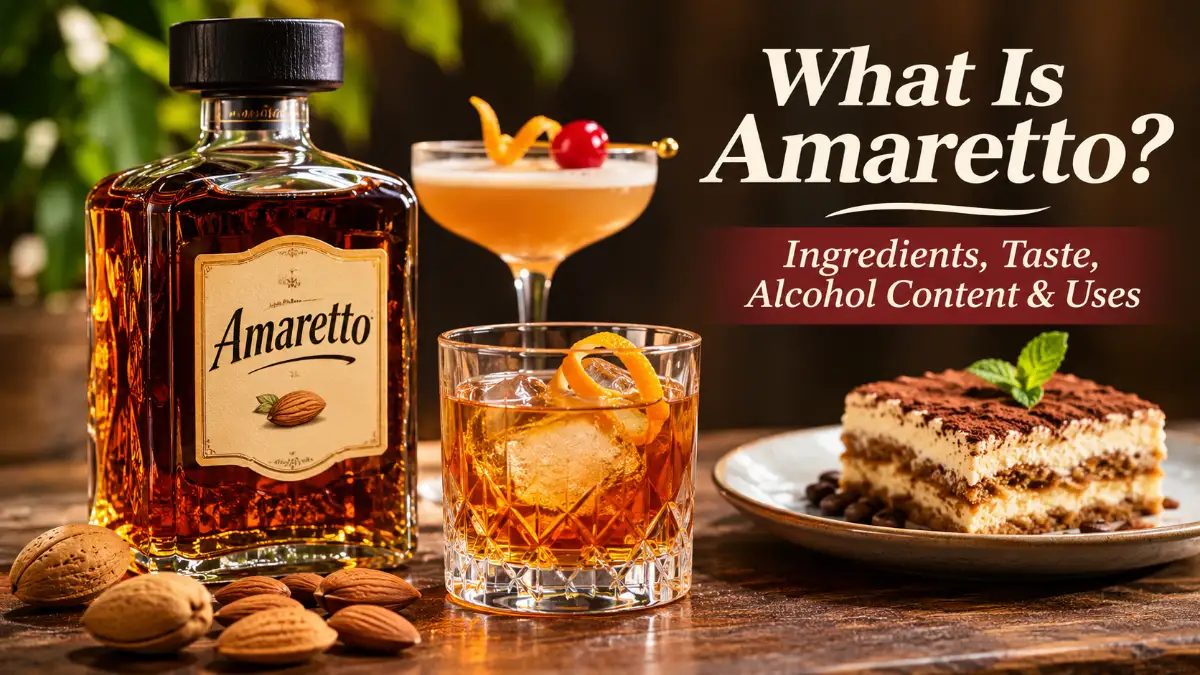
Amaretto is a sweet, almond-flavored Italian liqueur traditionally associated with Saronno, Italy. Its distinctive nutty taste can come from apricot kernels, almonds, or other flavoring ingredients, depending on the brand. Many traditional varieties contain approximately 20–30% alcohol by volume (ABV), making amaretto a popular choice for cocktails, coffee, and desserts.
Despite its almond-like flavor, not every amaretto contains actual almonds. Its combination of sweetness, gentle bitterness, and rich aroma makes it enjoyable on its own or mixed with other ingredients.
What Is Amaretto Made From?
Amaretto is made by combining alcohol, sweeteners, and flavoring ingredients that create its characteristic almond-like taste. Depending on the manufacturer, that flavor may come from apricot kernels, almonds, or other preparations. There is no single recipe shared by every brand.
Common ingredients may include:
- Apricot kernels: Used in some formulations to develop an almond-like flavor with subtle bitter notes.
- Almonds: Included in certain varieties, although not essential to every recipe.
- Alcohol: Forms the liqueur’s alcoholic base.
- Sugar or other sweeteners: Give amaretto its characteristic sweetness.
- Additional flavorings: May contribute hints of vanilla, caramel, or spice, depending on the producer.
Two familiar brands illustrate these differences. Disaronno Originale has an almond-like flavor without containing actual almonds, while Lazzaroni Amaretto gets its distinctive character from an infusion of traditional amaretti cookies.
Where Does Amaretto Come From?
Amaretto is closely associated with Saronno, a town in Lombardy, northern Italy. Its name is related to the Italian word amaro, meaning bitter, while amaretto suggests a slightly bitter character.
Traditional stories trace its origins to the Renaissance, but these accounts are better understood as local legends rather than conclusively documented history.
Over time, amaretto has become popular well beyond Italy, especially as an after-dinner drink, cocktail ingredient, and dessert flavoring.
What Does Amaretto Taste Like?
Amaretto tastes sweet, nutty, and slightly bitter, with a distinctive flavor resembling almonds or marzipan. Some varieties also have hints of vanilla, caramel, or warm spices.
Its flavor has four recognizable characteristics:
- Sweetness: A rich sweetness that works particularly well in desserts and mixed drinks.
- Almond-like flavor: A noticeable nutty taste, even in varieties made without almonds.
- Mild bitterness: A subtle bitter finish that balances some of the sweetness.
- Aromatic notes: Depending on the brand, you may notice vanilla, caramel, fruit, or spice.
Amaretto is generally sweeter than many herbal liqueurs, although the balance varies between products. Its sweetness and almond-like aroma are also what make it easy to recognize in cocktails.
How Much Alcohol Is in Amaretto?
Many traditional amaretto liqueurs contain approximately 20–30% ABV, equivalent to roughly 40–60 US proof.
For example:
- Disaronno Originale: 28% ABV (56 proof).
- Lazzaroni Amaretto: 24% ABV (48 proof).
The official Disaronno product information confirms its 28% alcohol strength, while Lazzaroni specifies 24% for its traditional amaretto.
These percentages apply to the individual products. Cream-based versions and other specialty formulations may have different alcohol strengths.
Although amaretto’s sweetness can make the alcohol taste less noticeable, it is still an alcoholic beverage.
How to Drink Amaretto
Amaretto can be served on its own or mixed with other ingredients. Whether you prefer its full sweetness or a lighter, more balanced flavor will help determine how you enjoy it.
Neat: Pour a small serving into a liqueur glass and drink it at room temperature. This brings out its almond-like aroma and rich sweetness.
On the rocks: Serve it over ice in a short glass. As the ice melts, it slightly dilutes the liqueur, making the sweetness less concentrated.
With coffee: Add a small amount to freshly brewed coffee for a warm, sweet, nutty flavor. Amaretto pairs particularly well with espresso and other strong coffee preparations.
In mixed drinks: Combine it with complementary ingredients such as lemon juice, whiskey, or coffee-based mixers. Citrus is particularly effective at balancing its sweetness.
Amaretto is also traditionally enjoyed after meals as a digestif. This refers to a drinking custom, however, rather than a proven digestive health benefit.
Read Also: Busch Apple: Taste, Alcohol Content, Calories & 2026 Availability
Popular Amaretto Cocktails and Dessert Uses
Amaretto is especially useful in cocktails that balance its sweetness with citrus, spirits, or other contrasting flavors. Its almond-like taste also complements many desserts.
Popular Amaretto Cocktails
1. Amaretto Sour
An Amaretto Sour combines amaretto with fresh lemon juice, balancing the liqueur’s sweetness with citrus acidity. Some versions include simple syrup, bourbon, or egg white for a different balance and texture.
2. Godfather Cocktail
The Godfather cocktail combines Scotch whisky and amaretto. The whisky brings smoky, woody, or malty notes, while amaretto softens the drink with sweetness and an almond-like flavor.
It’s a straightforward two-ingredient cocktail, although the proportions can be adjusted to suit different preferences.
3. French Connection
The French Connection combines cognac and amaretto. Cognac contributes fruit and oak notes, which pair naturally with the liqueur’s sweetness.
The result is a rich, spirit-forward cocktail commonly enjoyed after dinner.
Using Amaretto in Desserts
Amaretto works well in baking and dessert preparation because its almond-like flavor complements chocolate, coffee, cream, and fruit.
Popular ways to use it include:
- Adding a little to tiramisu or coffee-flavored desserts.
- Drizzling it over vanilla ice cream.
- Flavoring cakes, frostings, and dessert sauces.
- Mixing it into chocolate-based desserts.
- Adding it to whipped cream or fruit toppings.
Start with a small amount when flavoring desserts, since too much amaretto can overpower other ingredients.
Keep in mind that uncooked desserts retain the alcohol added, and cooking does not necessarily remove all of it.
Amaretto vs. Amaro: What’s the Difference?
Amaretto and amaro are both Italian liqueurs, but they have distinct flavors and uses.
Amaretto is known for its sweet, almond-like taste and gentle bitterness. It is commonly used in sweet cocktails, coffee, and desserts.
Amaro refers to a broad category of Italian bittersweet herbal liqueurs. Depending on the variety, an amaro may feature flavors from herbs, roots, citrus peels, and spices.
Both can be served after dinner, but amaretto is generally sweeter and nuttier, while amaro often has more pronounced herbal bitterness.
Because their dominant flavors are different, they are not usually interchangeable in recipes.
Does Amaretto Contain Almonds? Allergy and Substitution Notes
Not every amaretto contains almonds. Some producers obtain the characteristic almond-like flavor from apricot kernels or other ingredients, while certain formulations may include almonds.
However, almond-flavored does not automatically mean almond-free or safe for someone with a nut allergy.
Ingredient formulas vary, and alcoholic beverages do not always carry comprehensive allergen information. Under current US rules, major food allergen labeling for many alcoholic beverages is voluntary rather than universally required.
Anyone with an almond or tree nut allergy should confirm the specific product’s ingredients and allergen information with its manufacturer before drinking it. A missing allergen statement should not be treated as proof of safety.
What Can You Substitute for Amaretto?
The right substitute depends on whether you want to replace its almond-like flavor, sweetness, or alcoholic character.
For recipes that do not require alcohol, consider these options:
- Alcohol-free almond-flavored syrup: Useful in coffee, desserts, and sweet preparations. Check the label for alcohol content and allergen information.
- Almond extract: Provides a concentrated flavor in baking, so only a small amount is usually needed. Many extracts contain alcohol; choose a verified alcohol-free version when necessary.
- Nonalcoholic apricot-based flavorings: Can contribute a complementary fruity character, although they won’t reproduce the complete flavor of amaretto.
When preparing food for someone with allergies, verify the ingredients of any substitute rather than assuming that a similar flavor means a similar allergen profile.
Frequently Asked Questions About Amaretto
1. Can You Drink Amaretto Straight?
Yes. Amaretto can be enjoyed straight, or neat, at room temperature. Its sweet, almond-like taste makes it a popular after-dinner liqueur. If you find it too sweet on its own, serving it over ice can make it more refreshing.
2. Is Amaretto a Whiskey or a Rum?
No. Amaretto is a liqueur, not whiskey or rum. It combines an alcoholic base with sweetening and flavoring ingredients. Whiskey and rum are distinct categories of distilled spirits, while amaretto is recognized for its sweet, almond-like flavor.
3. Does Amaretto Need to Be Refrigerated After Opening?
Traditional amaretto generally doesn’t need refrigeration after opening. Keep the bottle tightly closed in a cool, dark place away from heat and direct sunlight. Cream-based versions may require different storage conditions, so follow the instructions on the specific bottle.
4. Is Amaretto Gluten-Free?
Some amaretto products may be gluten-free, but you shouldn’t assume every brand is suitable. Ingredients and manufacturing methods vary. If you have celiac disease or gluten sensitivity, confirm the product’s gluten-free status with its manufacturer before consuming it.
5. Is Amaretto the Same as Almond Extract?
No. Amaretto is a sweet alcoholic liqueur used in drinks and desserts, while almond extract is a much more concentrated flavoring mainly used in cooking and baking. Because almond extract is stronger, it cannot replace amaretto in equal quantities without significantly changing a recipe.