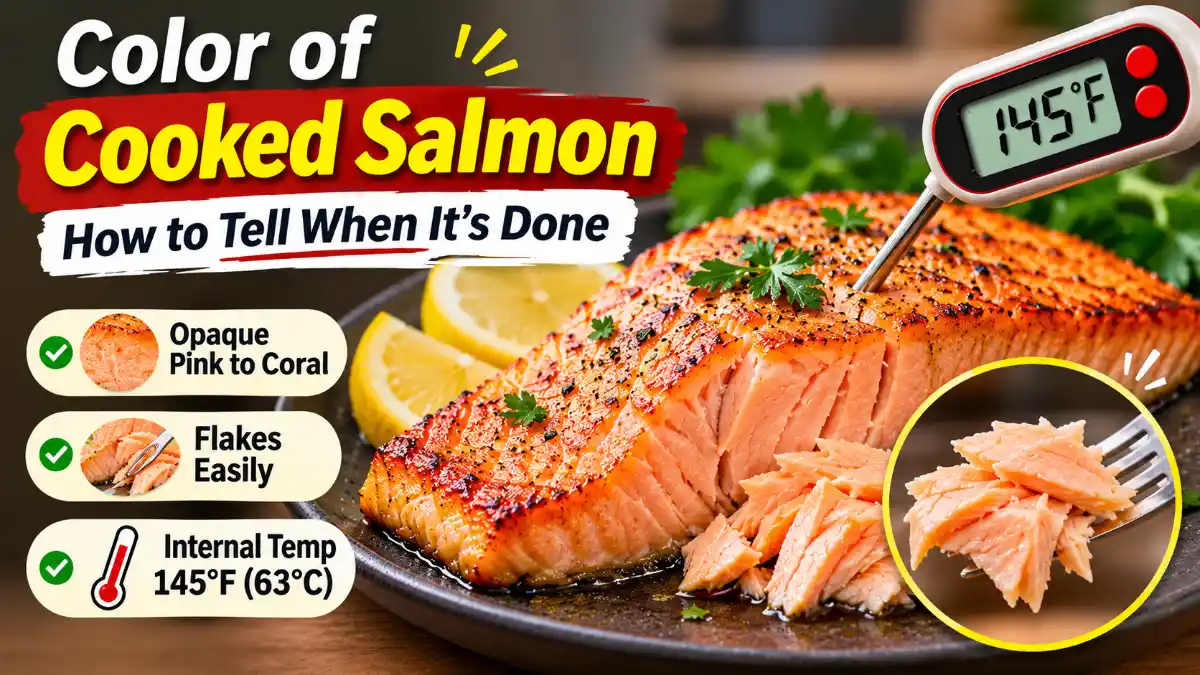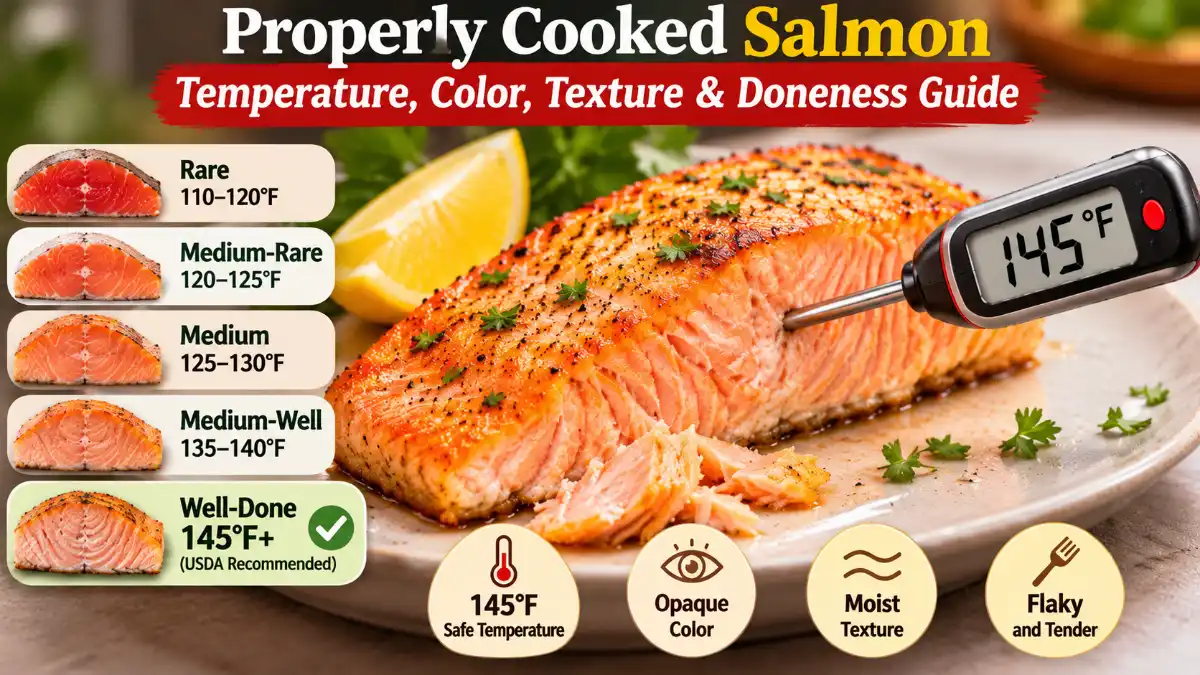
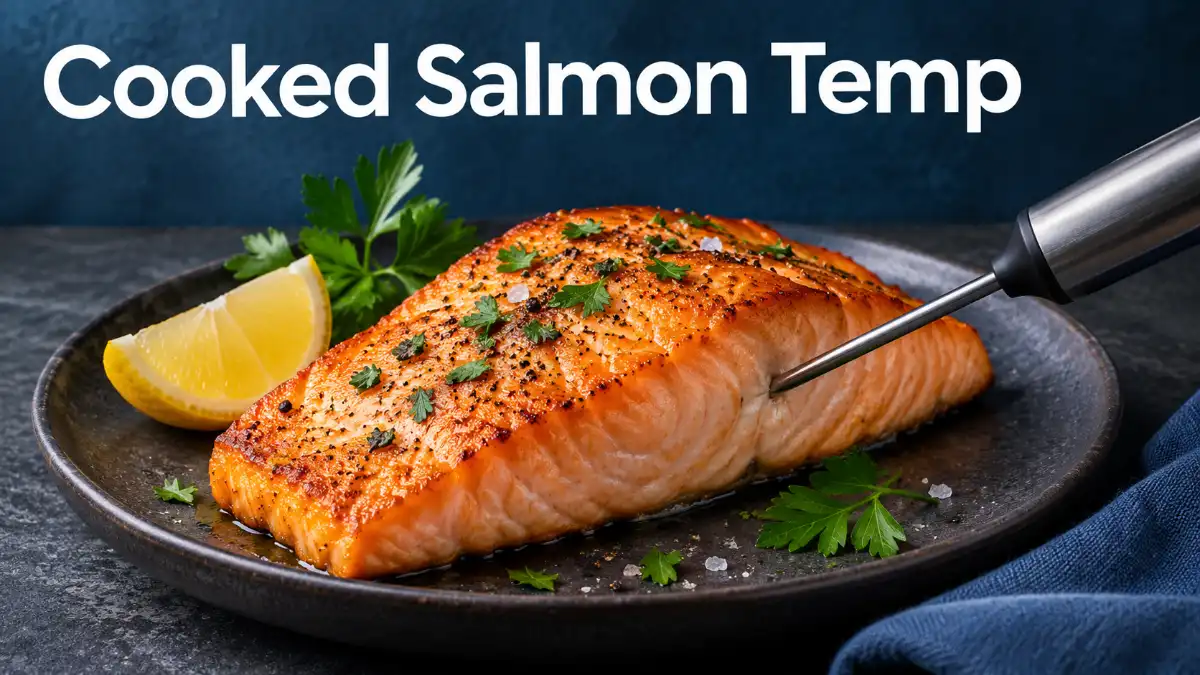
The recommended cooked salmon temp is 145°F (63°C), measured at the thickest part of the fish. According to the U.S. Food and Drug Administration (FDA), this is the safe minimum internal temperature for finfish, including salmon. Cooking salmon properly helps reduce the risk of foodborne illness while providing a nutritious source of protein, omega-3 fatty acids, and essential vitamins.
FDA+1
Whether you’re baking, grilling, pan-searing, or air-frying salmon, understanding its internal temperature is important. The right cooking method can help you prepare fish that is flavorful, moist, and safe to eat.
What Is the Safe Cooked Salmon Temp?
The FDA recommends cooking salmon to an internal temperature of 145°F (63°C). At this temperature, the fish should become opaque and separate easily with a fork.
The temperature must be measured inside the fish rather than on its surface. A food thermometer provides a more reliable indication of doneness than cooking time or appearance alone.
| Salmon temperature | Doneness description | Food safety guidance |
| 110–120°F | Rare, soft center | Below FDA recommendation |
| 125–130°F | Medium-rare, moist center | Below FDA recommendation |
| 135–140°F | Medium to nearly done | Below FDA recommendation |
| 145°F (63°C) | Fully cooked | Meets FDA recommendation |
| Above 145°F | More thoroughly cooked | May become dry |
Lower temperatures are sometimes used in restaurant cooking to achieve a softer texture. However, salmon cooked below 145°F does not meet the FDA’s standard consumer recommendation, and its safety cannot be guaranteed by appearance alone.
Why Proper Salmon Cooking Temperature Matters for Health
Salmon is a nutrient-rich food, but raw or undercooked fish can carry harmful microorganisms and parasites.
Cooking salmon to the recommended temperature reduces these food safety risks. This matters especially for people who may experience more serious complications from foodborne infections.
Reducing foodborne illness risks
Undercooked seafood may expose consumers to pathogens that cause gastrointestinal illness. Possible symptoms include nausea, vomiting, diarrhea, and abdominal discomfort.
Proper cooking is one of the most important preventive measures. Safe refrigeration, clean cooking equipment, and avoiding cross-contamination are equally important.
Protecting higher-risk individuals
Pregnant people, young children, older adults, and individuals with weakened immune systems should be particularly careful about eating undercooked seafood.
The FDA recommends that pregnant people and children avoid raw fish and choose seafood cooked to safe internal temperatures.
FDA+1
How to Check Salmon’s Internal Temperature
Using a digital instant-read food thermometer is the most dependable way to check whether salmon has reached the recommended temperature.
Follow these steps:
- Insert the thermometer into the thickest part of the salmon fillet.
- For a thin fillet, insert the probe sideways toward its center.
- Avoid touching the baking tray, pan, or grill grate with the probe.
- Wait for the temperature reading to stabilize.
- Confirm that the center reaches 145°F (63°C).
If the salmon has not reached the recommended temperature, continue cooking and check again.
How to tell if salmon is cooked without a thermometer
The FDA also describes visual indicators that may help determine whether fish is cooked.
Look for flesh that is opaque rather than translucent and separates easily when pressed gently with a fork.
However, visual signs are less precise than a thermometer. Color can vary depending on the type of salmon, lighting, and cooking method.
Read also: Medium Rare Salmon: Temperature, Cooking Methods, and Safety
Cooked Salmon Temperature by Cooking Method
Different cooking methods require different heat settings and cooking times. However, the safe internal temperature remains the same.
| Cooking method | Typical cooking setting | Target internal temp |
| Oven-baked | 375–425°F | 145°F |
| Air-fried | 375–400°F | 145°F |
| Grilled | Medium heat | 145°F |
| Pan-seared | Medium heat | 145°F |
| Poached | Gentle simmer | 145°F |
| Steamed | Steady steam | 145°F |
These cooking settings are general starting points, not guaranteed cooking times. Fillet thickness, starting temperature, and appliance performance influence how quickly salmon cooks.
Oven-baked salmon
Baking provides relatively even heating and works well for thicker fillets. Preheat the oven, season the salmon, and place it on a lined baking tray.
Check the thickest part with a thermometer before removing it from the oven. Avoid relying on a fixed cooking time alone.
Air-fried salmon
Air fryers circulate hot air around the fish, helping it cook quickly. A light coating of oil can reduce sticking and improve the surface texture.
Because air fryers vary in power, begin checking the internal temperature early, especially with thin fillets.
Grilled salmon
Grilling gives salmon a lightly charred flavor. Use clean, lightly oiled grill grates and avoid excessively high heat, which can burn the outside before the center finishes cooking.
Pan-seared salmon
Pan-searing develops a flavorful crust while allowing control over cooking. Start with a preheated pan and adjust the heat to prevent scorching.
Use the thermometer to verify the center rather than judging doneness solely by the browned exterior.
Health Benefits of Properly Cooked Salmon
Salmon offers several nutrients that support overall health. Cooking it safely allows you to include these nutrients in your diet while reducing foodborne illness risks.
Omega-3 fatty acids and heart health
Salmon supplies EPA and DHA, two important omega-3 fatty acids. These fats support normal cellular functions and contribute to a healthy dietary pattern.
The FDA notes that eating fish as part of a balanced diet may benefit cardiovascular health.
FDA
Protein for muscle maintenance
Salmon provides complete protein containing the essential amino acids the body needs. Protein supports muscle maintenance, tissue repair, and many normal biological functions.
Vitamins and minerals
Salmon also supplies nutrients such as vitamin B12, vitamin D, and selenium. Vitamin B12 supports nerve function, vitamin D contributes to bone health, and selenium plays a role in antioxidant defenses.
Nutrient amounts differ depending on the salmon species, portion size, and preparation method.
Is Medium-Rare Salmon Safe to Eat?
Medium-rare salmon is commonly associated with internal temperatures around 125–130°F. At this temperature, the center generally remains softer and more translucent than fully cooked salmon.
Although some restaurants serve salmon this way, medium-rare salmon falls below the FDA’s recommended 145°F temperature.
Freezing fish under specified commercial conditions can reduce certain parasite risks, but freezing does not eliminate every food safety hazard. It should not be considered a substitute for proper cooking.
For routine home preparation, particularly when serving vulnerable individuals, following the FDA temperature recommendation is the safer approach.
How to Store and Reheat Cooked Salmon Safely
Proper storage matters even after salmon has reached a safe cooking temperature.
According to USDA guidance, cooked fish can generally be refrigerated for 3–4 days.
- Refrigerate cooked salmon within two hours of preparation.
- Use airtight containers and maintain a refrigerator temperature of 40°F (4°C) or below.
- Refrigerate within one hour when the surrounding temperature exceeds 90°F (32°C).
- Reheat leftovers to 165°F (74°C).
- Discard salmon that has been stored improperly, even if it looks normal.
These practices reduce bacterial growth and help preserve food quality.
Ask USDA+2
Common Mistakes When Cooking Salmon
Several cooking mistakes can affect safety, flavor, and texture.
One common mistake is checking only the outside of the fillet. The surface may look cooked while the center remains below the recommended temperature.
Another is relying entirely on cooking time. Two similarly sized salmon fillets can cook differently because of thickness and starting temperature.
Overcooking is also common. Although temperatures above 145°F meet the minimum temperature recommendation, prolonged heating can make salmon dry and firm.
Finally, placing cooked fish on a plate previously used for raw seafood can introduce contamination. Always use clean utensils and serving surfaces.
Frequently Asked Questions
1. What is the ideal cooked salmon temp?
The FDA recommends an internal temperature of 145°F (63°C). Measure it at the thickest part of the fillet using a food thermometer. This is the standard recommendation for safely cooking salmon at home.
2. Is salmon safe to eat at 125°F?
Salmon cooked to 125°F is below the FDA’s recommended temperature. Although some people prefer its medium-rare texture, this temperature does not meet standard consumer food safety guidance.
3. Can pregnant women eat cooked salmon?
Yes. Salmon is categorized as a lower-mercury “Best Choice” by the FDA and EPA. Pregnant people can include properly cooked salmon in a balanced diet while following recommended seafood serving guidelines.
4. How long does salmon take to cook at 400°F?
A typical fillet may take approximately 10–15 minutes in a 400°F oven, depending on its thickness and starting temperature. Cooking time is only an estimate. Always confirm that the center reaches 145°F.
5. Does cooking salmon remove omega-3 fatty acids?
Cooking does not eliminate all omega-3 fatty acids. However, some fat loss or oxidation may occur depending on the cooking method, duration, and temperature. Baking, steaming, and poaching are practical ways to prepare salmon without excessive added oil.
Conclusion
Understanding the correct cooked salmon temp is essential for preparing a healthy, safe seafood meal. The FDA recommends 145°F (63°C), regardless of whether salmon is baked, grilled, steamed, pan-seared, or air-fried.
Using a food thermometer, practicing safe food handling, and storing leftovers correctly can help reduce foodborne illness risks. Properly prepared salmon also provides valuable protein, omega-3 fatty acids, and essential micronutrients, making it a nutritious addition to a balanced diet.