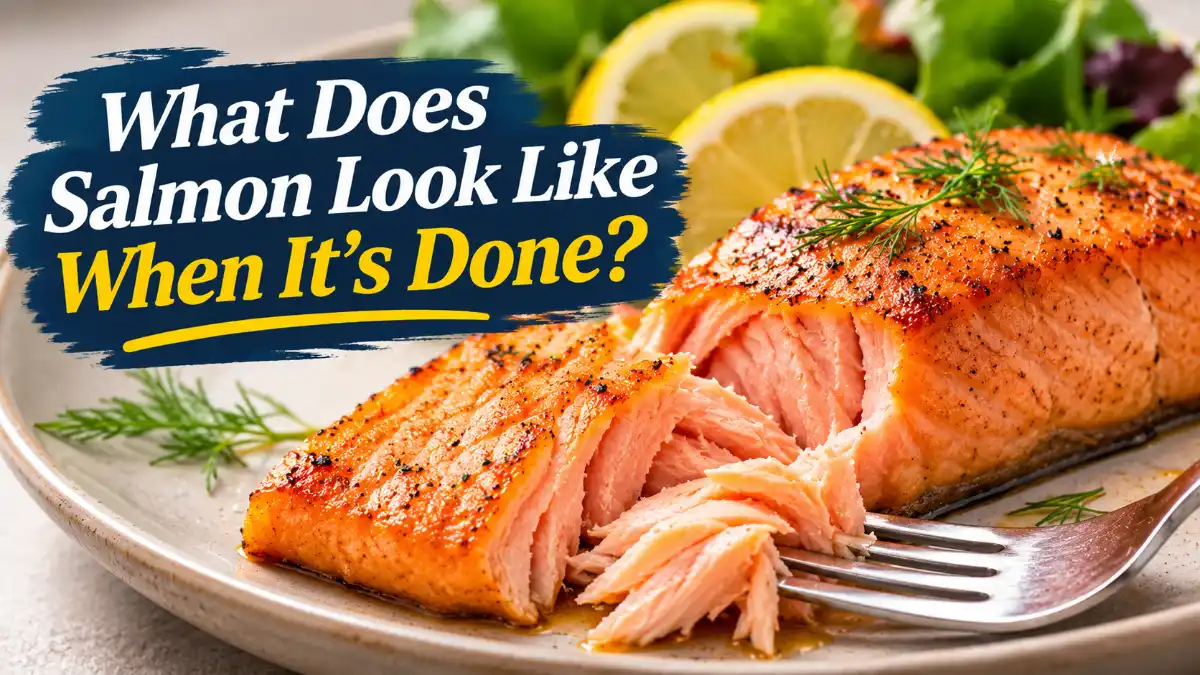
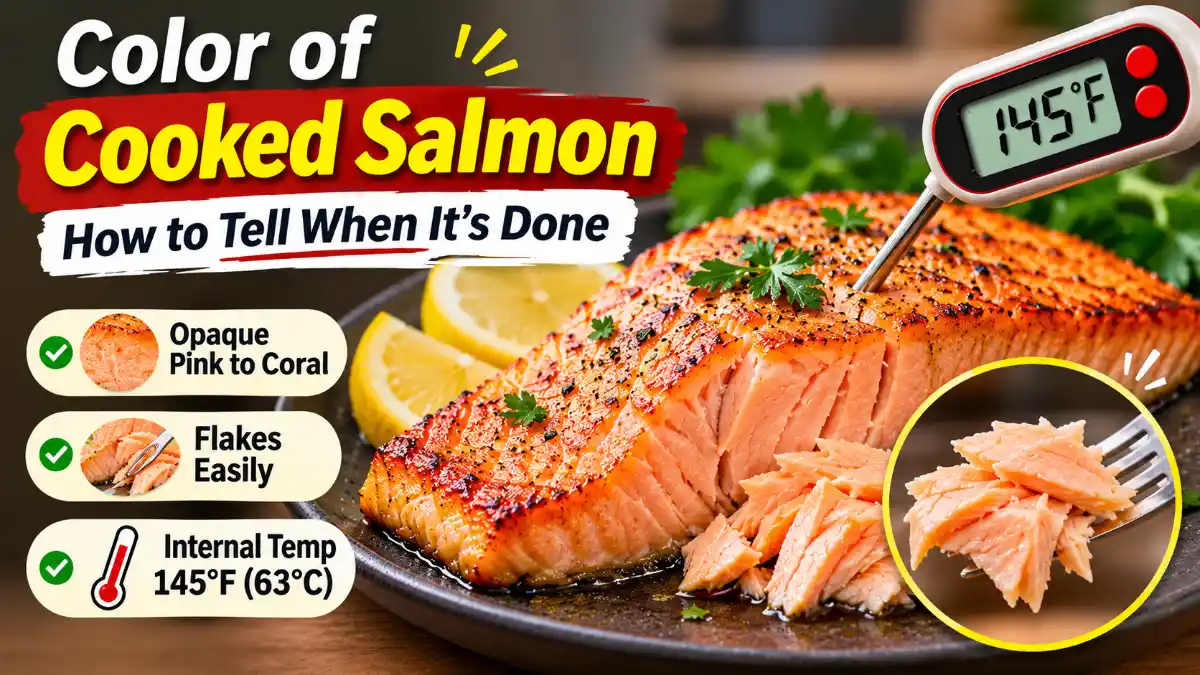
Color of Cooked Salmon varies by species from opaque pink, light orange-pink, peach or coral. When raw, salmon typically has a shiny, clear look. Properly cooked salmon will have an opaque look and separate into flakes that are moist. Color alone does not indicate if the salmon is safe to consume. To ensure your salmon is fully cooked, you should use a thermometer to check the internal cooking temperature. Your salmon should reach 145 degrees Fahrenheit (63 degrees Celsius).
Pinkness or redness at the center of a cooked salmon filet does not necessarily indicate that it was undercooked. There are many factors that influence the color of a salmon filet such as natural pigmentations, how thick the filet is, and the method of cooking used. If you understand these factors, you will be able to determine if a fish has been properly cooked, even if the color of the meat does not tell you. To learn more about pink centers in cooked salmon, refer to is salmon supposed to be pink inside?
What Color Should Cooked Salmon Be?
Cooked salmon usually has an inner portion that is a light pink, peach, or coral color. When the salmon is heated, the flesh of the salmon will change from being transparent to opaque. The ultimate color of the salmon will vary based upon the type of salmon used as well as the color that occurs naturally within the salmon.
When salmon is cooked by pan searing, grilling, or roasting, the surface can turn darker, golden, or brown depending upon both the cooking temperature and for how long the surface was exposed to that cooking temperature. At the same time, the center will likely remain a brighter pink color.
A properly cooked fillet generally has these characteristics:
Color: Opaque pink, peach, or orange-pink flesh.
Texture: Tender, moist flesh that separates into flakes.
Appearance: Less glossy and translucent than raw salmon.
Food safety temperature: A reading taken inside a product at 145 degrees Fahrenheit (63 degrees Celsius), which is the most widely accepted safe temperature for consuming products.
The use of a term like “completely white” may imply that if the salmon turns all white, then it has been cooked. However, some types of salmon will retain a darker pink or red-orange hue once they have been cooked to the suggested temperature. What is most critical is whether the fish looks as though it were still raw (i.e., translucent) versus looking as though it were cooked (i.e., naturally colored).
Color of Cooked Salmon: Raw vs. Undercooked vs. Cooked
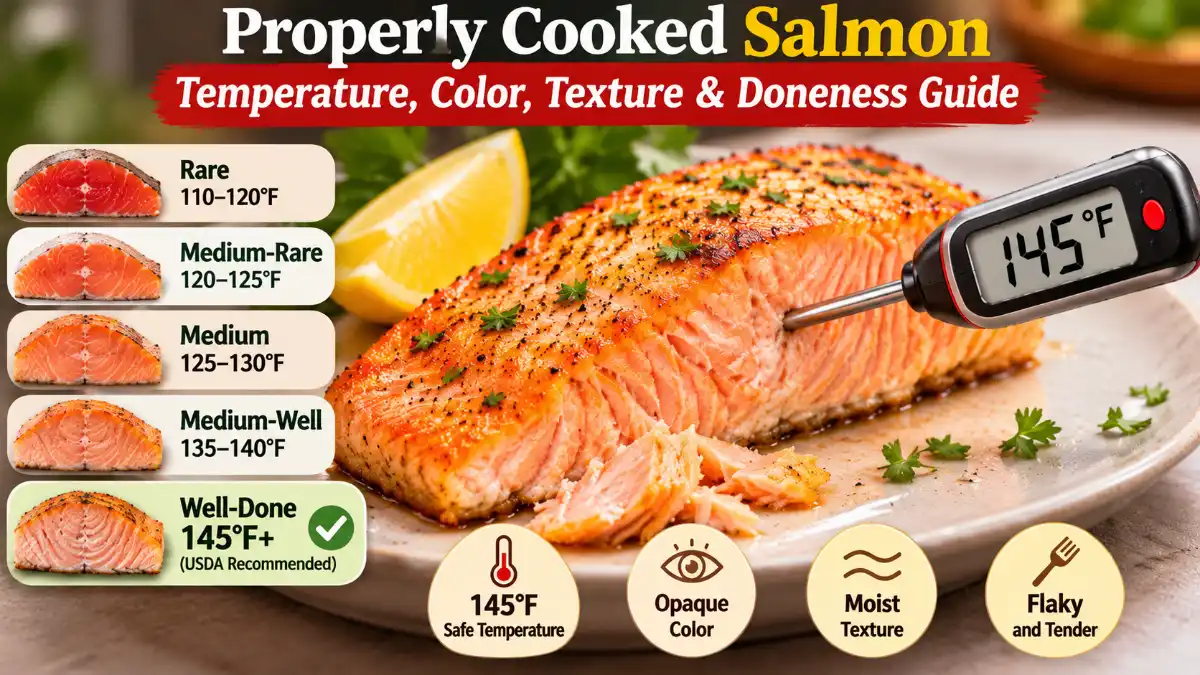
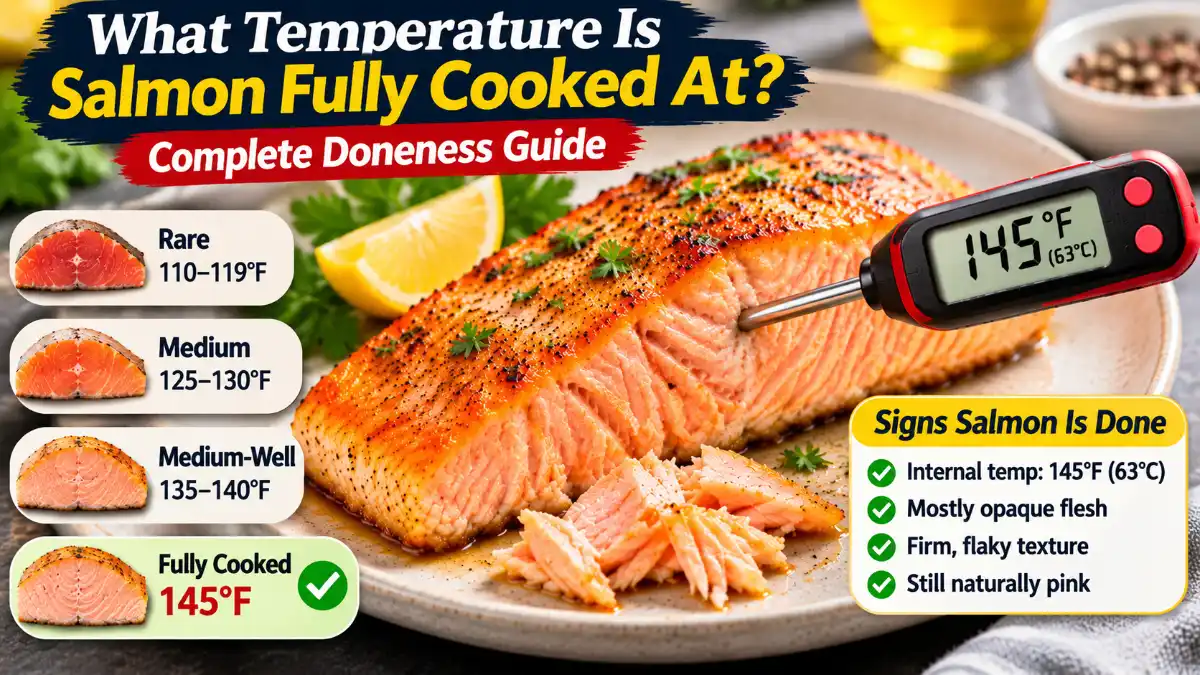
Salmon Color Chart: The following salmon color chart shows the changes in color and texture that occur as salmon is cooked to varying degrees.
Cooking Stage
Typical Flesh Color
Texture and Appearance
Raw salmon
Translucent pink, orange, or red
Glossy, soft, and cohesive
Undercooked salmon
Opaque exterior with a potentially translucent center
Softer center that may resist flaking
Cooked salmon
Generally opaque pink, peach, or coral
Moist, tender flesh that separates into flakes
Overcooked salmon
Often pale pink or lighter orange
Firm, dry, and sometimes crumbly
While these descriptions provide helpful visual indicators, they will not allow you to determine the internal temperature of a food item accurately. For example, two pieces of salmon can appear significantly different from each other and still have been cooked to the same internal temperature.
For example, when grilling salmon, the outer layer may be brown; however, if you are steaming or poaching salmon, there will typically be no variation in color. Although the type of cooking technique affects the outward appearance of the food, the necessity of checking the internal temperature of the food to determine whether it has cooked through remains unchanged.
How to Tell If Salmon Is Fully Cooked
By checking the internal temperature, color and feel of your salmon you will be able to tell when it is done. Although looking at your salmon can help you determine if it is done or not, using a thermometer will give you the best reading.
Check the Internal Temperature
The best internal temperature to use when cooking salmon at home is 145 degrees Fahrenheit or 63 degrees Celsius. That’s the minimum safe cooking temperature for fish.
Follow these steps:
Insert an instant-read meat/food thermometer into the most thickest section of the salmon fillet.
Position the sensor such that it is measuring the center of what is being measured and does not contact any part of the pan or other cooking surfaces.
Allow the reading to stabilize.
Confirm that the center has reached 145°F (63°C).
If your food isn’t done yet, you should continue to cook it until it reaches the desired temperature.
The temperature used in some recipes to achieve medium or medium-rare salmon results in a more tender product, but this is a preference based on taste, not a requirement of food safety standards.
Check the Color and Flaking Texture
If there isn’t a thermometer handy, the look and feel of the salmon can give some insight into whether or not the fish has been properly prepared.
Use a fork to gently press into the most dense portion of the fish. Cooked salmon will be able to easily break apart into flake-like pieces and its flesh should appear as an opaque color instead of a glossy or translucent appearance.
If the center is still translucent and does not flake, then you should cook your fish longer.
A large piece of salmon may look like it has been cooked on the outside, however, the inside will still be cool. This is more common if you are cooking your salmon at a high temperature.
Safe food handling guidelines recommend using a thermometer to check the internal temperature of foods being prepared for consumption. If you can, use a thermometer when preparing salmon to ensure that it has been cooked properly.
Read Also: Properly Cooked Salmon: Temperature, Color, Texture, and Doneness Guide
Why Does Cooked Salmon Sometimes Stay Pink or Red?
Salmon’s naturally occurring carotenoids (specifically, astaxanthin) give it a reddish/pinkish/orangey color.
These pigments are found in different amounts across all of the salmon species. Sockeye salmon is known for its deep red-orange color; however, Atlantic salmon tends to be more of a light orange-pink color.
Wild and farmed salmon can also have different coloring due to what they eat. Wild salmon get their carotenoids from the things they naturally consume, such as crustaceans and other marine life. On the other hand, farmed salmon can get their carotenoids from man-made feeds containing astaxanthin.
Dietary variations provide insight into why carotenoid pigments affect the color of salmon flesh.
The color of the pigments inside the fish is not lost during the cooking process. As such, when compared to a completely cooked Atlantic salmon fillet, a fully cooked sockeye fillet may appear significantly darker.
There is also natural variation within the different types of salmon. An example of this is that some king salmon can be found with extremely pale, or even white, meat.
The way that you prepare food will also determine how your finished product looks. For example, when you grill or pan sear something, it may brown on the outside. When you steam or poach food, it usually has a lighter, more consistent color.
Additionally, NOAA Fisheries describes the natural flesh colors of farmed Atlantic salmon that vary from pink to reddish orange.
What Does Overcooked Salmon Look Like?
Over-cooked salmon can look lighter in color and feel significantly harder than properly cooked salmon. The texture will change from being soft and moist to having hard, crumbly pieces separate from one another.
Common signs include:
Dry or chalky-looking flesh
Excessively firm or crumbly texture
Significant moisture loss
Pale or dull-looking areas
More visible white protein deposits in some cases
The white stuff seen on cooked salmon at times is known as albumin. This protein occurs naturally within the salmon and will move to the outer layer of the fish after it has been heated.
Normal cooking will produce some albumin. Therefore, the appearance of albumin does not necessarily mean that the meat has been overcooked. However, prolonged cooking or extreme heat will lead to the production of additional albumin.
This non-harmful material can be found in Food Network’s article about the white protein that forms when cooking salmon.
Monitor the internal temperature of your salmon to prevent drying out; do not continue to cook once you reach the suggested internal temperature.
Frequently Asked Questions
1. Can salmon be fully cooked and still look pink inside?
Yes. Fully cooked salmon can remain pink, orange-pink, or reddish because of its natural pigmentation. The final shade depends partly on the species, so pink flesh alone does not mean the fish is undercooked. Check the internal temperature to confirm doneness.
2. Is it safe to eat salmon that is slightly translucent?
A slightly translucent appearance cannot confirm whether salmon is safe to eat. For standard home cooking, the recommended internal temperature is 145°F (63°C). If the center has not reached that temperature, continue cooking rather than relying on its appearance.
3. Does the white stuff on cooked salmon mean it is overcooked?
Not necessarily. The white substance is albumin, a naturally occurring protein that becomes visible during cooking. Although more albumin may appear when salmon is cooked for longer or exposed to high heat, its presence alone does not indicate overcooking.
4. Can cooked salmon be orange instead of pink?
Yes. Cooked salmon can have an orange, peach, coral, or pink appearance depending on the variety and its natural pigments. Atlantic salmon commonly has orange-pink flesh, while sockeye salmon usually has a deeper reddish color. Both can retain their characteristic shades after cooking.
5. Can salmon look fully cooked on the outside but remain undercooked inside?
Yes. The surface of a thick salmon fillet may become opaque or browned before the center reaches the recommended temperature. This can happen during high-heat cooking. Insert a food thermometer into the thickest part to check whether the center has reached 145°F (63°C)