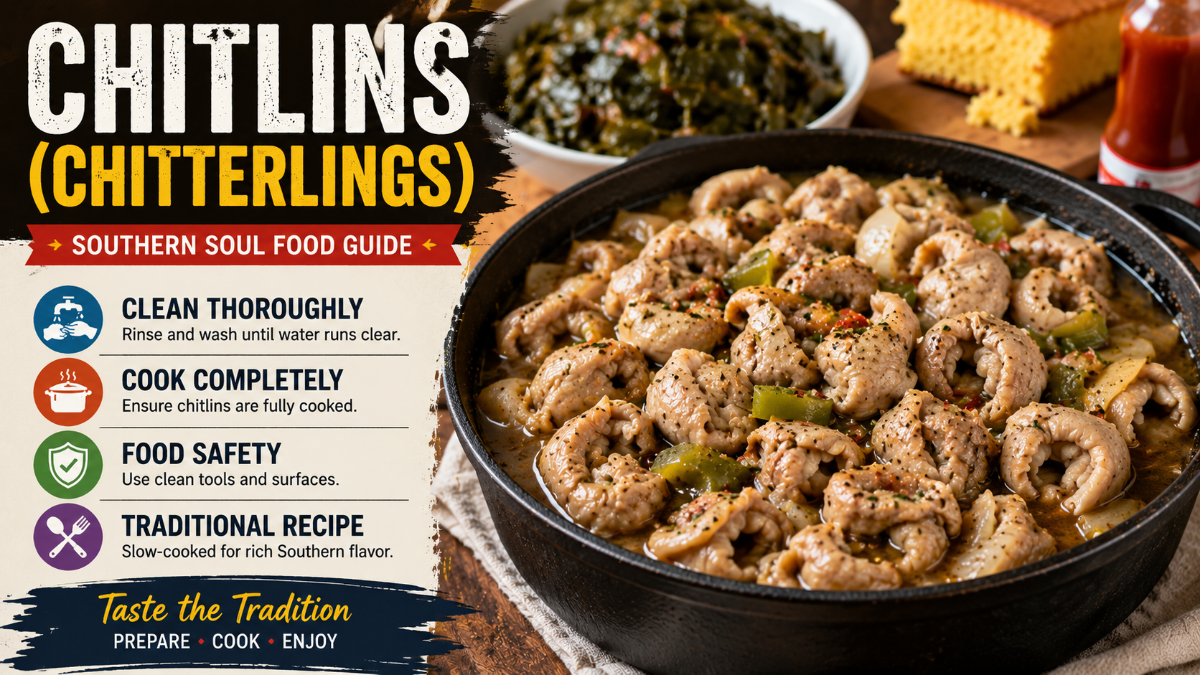
Chitlins, also called chitterlings, are pig intestines that are cleaned, seasoned, and slow-cooked until tender. They are an important part of Southern soul food and African American food traditions, often served with vinegar, hot sauce, greens, cornbread, and other comfort-food sides. Because raw pork chitterlings can carry harmful germs, careful cleaning, sanitation, and thorough cooking are essential.
What Are Chitlins?
Chitlins are pork intestines, most often from the small intestine. “Chitlins” is the familiar Southern shorthand for chitterlings, and both terms generally describe the same food.
They are part of the broader category of offal, meaning edible cuts other than standard muscle meat. When properly prepared, chitterlings have a savory pork flavor and a tender, lightly chewy texture. They are typically simmered in a seasoned broth rather than fried.
Why Chitlins Matter in Southern Food
Chitlins have cultural significance far beyond their ingredients. In Southern cooking, they reflect traditions of thrift, skill, and making satisfying meals from ingredients that others might overlook. For many African American families with Southern roots, they are strongly associated with holiday meals, family gatherings, and culinary knowledge passed from one generation to the next.
There is no single correct way to prepare them. Some cooks favor a clean, lightly seasoned broth, while others use a fuller blend of onion, celery, bell pepper, garlic, hot peppers, vinegar, or smoked meat. The common thread is patient preparation and a well-seasoned final dish.
Buying Pork Chitterlings
Buy chitterlings from a reputable grocery store, butcher, or specialty market. They are often sold frozen, though some stores carry refrigerated packages around the holiday season.
Read the package label before cooking. “Pre-cleaned” usually means the product has been processed or trimmed, but it may still be raw and must be handled accordingly. “Pre-cooked” products should be reheated according to the manufacturer’s directions.
| Product Type | What It Usually Means | Best Practice |
| Raw chitlins | Uncooked pork intestines | Clean, sanitize carefully, and cook thoroughly |
| Pre-cleaned chitlins | Trimmed or partially cleaned before packaging | Inspect and treat as raw unless labeled fully cooked |
| Pre-cooked chitlins | Cooked before packaging | Follow package reheating instructions |
| Frozen chitlins | Raw or cooked product preserved by freezing | Thaw in the refrigerator, never on the counter |
If using raw frozen chitlins, thaw them in the refrigerator in a covered container that will catch any drips. Use them within two days of thawing, or keep them frozen until you are ready to prepare them.
How to Clean Chitlins Safely
Raw chitlins can carry Yersinia and other germs. The greatest food-safety concern is cross-contamination: bacteria can spread from raw chitlins to hands, sinks, countertops, utensils, refrigerator handles, ready-to-eat food, or children’s items.
The safest approach is to boil raw chitlins for at least five minutes before cleaning them. This reduces the germs that may spread while you inspect and trim the product.
Read More : Purple flowers
How to Clean Chitlins Step by Step
- Set up before opening the package. Gather ingredients, utensils, a large pot, a colander, paper towels, and cleaning supplies so you do not need to touch cabinets, drawers, or refrigerator handles after handling raw pork.
- Keep children away from the preparation area. Ask another adult to care for infants and young children until the preparation area has been cleaned and sanitized.
- Pre-boil raw chitlins. Put them in a large pot, cover with water, bring to a boil, and boil for at least five minutes before cleaning.
- Cool them enough to handle. Work in manageable batches rather than filling the sink or counter with raw product.
- Inspect each piece. Remove visible excess fat, membrane, dark material, and debris. Discard pieces that appear spoiled or questionable.
- Rinse with minimal splashing. Use a colander and avoid spraying water around the sink, countertops, or nearby dishes.
- Wash and sanitize the kitchen. Clean all touched surfaces, tools, handles, and sink areas after preparation. The CDC recommends a fresh solution of 1 tablespoon of bleach per gallon of water for surfaces exposed to raw chitlins or their juices.
Vinegar, salt, lemon, baking soda, and repeated rinsing may be part of a family’s preparation routine, but they are not replacements for safe handling, sanitation, and thorough cooking.
How to Cook Chitlins
Traditional Southern chitlins are simmered slowly in seasoned liquid until they are fully cooked and tender. The long cooking time softens the intestines and lets the aromatics flavor both the chitlins and their broth.
Basic Southern Chitlins Recipe
Ingredients
- 5 pounds raw or pre-cleaned pork chitterlings
- Water, as needed
- 1 large onion, chopped
- 2 celery stalks, chopped
- 1 green bell pepper, chopped
- 3 to 4 garlic cloves, minced
- 1 to 2 bay leaves
- 1 teaspoon black pepper
- Red pepper flakes or hot pepper, to taste
- 1 to 2 tablespoons apple cider vinegar
- Salt, to taste
- Hot sauce, for serving
How to Cook Chitlins on the Stovetop
- Clean raw chitterlings using the safe process above. If using a pre-cooked product, follow its package directions instead.
- Place the cleaned chitlins in a large stockpot and add enough fresh water to cover them.
- Add the onion, celery, bell pepper, garlic, bay leaves, black pepper, and red pepper.
- Bring the pot to a boil, then reduce the heat to a steady simmer.
- Partially cover the pot and cook until the pieces are fully cooked and very tender. Depending on the product, quantity, and cooking temperature, this often takes several hours.
- Check the liquid level periodically. Add hot water as needed to keep the pot from drying out or scorching.
- Remove the bay leaves, taste the broth, and adjust salt, black pepper, vinegar, or hot sauce.
- Cut larger pieces into bite-size portions before serving.
The goal is tenderness, not a precise cooking time. Properly cooked pork chitterlings should be fully done, soft enough to cut easily, and free of any raw texture.
Can You Cook Chitlins in a Pressure Cooker?
A pressure cooker can shorten the tenderizing stage, but it does not remove the need for safe raw-pork handling. For raw chitlins, pre-boil before cleaning, prevent cross-contamination, and sanitize the kitchen afterward.
Use only the amount permitted by your appliance’s maximum-fill line, especially because simmering ingredients can create foam. Follow the manufacturer’s instructions for pressure cooking and releasing pressure. If you are new to chitterlings, a stockpot offers more control over tenderness and seasoning.
Flavor and Texture Tips
Well-prepared chitlins should taste savory, seasoned, and clean. They are naturally rich, so aromatic vegetables, black pepper, hot peppers, and vinegar help create balance.
- Add vinegar gradually; too much can make the broth harsh.
- Use hot sauce at the table so guests can control the heat.
- Keep the pot at a calm simmer rather than a violent boil.
- Add salt near the end if using salty broth, bouillon, smoked meat, or seasoning blends.
- Keep a small amount of seasoned broth with the finished dish to prevent it from drying out.
Aroma is part of the experience of cooking chitterlings, but ventilation can help. Use the stove fan, open windows if practical, and keep the lid partly on the pot while it simmers.
Traditional Southern Serving Ideas
Chitlins are usually served as part of a larger Southern meal rather than as a stand-alone dish. Their rich flavor works especially well with foods that offer acidity, starch, sweetness, or a fresh vegetable contrast.
Popular pairings include:
- Collard greens, mustard greens, or turnip greens
- Cornbread, hoecakes, or biscuits
- Black-eyed peas or field peas
- Macaroni and cheese
- Potato salad or coleslaw
- Candied yams or sweet potatoes
- White rice for soaking up the seasoned broth
- Pepper vinegar or hot sauce at the table
Natural internal-linking opportunities include recipes for collard greens, cast-iron cornbread, black-eyed peas, pepper vinegar sauce, Southern holiday menus, and safe pork storage.
Chitlins Food-Safety Checklist
Safe preparation is as important as seasoning. Follow these steps every time you handle raw chitterlings:
- Keep raw chitlins cold and thaw frozen packages only in the refrigerator.
- Freeze raw chitlins unless you plan to clean and cook them within two days.
- Wash hands with soap and warm water for at least 20 seconds before and after preparation.
- Boil raw chitlins for at least five minutes before cleaning them.
- Keep children, infant bottles, toys, and pacifiers away from the preparation area.
- Avoid splashing while rinsing or moving the product.
- Keep raw pork and its juices away from ready-to-eat foods.
- Clean and sanitize the sink, counters, utensils, appliance handles, and other touched surfaces.
- Cook until fully done and tender before serving.
- Refrigerate leftovers promptly in shallow containers.
Frequently Asked Questions
Are chitlins and chitterlings the same thing?
Yes. Chitlins is a common shortened form of chitterlings. Both terms refer to pork intestines prepared as food, particularly in Southern cooking. Spelling and pronunciation vary by region, family, and recipe source; you may also see “chittlins” or “chitlings.” Regardless of the name, raw product should be handled as raw pork, cleaned carefully, and cooked until tender.
What do chitlins taste like?
Chitlins have a rich, savory pork flavor and a tender, slightly chewy texture. Their final taste depends largely on cleaning, seasoning, and cooking time. Onion, garlic, celery, black pepper, hot peppers, and vinegar are common additions because they balance the natural richness. Properly prepared chitterlings should taste clean and well seasoned, not bitter or unpleasantly strong.
Why do chitlins take so long to cook?
Pork intestines need sustained moist heat to become tender. Slow simmering softens their structure while giving seasoning time to flavor the cooking liquid. The exact cooking time depends on the quantity, freshness, heat level, and whether a stovetop or pressure cooker is used. Instead of relying only on a clock, cook until the pieces are fully done, tender, and easy to cut.
Are pre-cleaned chitlins ready to eat?
Usually not. Pre-cleaned means the chitlins have received some trimming or processing before packaging, but they may still be raw. Check the label for clear wording such as “fully cooked” or reheating instructions. When the label is unclear, handle the product as raw pork: keep it refrigerated, avoid cross-contamination, clean and sanitize your workspace, and cook it thoroughly.
Do vinegar or lemon juice clean chitlins?
Vinegar and lemon juice can add flavor and may be part of a traditional cleaning routine, but they do not replace food-safety practices. Raw chitterlings can carry germs that spread through hands, utensils, sinks, and counters. The key precautions are pre-boiling raw chitlins before cleaning, washing hands thoroughly, preventing splashes, sanitizing surfaces, and cooking the finished dish until fully done
What should you remove when cleaning chitterlings?
Remove visible debris, excess fat, tough membrane, and any questionable pieces. Clean one section at a time so you can inspect it carefully. Avoid turning the cleaning process into prolonged, splash-heavy rinsing, since that can spread raw-pork juices around the kitchen. For raw product, boil first, then work in small batches and sanitize everything that touches the chitlins or their liquid.
What vinegar is best for chitlins?
Apple cider vinegar and distilled white vinegar are both traditional choices. Apple cider vinegar offers a softer, slightly fruity tang, while white vinegar gives a sharper flavor. Add a small amount while the pot simmers, then serve more at the table. This lets each person adjust the acidity without making the entire dish taste overly sour. Pepper vinegar is another popular table condiment.
Can you freeze cooked chitlins?
Yes. Cool cooked chitterlings promptly, divide them into shallow containers, and refrigerate or freeze them soon after the meal. Freezing works well for preserving leftovers and makes reheating easier in smaller portions. Label containers with the date and reheat only the amount you plan to serve. As with all leftovers, discard food that has been held at room temperature too long or shows signs of spoilage.
What should you serve with chitlins?
Classic sides include collard greens, cornbread, black-eyed peas, macaroni and cheese, sweet potatoes, rice, and potato salad. Greens and vinegar provide contrast to the dish’s richness, while cornbread and rice soak up the seasoned broth. A holiday-style Southern plate might pair chitterlings with greens, peas, cornbread, hot sauce, and a sweet side such as candied yams.
Why should children stay out of the kitchen while chitlins are prepared?
Raw chitlins can carry germs that may spread from hands or surfaces to children, bottles, toys, pacifiers, and other foods. Infants and young children are especially vulnerable to foodborne illness. Keep them away from the preparation area, have another adult supervise them if possible, and wash hands and sanitize surfaces before touching them or their belongings.