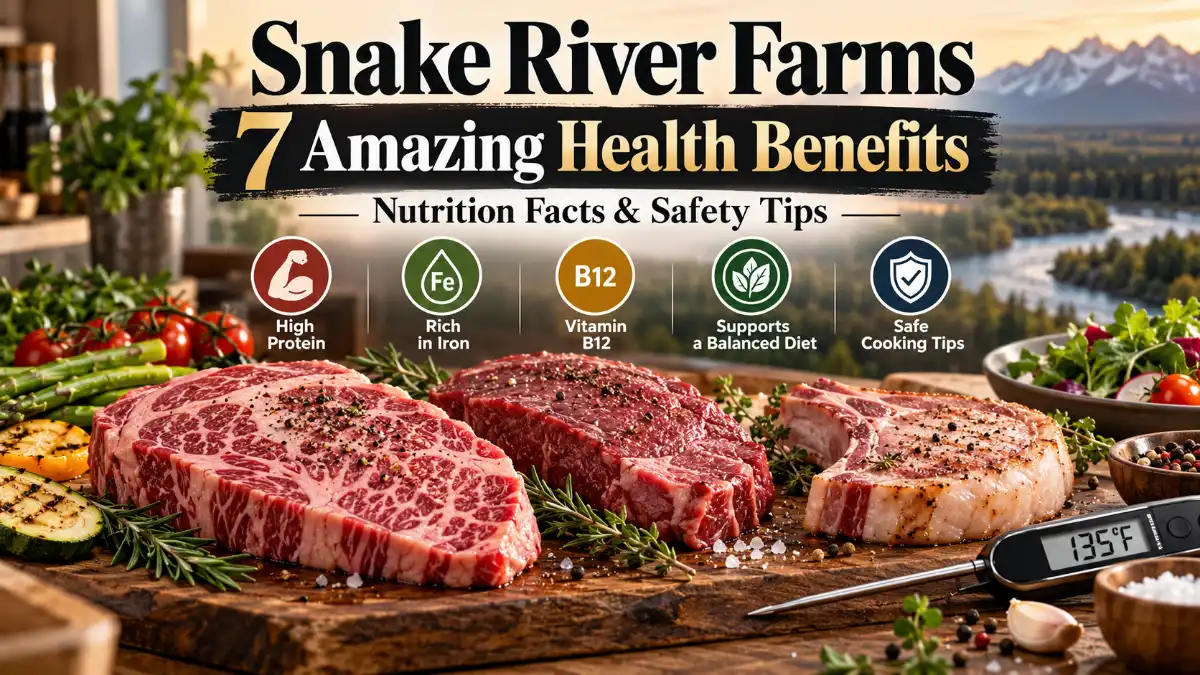
Snake River Farms is a premium American meat brand known for American Wagyu beef, Kurobuta pork, and USDA-graded beef products. These meats supply essential nutrients, including protein, iron, zinc, and vitamin B12. However, their nutritional value depends on the cut, fat content, serving size, and preparation method.
For health-conscious consumers, understanding the difference between premium meat quality and nutritional benefits is essential. Highly marbled Wagyu may offer exceptional tenderness, but it can also contain more fat than lean conventional beef.
This guide explores Snake River Farms products, seven potential nutritional benefits, health risks, and safe cooking practices.
What Is Snake River Farms?
Snake River Farms specializes in premium beef and pork products sold to home cooks, restaurants, and meat enthusiasts.
Its main product categories include:
- American Wagyu beef
- USDA Prime and Choice beef
- Kurobuta pork
- Steaks and roasts
- Specialty meat selections
American Wagyu is particularly popular because of its marbling, which refers to fat distributed throughout the muscle.
Kurobuta pork, associated with Berkshire pigs, is recognized for its flavor and tenderness.
Consumers can explore available cuts through the official Snake River Farms product catalog.
Snake River Farms Nutrition Facts
The nutritional composition of beef and pork varies considerably among cuts.
A lean tenderloin generally contains less fat than a heavily marbled ribeye. Similarly, fresh pork tenderloin differs nutritionally from bacon or cured ham.
| Nutrient | Main nutritional function |
| Protein | Muscle growth and tissue repair |
| Iron | Red blood cell function |
| Zinc | Immune function and wound healing |
| Vitamin B12 | Nerve health and DNA production |
| Vitamin B6 | Protein and energy metabolism |
| Fat | Energy and nutrient absorption |
Calories and macronutrients: There is no single accurate calorie or protein value for every Snake River Farms product. A 3-ounce serving of lean beef and the same weight of richly marbled Wagyu can contain different amounts of total fat, saturated fat, and calories.
For reliable nutritional comparisons, check the specific product information and the USDA FoodData Central database.
7 Potential Health Benefits of Snake River Farms Meat
1. Supports Muscle Growth and Repair
Beef and pork provide complete protein containing all nine essential amino acids.
Adequate protein supports muscle maintenance, recovery after exercise, and tissue repair.
2. Provides Iron for Healthy Blood
Beef contains heme iron, which is generally absorbed more efficiently than the non-heme iron found in plant foods.
Iron supports hemoglobin production and oxygen transportation throughout the body.
3. Supports Immune Function
Zinc contributes to normal immune responses, wound healing, and cell development.
Beef can be a useful dietary source of this essential mineral.
4. Supplies Vitamin B12
Vitamin B12 helps maintain healthy nerve function and supports red blood cell production.
Animal foods, including beef and pork, naturally contain this vitamin.
5. Helps Maintain Body Tissues
The protein in meat supplies amino acids used to maintain muscles, skin, and other tissues.
These benefits are not unique to premium meat; conventional beef, poultry, and other protein sources provide similar nutrients.
6. Promotes Satiety
Protein-rich foods can support feelings of fullness.
Pairing a moderate portion of meat with vegetables, beans, and whole grains creates a more balanced meal.
7. Provides Essential Micronutrients
Beef and pork supply several B vitamins and minerals involved in normal metabolism.
These nutrients support overall health when consumed as part of a varied dietary pattern.
Is Snake River Farms Wagyu Beef Healthy?
Snake River Farms Wagyu beef can fit into a healthy diet, but its high marbling requires attention.
Marbling contributes to flavor and tenderness while also increasing fat content in many cuts.
The American Heart Association recommends choosing lean, unprocessed meats and limiting saturated fat because excessive intake can increase LDL cholesterol and cardiovascular risk.
For healthier consumption:
- Choose leaner cuts regularly.
- Limit large servings of highly marbled beef.
- Remove visible fat when practical.
- Avoid excessive butter and creamy sauces.
- Include vegetables and fiber-rich foods.
- Vary protein sources throughout the week.
Wagyu’s unsaturated fat content does not automatically make it healthier than lean beef.
Snake River Farms Kurobuta Pork: Is It Healthy?
Kurobuta pork provides complete protein, B vitamins, and essential minerals.
However, its nutritional value depends on the cut.
Fresh pork loin can be a practical protein choice, while bacon and processed pork products may contain more sodium and saturated fat.
For everyday meals, choosing lean, unprocessed pork and using moderate portions is generally preferable to relying on processed meats.
Read Also: Color Chart Cooked Salmon Color: 5 Stages, Doneness & Safe Temperature Guide
Snake River Farms vs. Regular Beef
| Feature | American Wagyu | Conventional lean beef |
| Protein | High-quality protein | High-quality protein |
| Iron | Present | Present |
| Vitamin B12 | Present | Present |
| Marbling | Usually greater | Generally lower |
| Fat content | Often higher | Generally lower |
| Heart-health consideration | Watch saturated fat | Often easier to limit saturated fat |
The comparison depends on the exact cuts and serving sizes.
Premium pricing reflects characteristics such as breeding, production, grading, and eating quality, not necessarily superior nutrition.
How to Cook Snake River Farms Meat Safely
Safe cooking reduces the risk of foodborne illness.
The USDA recommends the following minimum internal cooking temperatures:
| Meat type | Minimum temperature |
| Beef steaks and roasts | 145°F (63°C), rest 3 minutes |
| Fresh pork chops and roasts | 145°F (63°C), rest 3 minutes |
| Ground beef | 160°F (71°C) |
| Ground pork | 160°F (71°C) |
| Leftovers | 165°F (74°C) |
Use a food thermometer to confirm doneness rather than judging by color.
Refrigerate perishable foods within two hours, or one hour when temperatures exceed 90°F (32°C). Store raw meat separately from ready-to-eat foods to prevent contamination.
How to Include Snake River Farms in a Balanced Diet
A balanced meal can include approximately 3 ounces of cooked meat, vegetables, and a fiber-rich side dish.
The American Heart Association identifies 3 ounces as a useful cooked-meat serving reference.
Healthy preparation methods include baking, roasting, broiling, and grilling without excessive charring.
People monitoring cholesterol, blood pressure, or calorie intake should pay particular attention to saturated fat, sodium, and portion size.
Frequently Asked Questions
1. Is Snake River Farms beef good for your health?
It provides protein, iron, zinc, and vitamin B12. Its healthfulness depends on the cut, fat content, portion size, and overall dietary pattern.
2. Is Snake River Farms Wagyu healthier than regular beef?
Not necessarily. Wagyu commonly has greater marbling, while lean conventional beef may contain less total and saturated fat.
3. Is Snake River Farms meat good for muscle building?
Yes. Beef and pork provide complete proteins that support muscle maintenance and repair when combined with adequate nutrition and exercise.
4. Can people with high cholesterol eat Snake River Farms beef?
Lean cuts may fit into an individualized cholesterol-conscious diet. Limiting saturated fat and following medical dietary advice remains important.
5. Is Snake River Farms Kurobuta pork healthy?
Fresh Kurobuta pork provides beneficial nutrients. Lean cuts and moderate portions are generally preferable to fatty or highly processed pork products.