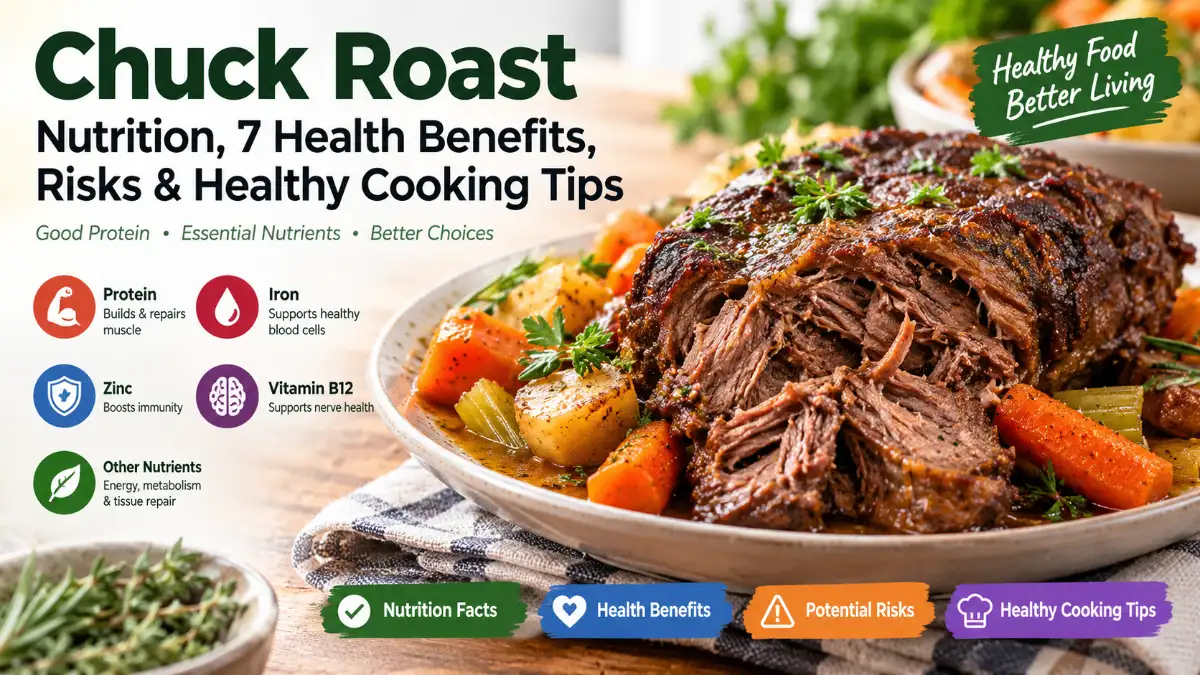
Chuck roast is a beef cut from the shoulder of a cow that provides protein, iron, zinc, and vitamin B12. These nutrients support muscle maintenance, healthy blood cells, and normal immune function. A 3-ounce serving of cooked, trimmed chuck arm roast contains approximately 180 calories and 28 grams of protein. However, the fat content varies by cut, and eating large amounts of fatty red meat may increase health risks. Choosing leaner portions and cooking them with vegetables can make chuck roast part of a balanced diet.
What Is Chuck Roast?
Chuck roast comes from the shoulder area of cattle. This muscle-rich section contains connective tissue and fat marbling, giving the meat its distinctive flavor.
Because the shoulder muscles are used frequently, the meat is naturally tougher than cuts such as tenderloin. Slow cooking breaks down connective tissue and produces a tender texture.
Common dishes include pot roast, beef stew, shredded beef, and slow-cooker dinners.
Chuck roast is popular because it is flavorful, versatile, and often less expensive than premium beef cuts.
Chuck Roast Nutrition Facts
The nutritional value of chuck roast depends on its grade, fat trimming, and preparation method.
According to USDA nutrient data, a cooked, braised, choice-grade chuck arm pot roast with separable fat removed provides approximately the following nutrients.
| Nutrient | Per 100 Grams | Per 3 Oz (85g) |
| Calories | 212 kcal | 180 kcal |
| Protein | 33.4 g | 28.4 g |
| Total Fat | 7.7 g | 6.5 g |
| Saturated Fat | 2.9 g | 2.5 g |
| Carbohydrates | 0 g | 0 g |
| Iron | 2.9 mg | 2.5 mg |
| Zinc | 7.8 mg | 6.6 mg |
| Cholesterol | 100 mg | 85 mg |
Source: USDA National Nutrient Database, beef chuck arm pot roast, choice grade, separable lean only, cooked and braised. Values are rounded. Fattier portions may contain substantially more calories and saturated fat.
7 Health Benefits of Chuck Roast
1. Supports Muscle Growth and Repair
Chuck roast supplies complete protein containing all nine essential amino acids.
Protein supports muscle maintenance, tissue repair, and recovery after exercise.
A moderate serving can contribute meaningfully to daily protein requirements, particularly when combined with adequate physical activity.
2. Provides Iron for Healthy Blood
Beef contains heme iron, which is generally absorbed more efficiently than iron from plant foods.
Iron supports hemoglobin production, allowing red blood cells to transport oxygen throughout the body.
Adequate iron intake helps prevent nutritional iron deficiency, although individual needs vary.
The National Institutes of Health provides further information about iron requirements and dietary sources.
3. Supports Normal Immune Function
Chuck roast provides zinc, an essential mineral involved in immune responses, wound healing, and cellular growth.
Getting sufficient zinc helps the immune system function normally.
However, consuming extra zinc-rich foods does not necessarily strengthen immunity beyond normal levels.
4. Promotes Nervous System Health
Vitamin B12 supports healthy nerve function, DNA synthesis, and red blood cell production.
Beef is a natural source of this vitamin, making it useful for people who include animal products in their diets.
5. Helps Maintain Energy Metabolism
Beef contains B vitamins that help the body convert food into usable energy.
Iron also contributes to normal oxygen transport, supporting everyday physical functioning.
These nutrients help maintain normal metabolism rather than providing an immediate energy boost.
6. Supports Tissue Maintenance
The protein and zinc found in beef contribute to tissue repair and normal cellular processes.
They help maintain healthy tissues and support recovery from everyday wear.
7. May Help Control Hunger
Protein-rich meals tend to be filling.
Eating a moderate portion of chuck roast alongside vegetables and whole grains may help maintain satisfaction between meals.
However, weight management still depends on total calorie intake and overall eating habits.
Is Chuck Roast Healthy for Your Heart?
Chuck roast can fit into a heart-conscious eating pattern, but saturated fat deserves attention.
Consuming excessive saturated fat can increase LDL cholesterol, a risk factor for cardiovascular disease.
The American Heart Association recommends lean, unprocessed meats while emphasizing fish, legumes, nuts, and other nutritious protein sources.
For healthier meals:
- Remove visible fat before cooking.
- Choose moderate portions.
- Use low-sodium broth.
- Avoid butter-heavy gravies.
- Serve beef with fiber-rich vegetables.
- Alternate red meat with fish, poultry, and plant proteins.
Potential Health Risks of Eating Chuck Roast
Saturated Fat and Cholesterol
Fattier chuck cuts can increase saturated fat intake. People managing elevated LDL cholesterol should favor leaner portions and limit excess saturated fat.
Red Meat and Colorectal Cancer
Higher red meat consumption is associated with increased colorectal cancer risk.
The World Cancer Research Fund recommends limiting red meat to approximately 350–500 grams of cooked meat weekly.
This recommendation concerns total red meat consumption, not chuck roast alone.
Excess Calories and Sodium
Large fatty servings, salty seasonings, and rich gravies can increase calorie and sodium intake.
Plain chuck roast contains virtually no carbohydrates, but potatoes, sauces, and other additions change the nutritional profile of the meal.
How to Cook Chuck Roast in a Healthy Way
Slow cooking and braising are particularly suitable because they tenderize the meat without requiring deep-frying.
Healthy Slow-Cooker Recipe
Ingredients:
- 2 pounds of trimmed chuck roast
- 2 carrots, chopped
- 1 onion, sliced
- 2 celery stalks
- 3 garlic cloves
- 1 cup low-sodium beef broth
- 1 tablespoon olive oil
- Rosemary, thyme, and black pepper
Instructions:
- Trim visible excess fat from the roast.
- Lightly brown the beef in olive oil.
- Place vegetables and beef in a slow cooker.
- Add broth, garlic, and herbs.
- Cook until the beef is tender, checking the appliance’s instructions and meat temperature.
- Remove excess surface fat before serving.
Food safety: The USDA recommends cooking whole beef roasts to at least 145°F (63°C), followed by a three-minute rest. Chuck roast is usually cooked to a higher temperature for tenderness.
Read Also: How to Eat Coconut Cult Yogurt: A Practical First-Jar Guide
Chuck Roast vs. Other Beef Cuts
| Beef Cut | Characteristics | Health Consideration |
| Chuck roast | Flavorful, suited to slow cooking | Fat varies considerably |
| Sirloin | Tender and often lean | Useful lower-fat option |
| Brisket | Rich flavor, benefits from slow cooking | May contain substantial fat |
| Round roast | Firm and generally lean | Often lower in saturated fat |
The healthiest choice depends on the particular cut, trimming, portion size, and cooking method.
How Much Chuck Roast Should You Eat?
A practical serving is approximately 3 ounces of cooked meat, roughly the size of a deck of cards.
Pairing the beef with vegetables, beans, or whole grains improves meal variety.
Eating smaller portions of red meat while including different protein sources throughout the week supports a more balanced diet.
How to Store Chuck Roast Safely
Keep raw beef refrigerated at 40°F (4°C) or below and generally use fresh roasts within three to five days.
Refrigerate cooked leftovers within two hours, or one hour when temperatures exceed 90°F (32°C).
Consume refrigerated leftovers within three to four days and reheat them to 165°F (74°C).
For additional guidance, consult the USDA Food Safety and Inspection Service.
Frequently Asked Questions
1. Is chuck roast healthy for weight loss?
Yes, trimmed chuck roast can fit into a weight-loss diet. Its protein content supports fullness, but fattier portions contain more calories. Moderate servings with vegetables are generally preferable.
2. Is chuck roast high in cholesterol?
Chuck roast contains dietary cholesterol and saturated fat. The exact amounts vary by cut. People with high LDL cholesterol should consider leaner portions and their overall saturated fat intake.
3. Can people with diabetes eat chuck roast?
Yes. Plain chuck roast contains virtually no carbohydrates. However, people with diabetes should consider serving size, saturated fat, cardiovascular health, and the carbohydrate content of accompanying foods.
4. Is chuck roast good for building muscle?
Yes. Its complete protein provides amino acids needed for muscle maintenance and repair. Resistance exercise and sufficient overall protein and calorie intake are also important for muscle development.
5. Is eating chuck roast every day unhealthy?
Eating large portions daily may increase saturated fat and red meat consumption. Including fish, poultry, beans, and other protein sources provides greater nutritional variety. Moderate consumption is generally the better approach.