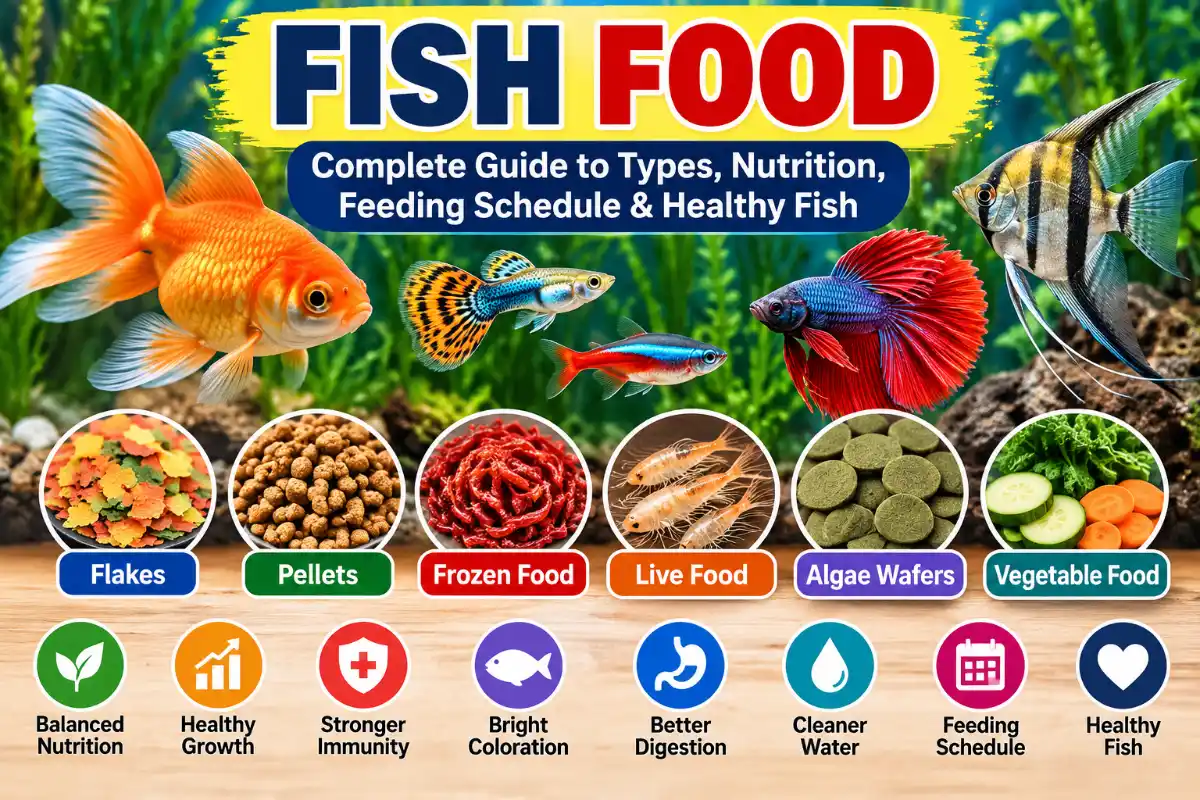
Fish food provides the essential nutrients aquarium fish need for healthy growth, energy, digestion, and normal immune function. The best fish food depends on the species, age, size, and natural diet of your fish. Popular options include flakes, pellets, frozen foods, live foods, and algae wafers. Most aquarium fish need regular, measured meals, while some large carnivorous species require less frequent feeding. Choosing a suitable diet and avoiding overfeeding helps protect fish health and maintain clean aquarium water.
Whether you keep goldfish, bettas, guppies, or tropical community fish, understanding their nutritional requirements makes everyday aquarium care easier.
What Is Fish Food?
Fish food is a prepared or natural diet containing nutrients such as protein, fats, vitamins, and minerals. Commercial formulas are developed for different species and feeding behaviors.
Fish generally fall into three dietary categories: carnivores, herbivores, and omnivores. Carnivores primarily eat animal-based foods, herbivores consume plant material or algae, and omnivores eat both.
A balanced diet supports growth, tissue repair, energy production, healthy coloration, and reproduction. The Merck Veterinary Manual explains that inadequate nutrition can contribute to poor growth, deformities, impaired metabolism, and reduced immune function.
Types of Fish Food
Different types of fish food offer different feeding benefits.
1. Flake Fish Food
Flakes are thin, lightweight foods commonly used for guppies, mollies, tetras, and other small tropical fish. They initially float and gradually sink, making them convenient for many surface and midwater feeders.
2. Pellet Fish Food
Pellets provide concentrated nutrition and come in floating, slow-sinking, and sinking varieties. They are suitable for many goldfish, bettas, cichlids, and koi when the formulation and pellet size match the species.
3. Frozen and Freeze-Dried Food
Frozen brine shrimp, bloodworms, and mysis shrimp can provide dietary variety. These foods are often used as supplements rather than complete staple diets.
4. Live Fish Food
Cultured brine shrimp, daphnia, and other live organisms encourage natural feeding behavior. However, live food from unreliable sources may introduce parasites or infectious organisms.
5. Algae Wafers and Plant-Based Food
Algae wafers and suitable vegetables benefit certain herbivorous and algae-grazing species. Not every bottom-feeding fish is herbivorous, so food selection must match its actual diet.
Essential Nutrients in Fish Food
| Nutrient | Main health benefit |
| Protein | Growth and tissue repair |
| Healthy fats | Energy and essential fatty acids |
| Carbohydrates | Energy for suitable species |
| Vitamins | Normal metabolism and body functions |
| Minerals | Skeletal development and physiological processes |
| Fiber | Digestive support in plant-eating species |
Protein requirements differ by species and life stage. A high-protein product is not automatically healthier for every aquarium fish.
Best Fish Food for Different Fish Species
| Fish species | Recommended food |
| Goldfish | Goldfish-specific pellets and suitable vegetables |
| Betta fish | Betta pellets and suitable insect-based supplements |
| Guppies | Small tropical flakes or micro-pellets |
| Tetras | Fine flakes and micro-pellets |
| Angelfish | Balanced tropical pellets or flakes |
| Corydoras | Sinking omnivore tablets |
| Koi | Koi-specific pellets |
Choose foods according to nutritional needs, mouth size, and feeding location rather than relying on one formula for every species.
How Much Fish Food Should You Feed?
Most aquarium fish require feeding at least daily, although some large carnivorous fish naturally eat substantial meals less frequently.
The RSPCA fish feeding guidance recommends offering only the amount fish can consume within approximately two to five minutes and avoiding excess food. This is a practical starting point, not a universal requirement.
Read Also: Funnel Cake: Nutrition, Health Effects, Ingredients, and Healthy Recipe
Fish Feeding Schedule
| Fish category | General feeding frequency |
| Newly hatched fry | Several small meals daily |
| Juvenile fish | Multiple small meals daily |
| Adult tropical fish | Usually 1–2 meals daily |
| Betta fish | Generally 1–2 small meals daily |
| Goldfish | Often 1–2 meals daily |
| Large predatory fish | Species-dependent; sometimes weekly |
| Pond koi | Adjust according to temperature |
Important feeding exceptions: Nocturnal fish may need food after lights dim. Bottom-feeding fish require food that reaches the substrate, while cold-water pond fish may eat less when temperatures fall. Young fish typically need more frequent feeding than adults.
Floating vs. Sinking Fish Food
Floating food is useful for species that naturally feed near the surface. It also allows owners to observe how much food is consumed.
Sinking food is better suited to many bottom dwellers, including corydoras and certain catfish.
Mixed-species aquariums may require both types so that slower or bottom-feeding fish receive enough nutrition.
How to Choose the Best Fish Food
Before buying fish food, check the intended species, nutritional composition, pellet size, expiration date, and feeding instructions.
Choose a nutritionally complete staple formula whenever possible. Treats and supplementary foods should not replace balanced everyday nutrition.
Look for clear ingredient labeling and select food that matches your fish’s natural feeding habits. The Merck Veterinary Manual’s nutrition guidance emphasizes matching dietary composition to fish nutritional requirements.
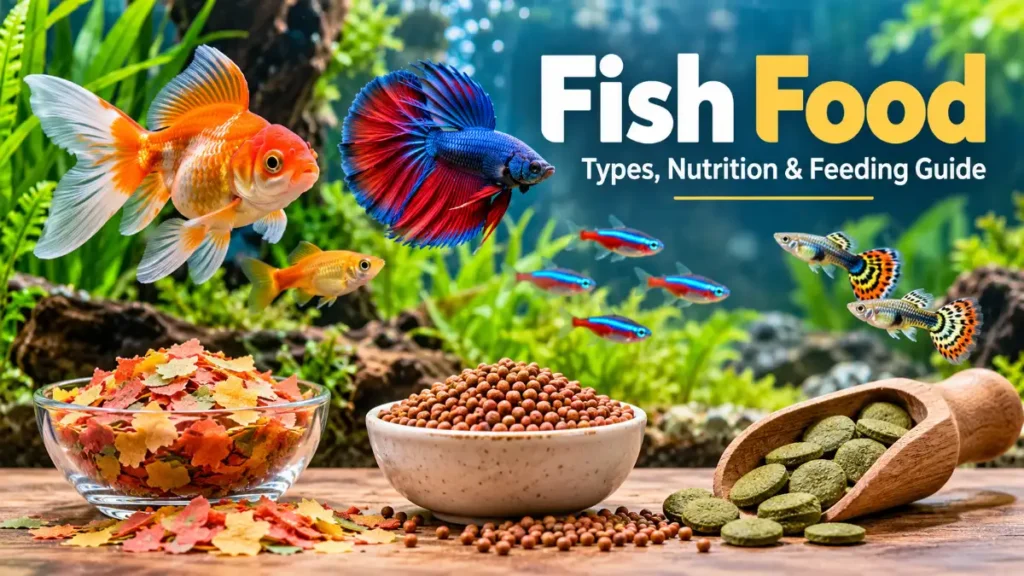
Common Fish Feeding Mistakes
Overfeeding is a major aquarium care mistake. Uneaten food decomposes, increases organic waste, and may contribute to harmful water-quality changes.
Other common mistakes include feeding unsuitable diets, relying exclusively on treats, ignoring bottom feeders, and using spoiled food.
To protect water quality, remove leftover food, maintain biological filtration, test ammonia and nitrite, and perform appropriate partial water changes.
How to Store Fish Food Safely
Store dry food in a tightly sealed container away from moisture, sunlight, and heat.
The Merck Veterinary Manual advises replacing dry food kept at room temperature approximately two months after opening. Frozen products should follow manufacturer storage instructions, and thawed food should not be refrozen.
Discard food showing mold, unusual odors, or moisture damage.
5 FAQs About Fish Food and Health
1. What is the healthiest food for aquarium fish?
The healthiest choice is a nutritionally complete, species-appropriate diet. Goldfish, bettas, and herbivorous fish have different requirements, so their foods should match their natural diets.
2. Can overfeeding cause health problems in fish?
Yes. Excess feeding may contribute to obesity and poor water quality. Decomposing leftovers can increase ammonia and stress fish, potentially making them more vulnerable to illness.
3. Why is my fish not eating food?
Fish may refuse food because of stress, unsuitable water temperature, poor water quality, illness, or inappropriate food. Persistent appetite loss, especially with unusual swimming or breathing, requires veterinary attention.
4. Can fish food improve immunity and coloration?
Balanced nutrition supports normal immune function and healthy coloration. Certain dietary pigments, such as carotenoids, can enhance natural colors in some species. However, food cannot guarantee disease prevention.
5. What happens when fish lack essential nutrients?
Nutritional deficiencies can cause slow growth, poor body condition, skeletal abnormalities, and impaired immune function. Providing an appropriate balanced diet helps reduce these risks.
Conclusion
Choosing suitable fish food is essential for maintaining healthy aquarium fish. Flakes, pellets, frozen foods, live foods, and algae-based products each serve different dietary needs. Select a complete diet appropriate for your species, provide measured meals, and prevent uneaten food from accumulating.