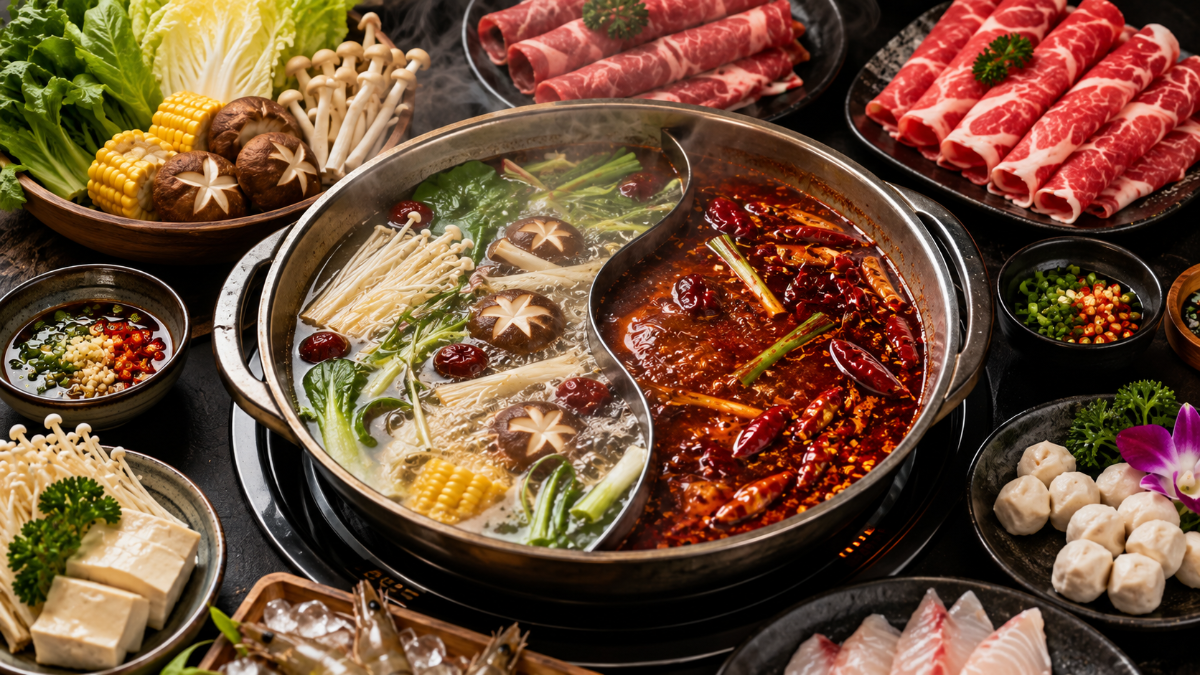
Hotpot is a Chinese table-cooking meal built around a simmering broth, raw ingredients, and individual dipping sauces. Rather than receiving a finished plate, diners cook small portions of meat, seafood, vegetables, tofu, and noodles in the pot as they eat.
For a first attempt, the goal is not to recreate every regional tradition at once. Choose a broth you will enjoy, buy a balanced but manageable selection of ingredients, keep raw and cooked food separate, and let everyone cook at their own pace.
Start With the Meal You Want
The easiest way to plan a Chinese hotpot is to choose the experience first. Do you want a gentle seafood meal, an intensely spicy mala broth, a mushroom-focused vegetarian spread, or a meat-forward dinner centered on beef or lamb?
| If your group wants… | A good direction | What defines it |
| Mild, clean flavors | Beijing-style or Cantonese-style | Clear broth and ingredient-focused cooking |
| Seafood | Cantonese/Guangdong-style | Light stock, seafood, greens, soy-based sauces |
| Thinly sliced beef | Chaoshan beef hotpot | Light beef broth and quick-cooking fresh beef |
| Mushroom depth without major heat | Yunnan-inspired mushroom pot | Mushroom-rich broth with vegetables and tofu |
| Chili plus Sichuan-pepper numbing | Sichuan mala | Chili, huajiao, aromatics, and a rich seasoned base |
| Very intense spice | Chongqing-style | Tallow-forward, chili-heavy mala broth |
A divided yuanyang pot is useful when spice tolerance differs at the table. One side can hold a spicy mala broth while the other holds mushroom, tomato, chicken, or clear stock.
Build the Table in Four Parts
A successful hotpot table does not need dozens of dishes. It needs contrast: something tender, something crisp, something absorbent, and something filling.
1. Choose Your Broth
The broth cooks the food, but it also establishes the meal’s personality.
- Mala broth: A bold Sichuan-style base flavored with dried chilies, Sichuan peppercorns, doubanjiang, ginger, garlic, and spices. It combines heat with the distinctive numbing sensation known as má.
- Clear broth: A lighter option often based on water or stock with ginger and scallion. It works well with lamb, seafood, tofu, and delicate vegetables.
- Mushroom broth: An earthy, savory choice that suits vegetarian tables and diners who prefer umami over heat.
- Tomato broth: Mildly sweet and tangy, often approachable for children or people trying hotpot for the first time.
- Coconut chicken broth: Associated with Hainan-style hotpot, this broth is fragrant, gently sweet, and especially good with chicken and vegetables.
- Sour broth: Guizhou-style sour soups may use fermented tomato and other tart local ingredients for a sharper, brighter flavor profile.
For a first home meal, a ready-made broth concentrate is often the most practical choice. A homemade mala broth can be excellent, but it involves blooming doubanjiang in fat, layering aromatics and whole spices, adding stock, and allowing time for the flavors to infuse.
2. Pick Two or Three Proteins
Choose fewer proteins than you think you need. Hotpot becomes more enjoyable when diners can taste each ingredient rather than trying to finish a crowded table.
Good starting choices include:
- Very thinly sliced beef
- Thinly sliced lamb
- Pork belly
- Shrimp
- Fish fillets suitable for poaching
- Fish balls, shrimp balls, or beef balls
- Dumplings
- Tofu puffs or fish tofu
For a more traditional Sichuan- or Chongqing-inspired table, add beef tripe, duck blood, or huanghou (黄喉), a crisp beef or pork blood-vessel ingredient commonly associated with the aorta.
3. Add Vegetables That Cook Differently
The best vegetable selection includes both quick-cooking and slow-cooking items.
| Ingredient type | Examples | Why it belongs on the table |
| Delicate greens | Bok choy, spinach, tong hao, napa cabbage | Cook quickly and freshen rich broth |
| Mushrooms | Enoki, shiitake, oyster mushrooms | Add texture and absorb broth flavor |
| Root vegetables | Lotus root, daikon, potato | Hold their shape and need longer simmering |
| Sweet additions | Corn, squash | Balance salty or spicy broth |
| Aromatic vegetables | Garlic chives, scallions | Add freshness near the end |
Yunnan mushroom hotpot demonstrates how much flavor mushrooms can bring to the meal. The regional style is known for a gentle broth that lets mushrooms remain the focus rather than burying them under chili heat.
Read More: Chitlins
4. Include Absorbent Ingredients
Tofu and starches are not side dishes in a hotpot. They absorb the broth and help turn a selection of ingredients into a complete meal.
Try a mix of:
- Firm tofu
- Frozen tofu
- Silken tofu
- Tofu skin or dòufǔ pí
- Bean curd sticks, also called yuba
- Konjac noodles or blocks
- Glass noodles
- Wide sweet-potato starch noodles
- Udon
- Rice cakes
- Instant noodles, added near the end
Fish tofu deserves a quick clarification: despite its name, it is usually a processed fish-based product with a soft, tofu-like texture rather than ordinary soybean tofu.
A Simple Formula for Buying Ingredients
For a group of four, start with about two proteins, four to six vegetables or mushrooms, one or two tofu products, and two starches. Add more only if your group has a large appetite or you are serving no other dishes.
| Item | Practical amount for four diners |
| Broth | 3–4 quarts, plus extra stock or water for topping up |
| Protein | 1.5–2 lb across two types |
| Vegetables and mushrooms | 4–6 varieties |
| Tofu and bean products | 1–2 varieties |
| Noodles or starches | 2 choices |
| Dipping sauces | 2–3 components per person |
These are planning estimates, not strict rules. A table that favors seafood may need less red meat, a vegetarian group may want more tofu, mushrooms, and noodles.
Make the Sauce Bar Work for Everyone
The shared broth gives the meal a foundation, but the dipping sauce makes each bite personal. Set out a few base ingredients rather than preparing one large universal sauce.
For rich or spicy broths
A cooling oil-based dip can work well:
- Sesame oil
- Fresh minced garlic
- Cilantro
- Scallion
- A little soy sauce, if desired
This kind of sauce is often associated with Chongqing-style dining because it complements the spicy broth rather than competing with it.
For clear Beijing-style broth
Build a thicker, nutty dip:
- Chinese sesame paste
- Water or warm broth to loosen it
- Fermented bean curd
- Soy sauce
- Sesame oil
- Leek flower sauce, if available
Tahini is a workable substitute for Chinese sesame paste, though it is usually less roasted in flavor.
For seafood-focused broth
Keep the sauce lighter:
- Light soy sauce
- Chopped scallion
- Fresh chili
- Cilantro
- A small splash of vinegar, if desired
Make small bowls first. It is much easier to add garlic, chili, or sesame paste than to rescue an overly salty or overly spicy sauce.
Set Up the Cooking Zone
The table arrangement affects safety and enjoyment more than most first-timers expect.
Place the burner securely at the center with the pot stable on top. Keep broth below the rim so it has room to bubble once food is added. Arrange raw meat and seafood on separate plates, keep vegetables on their own trays, and give each diner a sauce bowl and eating bowl.
You will also need:
- A ladle for adding broth
- A slotted spoon or small wire strainer for retrieving food
- Dedicated raw-food tongs or chopsticks
- Separate eating chopsticks
- Small plates for cooked food
- Napkins, especially for spicy broth splashes
Do not use personal eating chopsticks to handle uncooked meat. Keeping raw-food tools separate limits cross-contamination and prevents confusion once the meal is underway.
Cook by Texture, Not by a Rigid Sequence
Hotpot works best when diners add ingredients in small batches. The right order is less about tradition than understanding what needs time and what does not.
| Add when | Ingredients | What to watch for |
| Early in the meal | Daikon, lotus root, potato, corn | Need time to become tender |
| Early or mid-meal | Tofu, bean curd sticks, mushrooms | Improve as they absorb broth |
| Just before eating | Thin beef, lamb, pork belly | Cook through quickly, avoid overcrowding |
| Near the end | Leafy greens | Wilt fast and can become soft if left too long |
| Last | Noodles, rice cakes, dumplings | Can thicken the broth or require package timing |
A thin slice of beef may cook rapidly, but time alone is not a universal food-safety measure. Thickness, broth temperature, and the amount of food in the pot all affect how quickly it cooks.
Keep Food Safety Part of the Ritual
Hotpot involves raw ingredients at the table, so good handling practices matter.
US FoodSafety.gov guidance lists these minimum internal temperatures:
- Whole cuts of beef, pork, lamb, and veal: 145°F (63°C), followed by a 3-minute rest
- Ground meat: 160°F (71°C)
- Poultry: 165°F (74°C)
- Fish: 145°F (63°C)foodsafety+1
For thicker pieces, a food thermometer is more reliable than judging by color or counting seconds. Shellfish should be thoroughly cooked, discard clams, mussels, or oysters that remain closed after cooking.
Keep the broth actively simmering or boiling, but avoid dropping in so much food that the temperature falls sharply. Once cooked food has touched a personal bowl or someone’s mouth, it should not return to the shared pot.
After the meal, refrigerate perishable leftovers within two hours, when the ambient temperature is above 90°F (32°C), the recommended window is one hour. Store leftovers in shallow containers so they cool more quickly.foodsafety+1
Use Regional Styles as Inspiration, Not Rules
Chinese hotpot is not one standardized cuisine. Regional labels are helpful because they explain recurring patterns, but restaurants and households adapt them constantly.
Beijing-style hotpot
This style is often associated with a chimney-shaped copper pot, a restrained broth, thin mutton, and sesame paste. The broth stays simple so the meat and dipping sauce do most of the work.
Cantonese and Guangdong hotpot
Cantonese versions often highlight seafood in a gentle chicken or pork-based stock. Fresh shrimp, fish, squid, crab, fish balls, leafy greens, and light sauces are common choices.
Chaoshan beef hotpot
Chaoshan hotpot is prized for fresh beef cooked briefly in a light beef broth. Its stripped-back approach can feel familiar to shabu-shabu diners, but it remains a distinct Chinese regional tradition with its own cuts, sauces, and eating habits.
Sichuan and Chengdu hotpot
Sichuan mala broths build flavor from chili, Sichuan peppercorn, doubanjiang, and aromatics. Many Chengdu-style versions aim for fragrance and layered spice, and divided pots are a practical option for mixed groups.
Chongqing hotpot
Chongqing is strongly associated with a rich, tallow-based spicy broth, a dense red chili oil layer, and ingredients such as tripe, duck blood, and huanghou. Traditional single-broth presentations are common, though restaurants vary in format.
Hainan, Guizhou, and Yunnan
Hainan coconut chicken hotpot offers a sweet, aromatic broth. Guizhou sour hotpot brings fermented tang. Yunnan mushroom hotpot focuses on fungi and savory depth. Together, these traditions show why “hotpot” should never be treated as shorthand for only one spicy red broth.
What Hotpot Says About Eating Together
The cultural appeal of hotpot is not merely that diners share one pot. It is that the meal makes room for individual choice inside a group setting. One person can eat tripe, another can stay with tofu and mushrooms, and someone else can use only the mild side of a divided pot. Everyone shares the table without being forced into the same plate.
That flexibility makes hotpot especially useful for mixed groups, long meals, family occasions, and gatherings where people have different appetites or dietary preferences. It also explains why a well-run meal feels relaxed: the pot keeps moving, but no one has to finish at the same speed.
Frequently Asked Questions
Can I use regular soup stock for hotpot?
Yes. Chicken, vegetable, beef, or mushroom stock can all become a good hotpot base. Season it gradually with ginger, scallion, garlic, soy sauce, dried mushrooms, tomato, or chili according to the style you want. Use a broth that tastes slightly stronger than you would serve as ordinary soup, because added ingredients and extra liquid from vegetables can dilute it during the meal.
What should I serve alongside hotpot?
Hotpot can stand alone, but simple sides are useful. Consider steamed rice, chilled cucumbers, pickled vegetables, cold noodles, or a light salad to offset a rich mala broth. Avoid serving too many heavy fried dishes or rich meat courses beforehand, the table already provides plenty of substance. Drinks such as tea, sparkling water, or chilled nonalcoholic beverages can help diners reset between spicy bites.
Why is Sichuan peppercorn different from black pepper?
Sichuan peppercorn is not closely related to black pepper. It creates a citrusy aroma and a distinctive tingling or numbing sensation called má, while black pepper delivers a more familiar sharp heat. Chili supplies the “lá” heat in málà, Sichuan peppercorn supplies the “má.” Replacing it with black pepper changes the character of a mala broth rather than reproducing it.
Can I make hotpot entirely vegetarian or vegan?
Yes. Use mushroom, tomato, vegetable, or vegetable-oil mala broth, then build the table around tofu, tofu skin, bean curd sticks, mushrooms, leafy greens, lotus root, corn, squash, noodles, and dumplings made without animal ingredients. Check packaged broth bases, sauces, and dumplings carefully, as some contain meat stock, animal fat, seafood, egg, or dairy. Tofu, yuba, and vegetables are all common components of plant-based hotpot spreads.
What should I do when the broth becomes too salty?
Add unsalted stock or hot water in small increments, then allow the broth to return to a simmer before tasting again. Adding more salty condiments, broth concentrate, or cured ingredients will make the problem worse. You can also shift toward vegetables, tofu, and noodles, which dilute the impact of a salty broth more effectively than adding more marinated meat.
Is it safe to drink leftover hotpot broth?
It can be, provided the meal was handled safely and the broth has not been left at room temperature too long. Keep in mind that it may become saltier and richer as starch, meat juices, oils, and seasonings accumulate. Strain it if desired, cool it promptly, and refrigerate it in shallow containers. When reheating, bring it back to a full boil before serving.
Why does a hotpot broth become oily?
Oil can come from the broth base, particularly mala bases made with beef tallow or oil, and from fatty ingredients such as pork belly, beef, and meatballs. An oily surface is expected in many Chongqing- and Sichuan-style broths. If you prefer a lighter meal, choose a clear mushroom, tomato, or seafood broth and select lean proteins, vegetables, and tofu.
Can children eat hotpot?
Yes, with adult supervision and a mild broth. Keep children away from the burner and boiling pot, cook their food thoroughly, and transfer cooked pieces to a separate bowl so they can cool before eating. Avoid very spicy mala broth unless the child already enjoys spicy food. A divided pot with a mild side is usually the simplest family-friendly setup.
How do I avoid wasting ingredients at the end?
Put out only part of each ingredient tray at first and replenish as needed. This keeps raw food colder and gives you a clearer sense of what the group will actually eat. Save untouched raw ingredients promptly in the refrigerator, but discard foods that have sat at room temperature too long. Planning around vegetables, tofu, and noodles also helps reduce waste because they can often be repurposed in soup or stir-fries.
What is the best beginner-friendly broth?
Tomato, mushroom, chicken, or mild clear broth are usually the easiest entry points because they let diners taste the ingredients without overwhelming heat. If the group wants to try mala, choose a divided pot with one mild broth and one low- or medium-spice mala side. That arrangement lets everyone experience the defining chili-and-Sichuan-pepper profile while still having a comfortable alternative.