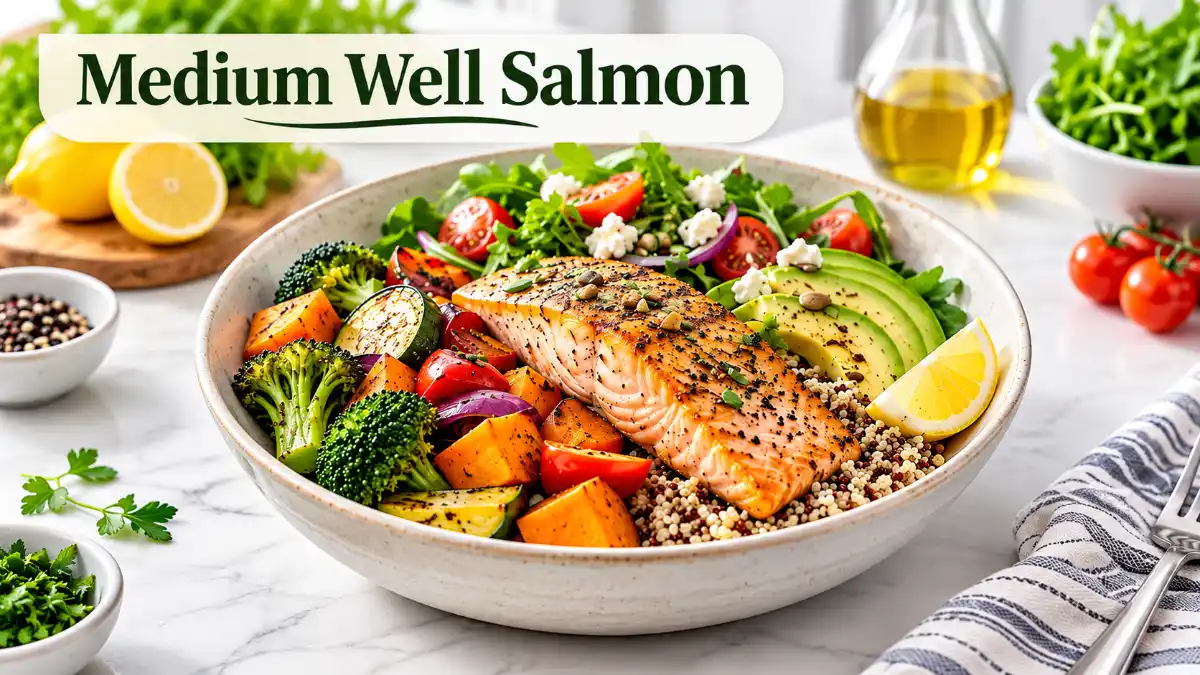
Medium well salmon is salmon cooked until the flesh becomes mostly opaque, noticeably firm, and lightly pink in the center. In culinary cooking guides, medium-well salmon is commonly associated with an internal temperature of approximately 135–140°F (57–60°C). However, this is below the U.S. Food and Drug Administration’s recommended safe minimum temperature of 145°F (63°C) for finfish.
Salmon is an excellent source of protein, omega-3 fatty acids, vitamin B12, and other essential nutrients. Preparing it properly helps preserve its appealing texture while reducing the risk of foodborne illness.
Understanding cooking temperatures, color changes, and texture differences makes it easier to prepare salmon confidently. The most important distinction is that culinary doneness preferences and official food safety recommendations are not always the same.
What Is Medium Well Salmon?
Medium well salmon describes a level of cooking between medium and well-done. Its flesh is firmer and less translucent than medium-cooked salmon but generally retains more moisture than heavily cooked fish.
At this stage, the outside is opaque, the muscle layers separate more easily, and the center may retain a light pink appearance.
Common characteristics include:
- Temperature: Approximately 135–140°F in some culinary guides.
- Color: Mostly opaque pink or peach, depending on the salmon species.
- Texture: Firm, flaky, and moderately moist.
- Appearance: A cooked exterior with little or no visible translucency.
- Flavor: Rich and savory, although prolonged heating can reduce moisture.
These descriptions are culinary guidelines rather than standardized safety categories. For safer home preparation, the FDA recommends cooking salmon to 145°F.
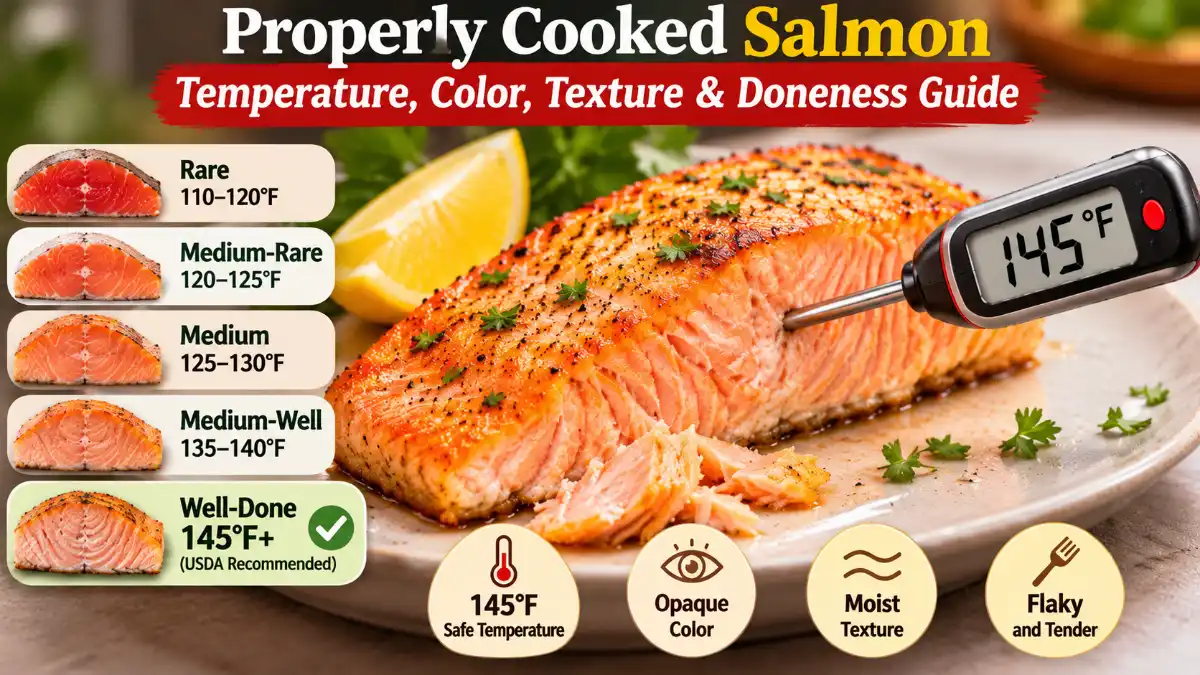
Salmon Temperature and Doneness Chart
Different temperatures produce noticeable changes in salmon’s texture and appearance.
| Doneness level | Approximate internal temperature | Typical texture |
| Rare | 110–115°F (43–46°C) | Very soft, translucent center |
| Medium-rare | 115–125°F (46–52°C) | Soft, moist, partly translucent |
| Medium | 125–135°F (52–57°C) | Tender, partly opaque |
| Medium-well | 135–140°F (57–60°C) | Firmer, mostly opaque |
| FDA-recommended minimum | 145°F (63°C) | Opaque, readily flakes |
| Beyond 145°F | Above the recommended minimum | Increasingly firm; may become dry |
These culinary temperature ranges are approximate and vary between cooking guides. Temperatures below 145°F do not meet the FDA’s recommended minimum for finfish.
Read also: Cooked Salmon Temp: Safe Internal Temperature and Health Guide
5 Signs of Medium Well Salmon
Knowing what to look for can help you understand how salmon changes during cooking.
1. The Flesh Looks Mostly Opaque
Raw salmon has a glossy, translucent appearance. As it cooks, its proteins change structure and the flesh becomes more opaque.
Medium-well salmon generally looks cooked throughout, although some varieties retain a noticeable pink color.
2. The Texture Feels Firmer
Medium-well salmon has a firmer texture than medium or rare salmon.
Gently press the thickest part with a fork. The flesh should offer some resistance without feeling extremely hard or rubbery.
3. The Layers Separate Easily
Salmon contains natural muscle segments that become easier to separate as cooking progresses.
A fork should gently divide the fish into flakes. However, flaking alone cannot confirm that it has reached a safe temperature.
4. The Center Has Limited Translucency
Medium-well salmon typically has little visible translucency in the center.
The interior may appear light pink or peach rather than the darker, glossy appearance associated with raw salmon.
5. The Internal Temperature Is Measured
A digital food thermometer provides the most accurate measurement.
Insert the probe into the thickest part of the fillet, avoiding bones and the cooking surface. Although medium-well culinary guides often describe 135–140°F, continue cooking to 145°F to meet FDA recommendations.
What Color Should Salmon Be When Cooked?
If you’re wondering what color should salmon be when cooked, the answer depends on the species, natural pigmentation, and cooking method. Properly cooked salmon generally changes from a translucent, glossy appearance to opaque pink, peach, or orange flesh. Atlantic salmon often looks light pink after cooking, while sockeye salmon can retain a deeper reddish-orange color. Grilled or pan-seared salmon may also develop a browned exterior. Salmon does not need to turn completely white to be thoroughly cooked. Because natural color varies, the safest way to check cooking completion is with a food thermometer reading of 145°F.
Salmon Doneness: How to Check It Correctly
Understanding salmon doneness involves examining internal temperature, texture, and appearance together. Raw salmon is generally soft and translucent, while cooking causes its proteins to firm up and the flesh to become more opaque. Culinary terms such as medium, medium-well, and well-done describe these texture differences, but they are not official food safety classifications. A food thermometer remains the most dependable tool for evaluating doneness. According to the FDA’s safe food handling guidance, finfish should reach 145°F, or display opaque flesh that separates easily with a fork when a thermometer is unavailable.
Salmon Medium Rare vs. Medium Well: Key Differences
Salmon medium rare has a softer texture and a more translucent center than medium-well salmon. Culinary guides commonly associate medium-rare salmon with temperatures around 115–125°F, although exact ranges differ. Medium-well salmon, typically described around 135–140°F, becomes firmer, more opaque, and somewhat less moist. Some diners prefer the softer texture of medium-rare fish, but eating salmon below 145°F carries additional food safety risks. Freezing can help control certain parasites under specified conditions, but it does not eliminate every foodborne hazard. Pregnant people, young children, older adults, and individuals with weakened immune systems should avoid raw or undercooked seafood.
Best Ways to Cook Salmon Without Drying It Out
Salmon cooks relatively quickly, so careful temperature control is important for maintaining moisture.
Baking Salmon in the Oven
Baking offers relatively even heat and works well for thicker fillets.
- Preheat the oven to 400°F.
- Place salmon on a lined baking tray.
- Brush lightly with olive oil.
- Season with herbs, lemon, and black pepper.
- Bake for approximately 12–15 minutes, depending on thickness.
- Check the thickest part with a thermometer and cook until it reaches 145°F.
Cooking times are estimates. Thick fillets may require additional time.
Pan-Searing Salmon
Pan-searing creates a lightly browned exterior while allowing control over cooking.
Heat a small amount of oil in a skillet over medium heat. Place the salmon skin-side down and cook until the lower portion becomes opaque.
Turn carefully if needed, reduce the heat, and continue cooking until the center reaches the recommended temperature.
Grilling Salmon
Grilling can add a smoky flavor and attractive browned surface.
Preheat the grill to medium heat, clean the grates, and lightly oil them to reduce sticking.
Place the salmon on the grill and cook gently, checking the internal temperature rather than relying on grill marks or cooking time alone.
Steaming Salmon
Steaming is useful for people who prefer tender fish without much added oil.
Place salmon in a covered steamer over simmering water. Allow it to cook until the thickest portion reaches 145°F.
Avoid unnecessarily prolonged cooking, which can make the texture firmer.
Health Benefits of Properly Cooked Salmon
Salmon provides several nutrients that contribute to overall health.
Supports Cardiovascular Health
Salmon contains EPA and DHA, two important omega-3 fatty acids.
The American Heart Association recommends consuming fish, particularly fatty fish, twice weekly as part of a heart-healthy eating pattern.
Provides High-Quality Protein
Salmon contains complete protein with all nine essential amino acids.
Adequate protein intake helps support muscle maintenance, tissue repair, and normal growth.
Supports Brain and Nerve Function
Vitamin B12 contributes to normal nerve function, while DHA is an important structural component of the brain.
Salmon provides both nutrients as part of a varied diet.
Contributes to Bone Health
Salmon naturally contains vitamin D, which helps the body absorb calcium and maintain healthy bones.
Cooking salmon to the recommended temperature can reduce foodborne illness risks without eliminating its overall nutritional value.
Food Safety Tips for Cooking and Storing Salmon
Safe preparation begins before salmon reaches the cooking pan.
The FDA seafood safety guidelines recommend careful seafood storage, preparation, and cooking.
FDA
Follow these practices:
- Refrigerate raw salmon at 40°F (4°C) or below.
- Cook or freeze refrigerated raw fish within one to two days.
- Thaw frozen salmon in the refrigerator rather than on the countertop.
- Keep raw fish separate from ready-to-eat foods.
- Wash hands and utensils after handling raw seafood.
- Refrigerate cooked salmon within two hours, or one hour when temperatures exceed 90°F.
- Consume refrigerated cooked salmon within three to four days.
- Reheat leftovers to 165°F (74°C).
Discard salmon with sour, rancid, or ammonia-like odors. However, remember that dangerous bacteria may be present even when fish smells normal.
Ask USDA+2
Frequently Asked Questions
1. What temperature is medium well salmon?
Medium-well salmon is commonly described in culinary guides as reaching approximately 135–140°F (57–60°C). However, the FDA recommends cooking salmon to 145°F (63°C) for food safety.
2. Can medium well salmon still be pink inside?
Yes. Medium-well salmon may have a light pink or peach-colored center. Natural pigmentation varies by species, so a pink appearance does not necessarily mean the fish is raw or unsafe. Check its internal temperature.
3. Is medium well salmon safe to eat?
Medium-well salmon cooked to 135–140°F is below the FDA’s recommended minimum temperature. Eating it may carry additional foodborne illness risks. Cooking salmon to 145°F is the safer recommendation.
4. How can you tell if salmon is overcooked?
Overcooked salmon often feels unusually firm, dry, or rubbery. Its flakes may separate excessively, and the surface may show substantial white albumin. These signs indicate texture changes rather than a specific unsafe cooking temperature.
5. Is medium rare salmon healthier than medium well salmon?
There is no reliable basis for claiming that medium-rare salmon is generally healthier than medium-well salmon. Both provide valuable nutrients, but undercooked salmon carries additional food safety risks. Cooking to 145°F is the recommended approach for reducing those risks.
Final Thoughts
Medium well salmon generally has a mostly opaque appearance, a firm but relatively moist texture, and a lightly pink center. Culinary guides commonly describe this doneness level at 135–140°F, but that range is below the FDA-recommended safe minimum.
For safer preparation, cook salmon to 145°F (63°C) and verify the temperature with a food thermometer.
Whether you bake, grill, steam, or pan-sear salmon, careful cooking and proper storage can help preserve its flavor, nutritional benefits, and overall quality.