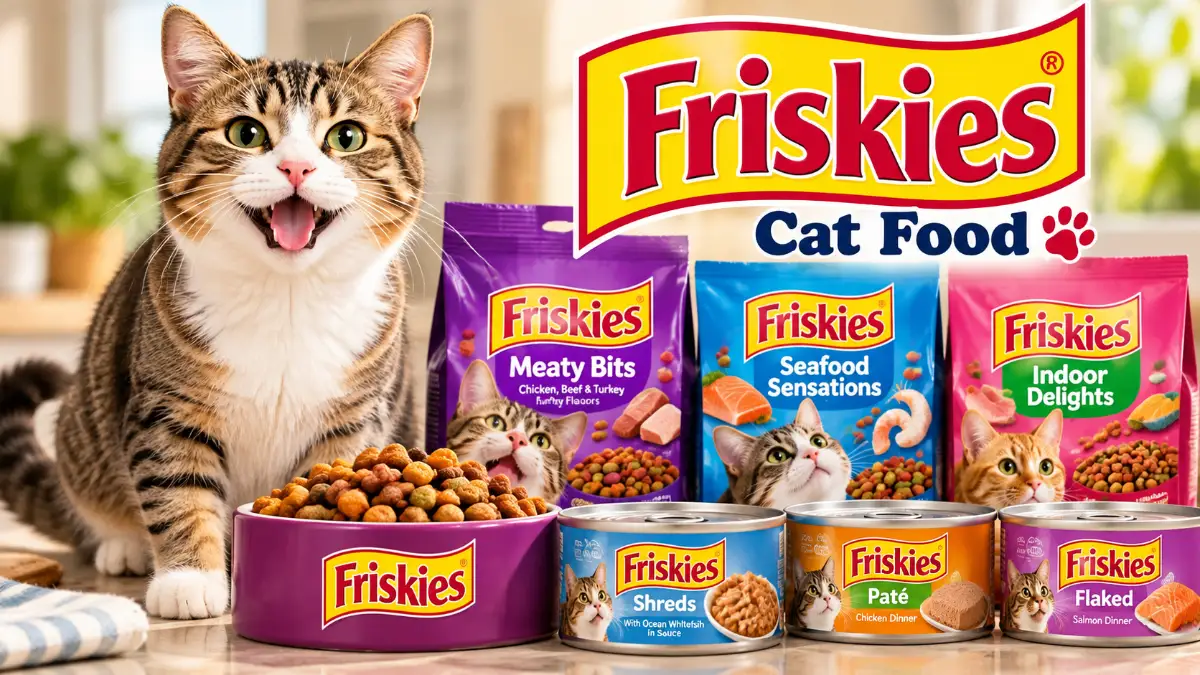
Friskies cat food is an affordable pet food brand made by Purina, offering wet and dry recipes designed to provide complete and balanced nutrition for cats. Many Friskies formulas contain protein, fats, vitamins, minerals, and taurine to support everyday health. However, the best choice depends on your cat’s age, weight, activity level, and medical needs.
Friskies is a practical option for many healthy cats, but not every formula suits every pet. Understanding its ingredients, nutritional benefits, potential drawbacks, and feeding recommendations can help you make an informed decision.
What Is Friskies Cat Food?
Friskies is a cat food brand manufactured by Nestlé Purina PetCare. The brand offers several flavors and textures, including crunchy kibble, pâté, shredded meat, and gravy-based wet food.
According to Purina’s official Friskies FAQ, its wet and dry food recipes are formulated to provide complete and balanced nutrition.
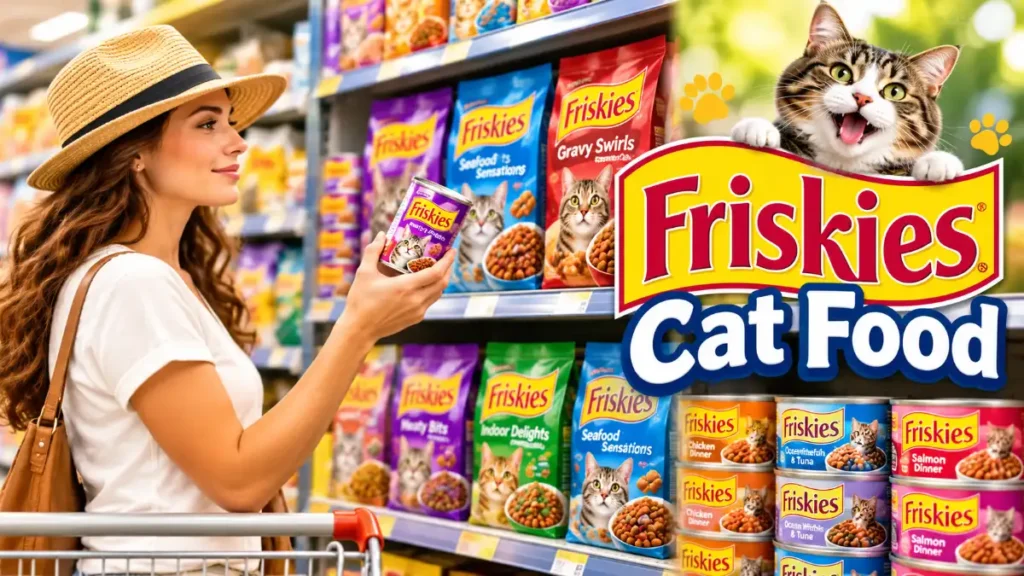
Friskies products are widely available in supermarkets, pet stores, and online retailers across the United States.
Its main appeal is affordability, convenient feeding, and a broad selection of flavors.
Types of Friskies Cat Food
Friskies offers different food options based on cats’ eating preferences and nutritional needs.
Dry recipes provide crunchy kibble that is easy to measure and store. Popular varieties include Seafood Sensations, Surfin’ & Turfin’ Favorites, and Farm Favorites.
Wet food comes in pâté, shreds, filets, and gravy-based varieties. Its higher moisture content can help support daily hydration, especially for cats that drink little water.
Friskies Party Mix and other treats offer additional flavor and variety. Owners should follow each product’s feeding instructions rather than assuming treats can replace regular meals.
Read Also: Seal Point Siamese Cat: Complete Buying Guide, Personality, Care and Ownership Experience
Friskies Cat Food Ingredients and Nutritional Value
Friskies ingredients vary depending on the recipe. Common ingredients across its product range include:
- Animal protein sources: Chicken, beef, fish, liver, and meat by-products.
- Grains and plant ingredients: Corn, wheat, soy, and other carbohydrate sources.
- Fats: Supply energy and essential fatty acids.
- Taurine: An essential amino acid for normal heart and vision function.
- Vitamins and minerals: Support overall nutritional requirements.
- Added flavors and colors: Present in certain recipes.
For example, the published Friskies Farm Favorites dry food label lists a minimum of 30% crude protein and 10.5% crude fat. These figures are specific to that recipe and should not be applied to every Friskies product.
Cats are obligate carnivores and need essential nutrients from animal sources. The Cornell Feline Health Center recommends checking nutritional adequacy statements and ingredient labels when selecting food.
Is Friskies Cat Food Good for Cats?
Yes, Friskies cat food can be a suitable daily diet for many healthy cats when the selected recipe is complete and balanced for their life stage.
Its main advantages include accessible pricing, multiple flavors, and formulas containing essential nutrients.
However, some recipes contain substantial grain ingredients, animal by-products, artificial coloring, or added flavors. These ingredients do not automatically make food unsafe, but owners should evaluate the overall formulation and their cat’s individual tolerance.
Cats with kidney disease, diabetes, diagnosed food allergies, or urinary conditions may require specially formulated diets recommended by a veterinarian.
Benefits of Friskies Cat Food
Friskies provides several practical nutritional and feeding advantages.
Complete nutrition: Appropriate formulas provide essential nutrients for their intended life stage.
Protein intake: Animal-derived ingredients contribute amino acids needed for normal body maintenance.
Hydration support: Wet varieties contain significant amounts of water, contributing to daily fluid intake.
Flavor variety: Multiple textures and flavors may appeal to selective eaters.
Affordability: Its broad availability and budget-friendly positioning make regular feeding more accessible.
These benefits depend on selecting the correct recipe and feeding appropriate portions.
Potential Health Concerns and Drawbacks
Although Friskies can meet established nutritional standards, there are several considerations.
Weight gain: Overfeeding calorie-dense dry food can contribute to obesity. Excess weight increases the risk of diabetes and joint problems.
Food sensitivities: Certain cats may react to specific proteins or other ingredients. Persistent itching, vomiting, or diarrhea requires veterinary evaluation.
Low moisture in dry food: Cats eating mainly kibble must obtain more water through drinking.
Medical dietary restrictions: Regular maintenance diets are not substitutes for veterinary therapeutic diets.
According to Cornell’s feline obesity guidance, maintaining a healthy body weight is important for preventing nutrition-related health complications.
Friskies Wet vs. Dry Cat Food: Which Is Better?
Both options can provide adequate nutrition, but they have different advantages.
| Feature | Wet Food | Dry Food |
| Moisture | Higher | Lower |
| Storage | Refrigerate after opening | Easier to store |
| Texture | Soft | Crunchy |
| Feeding | Portion-controlled meals | Convenient measuring |
| Hydration | Adds more water | Requires more drinking water |
| Cost | Generally higher per calorie | Generally lower per calorie |
Wet food may be particularly useful for cats needing additional dietary moisture. Dry food offers convenience and can also support a balanced diet when portioned correctly.
How Much Friskies Cat Food Should You Feed?
The appropriate amount depends on your cat’s body weight, life stage, calorie requirements, and the specific product.
Start with the feeding instructions printed on the package, then adjust portions to maintain an ideal body condition.
Healthy adult cats can generally eat one or two meals daily. Kittens often require more frequent feeding because they are growing.
If you combine wet and dry Friskies food, calculate the calories from both rather than serving full portions of each.
Always provide fresh drinking water and consult your veterinarian if your cat is gaining or losing weight unexpectedly.
How to Switch Your Cat to Friskies Safely
Introduce Friskies gradually to reduce the chance of digestive upset.
A common transition schedule is:
- Days 1–2: 25% Friskies and 75% current food.
- Days 3–4: 50% of each food.
- Days 5–6: 75% Friskies and 25% current food.
- Day 7 onward: 100% Friskies if tolerated.
Some cats need a slower transition, particularly those with sensitive digestion. Contact your veterinarian if vomiting, diarrhea, or loss of appetite develops.
FAQs About Friskies Cat Food and Cat Health
1. Is Friskies cat food healthy for everyday feeding?
Yes. Complete and balanced Friskies formulas can meet everyday nutritional needs when appropriate for a cat’s life stage. Portion control and individual health requirements remain important.
2. Can Friskies cat food cause kidney problems?
There is no basis for concluding that all Friskies food causes kidney disease. However, cats with existing kidney disease often need specific nutrient adjustments. A veterinarian should recommend an appropriate diet.
3. Is Friskies wet cat food better for urinary health?
Wet food supplies additional moisture, which can support hydration and more dilute urine. However, regular Friskies wet food is not a treatment for urinary disease. Urinary symptoms require veterinary assessment.
4. Can Friskies cat food cause allergies or digestive problems?
Some cats can develop adverse reactions to ingredients found in commercial cat foods, including particular animal proteins. Persistent itching, diarrhea, or vomiting should be investigated by a veterinarian rather than automatically blamed on one brand.
5. Is Friskies cat food safe for kittens and senior cats?
It depends on the recipe. Kittens need food formulated for growth or all life stages. Healthy senior cats may tolerate adult maintenance recipes, but cats with age-related health conditions may require different nutrition.
Final Verdict: Should You Choose Friskies Cat Food?
Friskies cat food is a reasonable, affordable choice for many healthy cats when its nutritional formulation matches their age and individual requirements. Its wet and dry varieties offer convenient options, while wet recipes can provide useful additional moisture.
The most important factors are choosing a complete and balanced formula, controlling calories, maintaining hydration, and monitoring your cat’s health. For cats with existing medical conditions, seek veterinary guidance before changing their diet.