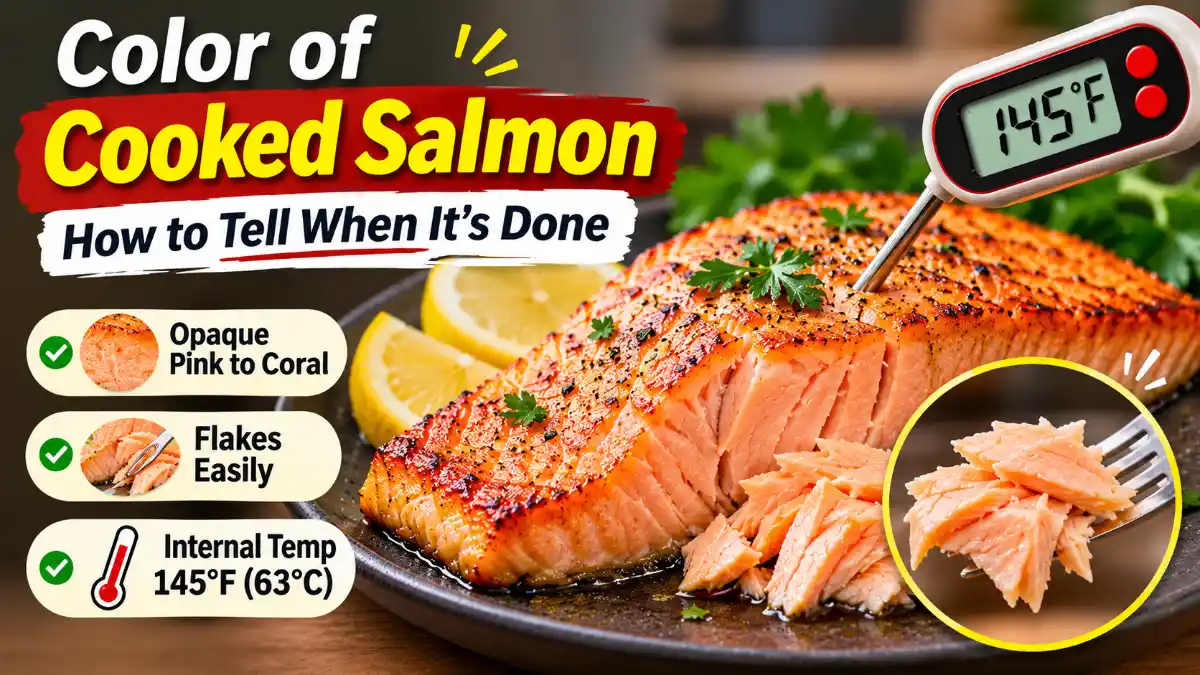
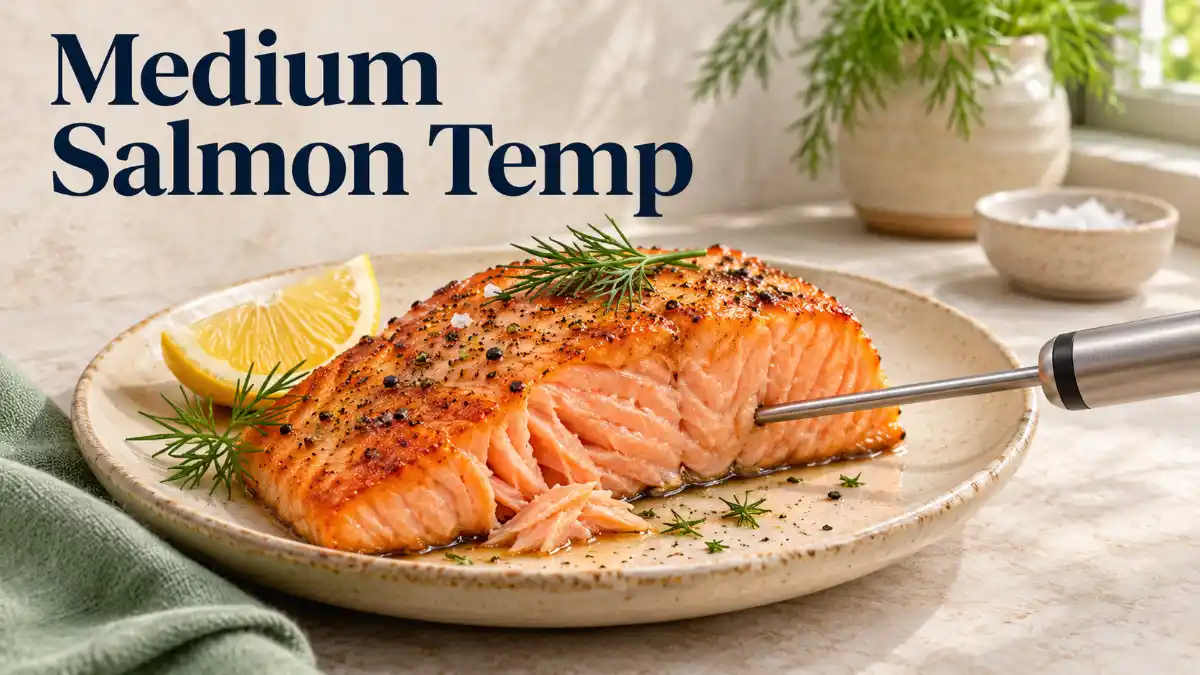
The ideal medium salmon temp is approximately 125–130°F (52–54°C), producing a tender, juicy texture with a slightly translucent center. However, the U.S. Food and Drug Administration (FDA) recommends cooking salmon to an internal temperature of 145°F (63°C) for food safety.
Salmon is rich in protein, omega-3 fatty acids, and essential vitamins, making it a nutritious addition to a balanced diet. Understanding cooking temperatures helps you enjoy its flavor while reducing the risks associated with undercooked seafood.
This guide explains salmon temperatures, safe cooking methods, nutrition, thermometer use, and storage precautions.
What Is the Ideal Medium Salmon Temp?
Medium salmon generally has a moist, tender texture and a center that is not completely opaque. Many chefs prefer this level of doneness because prolonged cooking can make salmon firm and dry.
However, culinary doneness preferences and food safety recommendations are different.
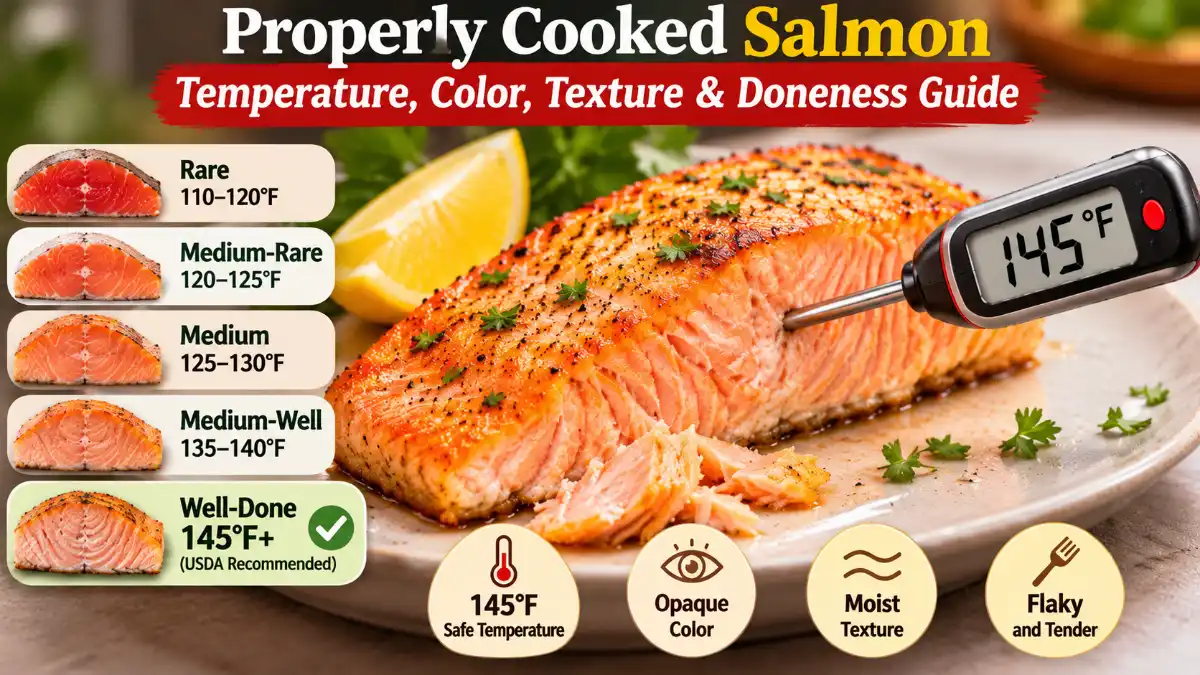
| Doneness Level | Internal Temperature | Appearance and Texture |
| Rare | 110–120°F (43–49°C) | Very soft, translucent center |
| Medium-rare | 120–125°F (49–52°C) | Moist, mostly translucent |
| Medium | 125–130°F (52–54°C) | Tender, slightly translucent |
| Medium-well | 130–140°F (54–60°C) | Firmer, mostly opaque |
| FDA-recommended | 145°F (63°C) | Fully cooked, opaque and flaky |
These culinary ranges are approximate, not official food safety classifications.
According to the FDA’s safe food handling guidelines, fin fish should reach 145°F internally or have opaque flesh that separates easily with a fork.
Is Medium Salmon Safe to Eat?
Salmon cooked to medium is below the FDA-recommended internal temperature. Although restaurants sometimes serve salmon with a translucent center, undercooked fish can contain harmful bacteria or parasites.
The degree of risk depends on seafood sourcing, handling, freezing, storage, and preparation. Fresh appearance alone does not establish safety.
Who Should Avoid Undercooked Salmon?
Certain groups face a higher risk of serious foodborne illness:
- Pregnant women
- Young children
- Older adults
- People with weakened immune systems
- Individuals receiving immune-suppressing treatments
These individuals should choose thoroughly cooked salmon.
Previously frozen salmon is not automatically safe to eat undercooked. Freezing can control certain parasites under specified conditions but does not reliably eliminate every harmful microorganism.
How to Check Salmon Temperature Correctly
An instant-read digital food thermometer provides a more dependable measurement than checking color alone.
- Insert the thermometer into the thickest part of the fillet.
- For thin fillets, insert the probe horizontally from the side.
- Position the sensing tip near the center without touching the pan.
- Wait until the temperature reading stabilizes.
- Check another thick section if necessary and continue cooking until the recommended temperature is reached.
Important: A pink center does not necessarily mean salmon is undercooked. Different salmon species retain different colors after cooking.
What Is Carryover Cooking?
Carryover cooking occurs when heat from the outer layers continues moving toward the center after food is removed from the heat source.
Salmon’s internal temperature may rise slightly while resting, especially with thick fillets cooked at high temperatures.
However, carryover increases vary. Removing salmon at 125°F and assuming it will reach 145°F is not a reliable food safety practice.
To confirm safe doneness, measure the thickest section and verify that it reaches 145°F.
Read Also: Cooked Salmon Color Chart: Raw, Cooked, and Overcooked
Best Ways to Cook Salmon Without Drying It Out
You can prepare flavorful, fully cooked salmon using controlled heat and a thermometer.
1. Oven-Baked Salmon
Preheat the oven to 375°F (190°C). Place the salmon on a baking sheet and season with olive oil, lemon, garlic, and herbs.
Bake for approximately 12–20 minutes, depending on thickness. Confirm that the center reaches 145°F.
2. Pan-Seared Salmon
Heat a lightly oiled skillet over medium heat. Cook the salmon skin-side down until the skin becomes crisp.
Turn carefully, lower the heat if necessary, and cook until the internal temperature reaches 145°F.
3. Air Fryer Salmon
Preheat the air fryer to 375°F. Arrange the fillets in a single layer.
Cook for approximately 7–12 minutes, checking thick pieces with a thermometer. Actual cooking time depends on fillet size and the appliance.
Health Benefits of Eating Properly Cooked Salmon
Salmon contains several nutrients that support normal bodily functions. Its nutritional value remains substantial when thoroughly cooked.
Supports Heart Health
Salmon provides EPA and DHA, two important omega-3 fatty acids.
Evidence reviewed by the FDA indicates that eating fish as part of a healthy dietary pattern may benefit cardiovascular health.
Provides High-Quality Protein
Salmon contains complete protein, including essential amino acids needed for muscle maintenance and tissue repair.
Pairing salmon with vegetables and whole grains creates a nutrient-rich meal.
Supports Brain Function
DHA contributes to normal brain function and development, especially during pregnancy and early childhood.
Pregnant individuals can obtain these nutritional benefits from fully cooked, lower-mercury salmon.
Supplies Vitamins and Minerals
Salmon provides vitamin B12, vitamin D, selenium, and other essential nutrients.
These nutrients contribute to normal nerve function, immune activity, and bone health.
Does Cooking Temperature Affect Salmon Nutrition?
Cooking changes salmon’s texture, moisture content, and some heat-sensitive nutrients.
Higher heat and prolonged cooking can increase moisture loss, but salmon cooked to 145°F still provides protein, omega-3 fatty acids, and important vitamins.
Choosing a lower medium salmon temp is not necessary to obtain salmon’s nutritional benefits.
Appropriate cooking, balanced portions, and safe food handling are more important than maintaining a particular translucent texture.
Food Safety: How to Store and Handle Salmon
Following proper storage practices helps reduce contamination and spoilage.
- Refrigerate raw salmon at 40°F (4°C) or below.
- Cook or freeze refrigerated fresh salmon within two days of purchasing it.
- Thaw frozen salmon in the refrigerator, not on the countertop.
- Keep raw seafood separate from cooked food and fresh produce.
- Wash hands, utensils, and cutting boards after handling raw fish.
- Refrigerate cooked salmon within two hours, or within one hour when temperatures exceed 90°F.
- Consume refrigerated cooked leftovers within three to four days.
If salmon smells sour, rancid, or ammonia-like, discard it. However, harmful bacteria may be present even without an unusual smell.
For additional information, see the FDA seafood selection and storage recommendations.
How Often Should You Eat Salmon?
Salmon belongs to the FDA’s lower-mercury Best Choices seafood category.
General dietary guidance recommends at least eight ounces of seafood weekly for adults following a 2,000-calorie eating pattern.
People who are pregnant or breastfeeding are advised to consume 8–12 ounces of varied, lower-mercury seafood weekly.
Portions and nutritional needs vary by age and individual circumstances.
Read the FDA’s advice about eating fish for serving recommendations and mercury information.
Frequently Asked Questions
1. What temperature is medium salmon?
Medium salmon is generally cooked to 125–130°F (52–54°C). This produces a moist, tender texture but remains below the FDA-recommended safe temperature.
2. Is salmon safe at 125°F?
Salmon cooked to 125°F has not reached the FDA’s recommended 145°F safety target. Eating it carries greater potential foodborne illness risks.
3. What is the safest internal temperature for salmon?
The FDA recommends 145°F (63°C) for fin fish, measured in the thickest section with a food thermometer.
4. Can pregnant women eat medium salmon?
Pregnant women should avoid undercooked salmon. Fully cooked salmon is a nutritious, lower-mercury seafood option.
5. How can I keep fully cooked salmon moist?
Use controlled heat, avoid prolonged cooking beyond the safe temperature, and check doneness with an instant-read thermometer.
6. Does salmon continue cooking after leaving the heat?
Yes. Carryover cooking can slightly increase the internal temperature, but the increase is unpredictable. Always confirm safe doneness.
7. Is frozen salmon safer than fresh salmon?
Freezing under appropriate conditions can control certain parasites, but frozen salmon still requires safe handling and thorough cooking.
8. Can I cook salmon without a thermometer?
Yes, although a thermometer is more reliable. FDA guidance also describes properly cooked fish as opaque and easily separated with a fork.
9. Why is my salmon still pink after cooking?
Salmon naturally contains pigments that can remain visible after cooking. Pink color alone does not determine whether the fish is safe.
10. Can I reheat cooked salmon safely?
Yes. Refrigerate leftovers promptly and reheat them to 165°F (74°C), the FDA-recommended temperature for leftovers. Avoid repeated unnecessary reheating to preserve texture.
Conclusion
The typical medium salmon temp is 125–130°F, producing a tender texture and slightly translucent center. However, the FDA recommends cooking salmon to 145°F to reduce foodborne illness risks.
Salmon remains a nutritious source of protein, omega-3 fatty acids, and essential vitamins when fully cooked.
Using a digital thermometer, practicing safe storage, and controlling cooking heat allows you to enjoy flavorful salmon while prioritizing food safety.