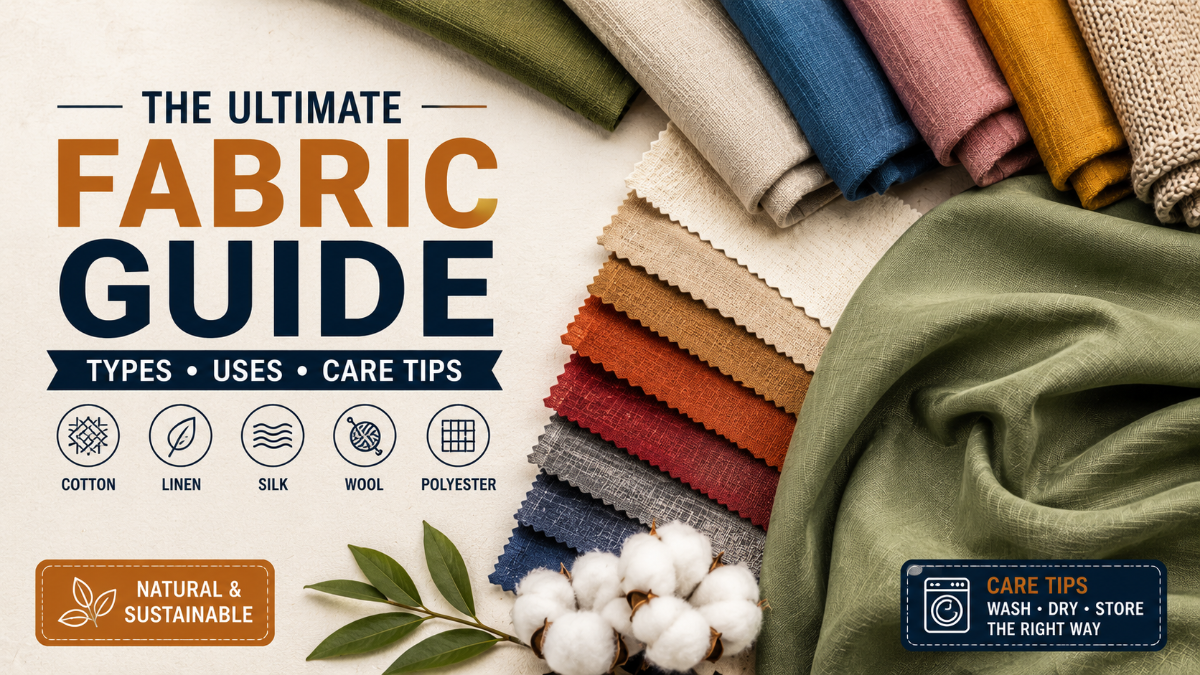
Fabric is a constructed textile material used in clothing, furnishings, crafts, and technical products. To understand how a material will feel, move, wear, and perform, follow the chain from fiber to yarn, construction, finish, properties, and finally end use.
A cotton T-shirt, cotton denim jacket, and cotton towel all begin with the same natural fiber. They behave differently because their yarns, structures, weights, and finishes differ. Likewise, satin may be made from silk, polyester, or viscose; satin describes a smooth weave structure, not a single fiber.
Fabric, Fiber, and Textile Basics
A fiber is the basic raw material used to make yarn or a textile surface. Cotton, wool, silk, polyester, and nylon are fibers. Fabric is a completed material made by weaving, knitting, bonding, felting, or otherwise assembling fibers or yarns. Textile is the broadest term, covering fabrics as well as nonwoven and technical fiber-based materials.
| Term | Meaning | Examples |
| Fiber | Basic textile raw material | Cotton, flax, wool, silk, polyester |
| Yarn | A continuous strand of grouped or spun fibers | Cotton yarn, wool yarn, filament yarn |
| Fabric | Constructed textile material | Denim, jersey, canvas, velvet |
| Textile | Broad category of fiber-based materials | Fabrics, felt, filters, technical textiles |
| Finish | Treatment applied after construction | Brushed, coated, water-repellent, wrinkle-resistant |
How fabric is classified
Fabric can be classified by its fiber source, construction, weight, performance properties, or intended purpose.
| Classification | Main categories | What it helps explain |
| Fiber source | Natural, regenerated, synthetic, blended | Feel, absorbency, care, resilience |
| Construction | Woven, knitted, nonwoven, pile, tufted, bonded | Stretch, stability, texture, drape |
| Weight | Lightweight, medium weight, heavyweight | Opacity, warmth, structure |
| Performance | Stretchy, absorbent, insulating, durable, weather resistant | Project suitability |
| End use | Apparel, home textiles, outdoor, technical | Practical selection |
Fiber → Yarn → Construction → Finish → Properties → End Use
This model is more useful than memorizing names in isolation. A blazer needs a stable fabric with controlled drape; activewear needs stretch, recovery, and moisture handling; towels need absorbency and loop pile.
Common fibers, fabrics, and constructions at a glance
| Name | Category | Usually made from | What it describes | Common uses |
| Cotton | Natural fiber | Cotton plant | Cellulosic textile fiber | Clothing, bedding, towels |
| Linen | Natural fiber | Flax plant | Cellulosic textile fiber | Summer clothing, table linens |
| Wool | Natural fiber | Sheep fleece or other animal hair | Protein textile fiber | Knitwear, coats, suiting |
| Silk | Natural fiber | Silkworm filament | Protein filament fiber | Dresses, scarves, blouses |
| Viscose | Regenerated fiber | Processed cellulose | Regenerated cellulosic fiber | Dresses, lining, blouses |
| Modal | Regenerated fiber | Processed cellulose | Soft regenerated cellulosic fiber | Underwear, T-shirts, sleepwear |
| Lyocell | Regenerated fiber | Processed cellulose | Regenerated cellulosic fiber | Shirts, bedding, trousers |
| Polyester | Synthetic fiber | Synthetic polymer | Manufactured textile fiber | Sportswear, fleece, upholstery |
| Nylon | Synthetic fiber | Polyamide polymer | Manufactured textile fiber | Swimwear, bags, outerwear |
| Elastane | Synthetic fiber | Elastic polymer | Stretch and recovery fiber | Leggings, underwear, stretch denim |
| Denim | Woven fabric | Usually cotton | Twill-woven fabric | Jeans, jackets, workwear |
| Canvas | Woven fabric | Cotton, linen, polyester, or blends | Dense plain-woven fabric | Bags, tents, aprons |
| Satin | Weave/fabric | Silk, polyester, rayon, or blends | Smooth satin weave | Dresses, lining, bedding |
| Jersey | Knit fabric | Cotton, wool, viscose, polyester, or blends | Weft-knit construction | T-shirts, dresses, underwear |
| Velvet | Pile fabric | Cotton, silk, rayon, polyester, or blends | Cut-pile surface structure | Apparel, upholstery, décor |
| Terry cloth | Pile fabric | Usually cotton | Loop-pile textile | Towels, robes, washcloths |
| Fleece | Brushed textile | Usually polyester | Brushed knit or pile surface | Midlayers, blankets, casualwear |
Fibers Used in Fabric
A fiber does not determine a finished material by itself. Yarn thickness, twist, weave or knit structure, fabric weight, and finishing all affect performance.
Read More: Chitlins
Natural fibers used in fabric
Natural fibers come from plant or animal sources. Plant fibers are mainly cellulose-based, while animal fibers are protein-based. They can be woven, knitted, felted, or otherwise processed into many different materials.
| Fiber | Source | Key properties | Best uses | Watch for |
| Cotton | Cotton plant seed hairs | Soft, absorbent, versatile | T-shirts, denim, sheets, towels | Wrinkling and possible shrinkage |
| Linen | Flax stem | Cool, strong, crisp, breathable | Summer apparel, napkins, curtains | Low elasticity and creasing |
| Hemp | Hemp plant stem | Strong, durable, breathable | Bags, workwear, home textiles | May initially feel firm |
| Jute | Jute plant stem | Coarse, strong, economical | Rugs, sacks, décor | Not generally for soft apparel |
| Ramie | Ramie plant stem | Crisp, lustrous, strong | Blends, household textiles | Can feel stiff |
| Wool | Sheep fleece and other animal hair | Insulating, resilient, moisture-managing | Sweaters, coats, socks | May shrink or felt with unsuitable care |
| Silk | Silkworm filament | Smooth, lustrous, strong for its weight | Dresses, scarves, blouses | Needs careful laundering |
| Cashmere | Cashmere goat down | Soft, light, insulating | Fine knitwear, scarves | Can pill with friction |
| Alpaca | Alpaca fleece | Warm, soft, lightweight | Sweaters, blankets, coats | Texture varies by grade |
| Mohair | Angora goat hair | Lustrous, resilient, lofty | Knitwear, suiting, upholstery | May feel less soft than fine wool |
Cotton is especially versatile because it can become crisp poplin, rugged denim, absorbent terry, soft flannel, lightweight voile, or casual jersey. Linen is often chosen for warm-weather clothing because it can be woven into airy structures, although its tendency to crease is a natural consequence of low elasticity.
Wool’s crimp helps trap air and contributes to insulation and recovery. Silk is a filament fiber with a naturally smooth surface, making it suitable for fabrics that need luster and fluid drape.
Regenerated cellulosic fibers
Regenerated fibers begin with cellulose, commonly from wood pulp or cotton linter. The cellulose is processed and re-formed into textile fibers, placing these materials between raw natural fibers and fully synthetic polymers.
| Fiber | What it is | Key properties | Best uses | Watch for |
| Viscose | Regenerated cellulose | Soft, absorbent, fluid drape | Dresses, blouses, lining | Care and wet strength vary |
| Modal | Regenerated cellulose | Smooth, soft, flexible | Underwear, pajamas, T-shirts | Often blended for performance |
| Lyocell | Regenerated cellulose | Smooth, absorbent, relatively strong | Shirts, bedding, denim blends | Performance varies by weight and finish |
| Cupro | Regenerated cellulose | Silky hand, breathable, drapey | Linings, dresses, blouses | Usually needs gentle care |
| Acetate | Modified cellulose | Smooth, lustrous, heat sensitive | Linings, occasionwear | Avoid excessive heat |
In consumer apparel, “rayon” and “viscose” are often used interchangeably. More precisely, rayon can be used as a broader regenerated-cellulose category, while viscose refers to a particular type or production route; the garment’s fiber label provides the clearest designation.
Bamboo labels also need context. Mechanically processed bamboo bast fiber differs from bamboo viscose or bamboo rayon, which are regenerated cellulose fibers. “Bamboo” alone does not identify how a fabric was made or how it will perform.
Synthetic fibers
Synthetic fibers are engineered from manufactured polymers. They are useful where quick drying, abrasion resistance, stretch, shape retention, or weather protection is needed.
| Fiber | Key properties | Best uses | Watch for |
| Polyester | Durable, wrinkle resistant, quick drying | Activewear, fleece, outerwear, upholstery | Dense styles may retain odors |
| Nylon/polyamide | Strong, light, abrasion resistant | Swimwear, bags, windbreakers, hosiery | Sensitive to high heat |
| Acrylic | Lightweight, warm, wool-like | Sweaters, blankets, faux fur | Can pill |
| Elastane/spandex | High stretch and recovery | Leggings, fitted garments, swimwear | Normally used in blends |
| Polypropylene/olefin | Very light, low absorbency, moisture resistant | Carpets, insulation, technical textiles | Heat sensitive and difficult to dye |
| Aramid | High heat and strength performance | Protective and industrial textiles | Specialized rather than everyday apparel |
Polyester is a fiber rather than one uniform material. Polyester mesh, fleece, satin, chiffon, woven suiting, and coated shell fabric can feel entirely different because their construction, yarn, weight, and finishing differ.
Fabric Construction, Weight, and Properties
Woven and knitted materials are two major yarn-based constructions. Nonwoven materials are produced directly from fiber webs through bonding, entangling, or felting rather than conventional yarn interlacing or looping.
Woven vs knitted vs nonwoven materials
| Construction | How it is made | Main characteristics | Examples | Best uses |
| Woven | Warp and weft yarns interlace | Stable; usually limited straight-grain stretch; may move more on the bias or with elastane | Denim, poplin, canvas, twill, satin | Shirts, trousers, jackets, bags |
| Knitted | Connected loops of yarn | Flexible, stretchier, body-conforming | Jersey, rib, interlock, French terry | T-shirts, socks, underwear, activewear |
| Nonwoven | Fiber web bonded, entangled, or felted | Can be disposable, technical, stiff, soft, or absorbent | Felt, interfacing, wipes, filtration media | Crafts, medical textiles, insulation |
| Pile | Raised loops or cut fibers on a base structure | Plush, textured, absorbent, or insulating | Velvet, terry, corduroy | Towels, upholstery, fashion |
| Bonded/laminated | Textile layers joined together | Added weather resistance, warmth, or structure | Softshell, bonded fleece | Outdoor and technical clothing |
Woven materials are stable because yarns cross at right angles. Plain weave, twill, satin, basket weave, and jacquard are common woven structures. Knitted materials form connected loops and therefore generally conform more readily to the body.
Important constructions
| Structure | What it is | Key properties | Common examples |
| Plain weave | Simple over-under yarn interlacing | Stable, balanced, often crisp | Muslin, poplin, canvas, voile |
| Twill | Staggered interlacing that forms diagonal ribs | Durable, drapes well, hides soil | Denim, chino, gabardine |
| Satin weave | Long yarn floats on the surface | Smooth, lustrous, fluid | Satin, charmeuse, sateen |
| Jersey knit | Single weft-knit structure | Soft, flexible, may curl at cut edges | T-shirts, casual dresses |
| Rib knit | Knit with vertical ribs | Strong crosswise stretch | Cuffs, fitted tops, neckbands |
| Interlock knit | Double-knit structure | Smooth and more stable than jersey | Babywear, T-shirts, dresses |
| Terry | Loop-pile surface | Absorbent and textured | Towels, robes, washcloths |
| Velvet | Dense cut-pile surface | Plush, light-reflecting surface | Formalwear, upholstery |
| Fleece | Brushed surface, often knitted | Warm, soft, lightweight | Sweatshirts, blankets, midlayers |
GSM and fabric weight
GSM means grams per square meter. It measures mass over a given area, not quality. Lower GSM generally means less material mass per unit area, but suitability depends on fiber, opacity, construction, and intended purpose.
| Weight consideration | What it can influence |
| Lower GSM | Lightness, drape, transparency, packing ease |
| Higher GSM | Opacity, structure, warmth, abrasion resistance |
| Fine yarns | Smoothness, softness, refined drape |
| Dense construction | Durability, wind resistance, lower air permeability |
| Open construction | Airflow, transparency, flexibility |
A 200 GSM jersey knit and a 200 GSM twill woven material can perform very differently. The knit may feel soft and flexible, while the twill may feel firmer, more opaque, and more structured.
Fabric properties that matter
| Property | What it means | Mainly affected by |
| Drape | How a material falls and moves | Fiber, weight, construction |
| Stretch | Ability to extend | Knit structure, elastane, bias direction |
| Recovery | Ability to return to shape | Elastane, resilient fibers, construction |
| Air permeability | How readily air passes through | Density, weight, construction |
| Absorbency | Ability to take in moisture | Fiber and finish |
| Moisture management | How moisture spreads and evaporates | Fiber, construction, finish |
| Abrasion resistance | Resistance to rubbing | Fiber strength, yarn, density |
| Tear strength | Resistance to tearing | Fiber, weave, density |
| Pilling resistance | Resistance to surface fiber balls | Fiber, yarn twist, friction |
| Shrinkage | Dimensional change after washing or drying | Fiber, finishing, construction |
| Wrinkle resistance | Ability to resist creasing | Fiber resilience, finish, structure |
30+ Common Fabric Types and Their Uses
The following reference list combines material, construction, properties, project suitability, and key limitations. Check fiber content and care information when a specific property—such as stretch, opacity, or washability—is essential.
Natural and regenerated materials
| Fabric | What it is | Key properties | Best uses | Watch for |
| Cotton poplin | Crisp plain-woven cotton | Smooth, stable, breathable | Shirts, dresses, uniforms | Limited stretch |
| Cotton voile | Fine lightweight cotton weave | Airy, soft, semi-sheer | Summer tops, dresses, curtains | May require lining |
| Muslin | Plain-woven cotton | Simple, soft, easy to sew | Toile making, baby items, crafts | Quality and weight vary |
| Denim | Traditionally cotton twill | Durable, structured, diagonal ribs | Jeans, jackets, bags | Weight and elastane change stretch |
| Canvas | Dense plain weave | Firm, tough, durable | Totes, tents, aprons, upholstery | Can be stiff |
| Chambray | Lightweight plain-woven fabric | Soft, breathable, denim-like appearance | Shirts, dresses | Less rugged than denim |
| Flannel | Brushed cotton, wool, or blend | Soft, warm, fuzzy surface | Pajamas, shirts, bedding | Surface can pill |
| Linen | Flax-based woven material | Cool, breathable, textured | Summer clothing, napkins, curtains | Wrinkles easily |
| Wool suiting | Fine woven wool | Resilient, insulating, tailored drape | Blazers, trousers, skirts | Care varies |
| Tweed | Textured woven wool | Warm, durable, structured | Jackets, coats | Usually heavier |
| Silk charmeuse | Satin-weave silk | Lustrous, fluid, smooth | Dresses, blouses, lingerie | Can snag |
| Chiffon | Lightweight sheer woven material | Airy, transparent, soft drape | Scarves, overlays, formalwear | Can be difficult to sew |
| Organza | Crisp sheer woven material | Structured, transparent | Bridalwear, sleeves, décor | Can feel stiff |
| Viscose challis | Lightweight regenerated-cellulose material | Soft, drapey, absorbent | Dresses, blouses, skirts | May need careful laundering |
| Modal jersey | Soft regenerated-cellulose knit | Smooth, flexible, comfortable | Underwear, T-shirts, sleepwear | Often blended |
| Lyocell twill | Smooth regenerated-cellulose twill | Soft, drapey, relatively strong | Shirts, trousers, dresses | Weight affects structure |
| Cupro lining | Smooth regenerated-cellulose material | Silky, breathable, fluid | Lining, dresses, blouses | Care depends on the garment |
Knitted, synthetic, and specialty materials
| Fabric | What it is | Key properties | Best uses | Watch for |
| Polyester jersey | Synthetic weft-knit material | Durable, quick drying, flexible | Sportswear, casual tops | Performance varies by finish |
| Polyester fleece | Brushed synthetic textile | Warm, soft, lightweight | Pullovers, blankets, midlayers | Can retain odors or pill |
| Nylon ripstop | Reinforced woven nylon | Light, tear resistant, durable | Outdoor gear, bags, shells | Often needs lining for comfort |
| Nylon-elastane knit | Stretch technical knit | Strong, flexible, quick drying | Swimwear, leggings, activewear | Avoid excessive heat |
| Acrylic knit | Synthetic wool-like knit | Light, warm, affordable | Sweaters, hats, blankets | Can pill |
| Jersey | Weft-knit fabric | Soft, flexible, comfortable | T-shirts, casual dresses | May curl at cut edges |
| Rib knit | Ribbed knit | Stretchy, fitted, textured | Cuffs, tanks, trim | Can stretch out if recovery is low |
| Interlock | Double-knit fabric | Smooth, stable, thicker | Babywear, T-shirts | Less airy than loose jersey |
| French terry | Loop-back knit | Soft, absorbent, medium weight | Hoodies, joggers, loungewear | Less warm than fleece |
| Scuba knit | Dense double-knit, often synthetic | Smooth, structured, stretchy | Dresses, skirts, modern tailoring | Less breathable than lighter knits |
| Mesh | Open construction | Airflow and low weight | Sportswear panels, bags, lining | May be transparent or snag easily |
| Velvet | Cut-pile fabric | Plush, rich appearance | Dresses, jackets, upholstery | Pile direction affects appearance |
| Corduroy | Ribbed pile fabric | Warm, durable, textured | Trousers, jackets, skirts | Bulk varies by wale width |
| Terry cloth | Loop-pile fabric | Absorbent, textured | Towels, robes, beachwear | Loops can snag |
| Softshell | Bonded or layered performance fabric | Durable, stretchable, weather resistant | Outdoor jackets, hiking trousers | Water resistance varies by product |
How to Choose, Identify, and Care for Fabric
Choose material according to what the finished item must do. A beautiful textile may still be unsuitable if it lacks the needed stretch, durability, drape, opacity, structure, or care practicality.
Best fabric by purpose
| Purpose | Look for | Good options |
| Summer clothing | Lightweight, breathable construction | Linen, cotton voile, lightweight cotton, lyocell |
| Winter clothing | Insulation, loft, suitable weight | Wool, fleece, flannel, cashmere blends |
| T-shirts | Softness, stretch, recovery | Cotton jersey, modal jersey, cotton blends |
| Dresses | Appropriate drape or structure | Viscose, silk, linen, poplin, crepe |
| Jeans | Twill construction and durability | Denim, stretch denim |
| Formalwear | Smooth surface and controlled drape | Silk, satin, velvet, crepe |
| Activewear | Stretch, recovery, moisture management | Polyester-elastane, nylon-elastane, mesh |
| Swimwear | Stretch, recovery, chlorine-appropriate construction | Nylon-elastane, polyester-elastane |
| Bedding | Comfort, washability, suitable weight | Cotton percale, sateen, linen, lyocell |
| Towels | Absorbency and loop pile | Cotton terry, cotton-modal terry |
| Curtains | Drape, opacity, light control | Linen, cotton, velvet, polyester blends |
| Upholstery | Abrasion resistance and stability | Woven polyester, canvas, velvet, performance textiles |
| Bags | Structure and durability | Canvas, denim, nylon ripstop |
| Beginner sewing | Stable, medium-weight material | Quilting cotton, poplin, twill, stable linen blends |
How to identify fabric by sight and feel
Visual inspection can help identify construction, but it cannot always confirm fiber content. Fine yarns, blends, coatings, and heavy finishing can make materials difficult to classify without a label or professional testing.
- Look for crossing threads: a grid-like structure usually indicates a woven material.
- Look for loops: connected loops or vertical knit columns usually indicate a knit.
- Check stretch direction: knits generally stretch more, while woven fabrics have limited straight-grain stretch but may move on the bias.
- Find diagonal ribs: diagonal lines commonly indicate twill, as in denim and chino.
- Examine the surface: raised loops suggest terry; plush cut pile suggests velvet; raised ribs suggest corduroy.
- Assess transparency and weight: light, open structures may be sheer, while dense, heavy materials are more likely to be opaque and structured.
- Verify the label: composition, care information, and supplier specifications are more reliable than touch alone.
Care essentials
Care labels should take priority over broad fiber rules because finishing, dye, lining, and trims can alter the appropriate treatment.
- Separate delicate materials from abrasive items such as towels, denim, or garments with exposed hardware.
- Avoid excessive dryer heat for elastane, nylon, acrylic, and many performance textiles.
- Reshape heavier knits while damp instead of hanging them wet.
- Store wool clean and dry to reduce pest damage.
- Test stain-treatment products in an inconspicuous area first, especially on silk, wool, acetate, and deeply dyed materials.
- Use fiber content, construction, and the care label together when deciding how to wash, dry, press, or store a garment.
FAQs
1. What are the main types of fabric?
The main types can be grouped by fiber source and construction. Fiber categories include natural fibers such as cotton, linen, wool, and silk; regenerated fibers such as viscose, modal, and lyocell; and synthetic fibers such as polyester, nylon, acrylic, and elastane. Construction categories include woven, knitted, nonwoven, pile, tufted, and bonded materials. A finished textile’s behavior depends on both systems: fiber influences comfort and care, while construction influences stretch, drape, strength, and surface texture.
2. What is the difference between fabric and textile?
Textile is the broader term. It includes woven materials, knitted goods, nonwovens, felt, lace, ropes, carpets, filtration products, and technical fiber-based materials. Fabric usually refers to a constructed textile surface used for garments, home furnishings, accessories, or sewing. Cloth is often used interchangeably with fabric in everyday language. Modern textile terminology includes far more than woven cloth, although the word’s historical roots are associated with weaving
3. What is the difference between fiber and fabric?
A fiber is the raw material used to make yarn or a textile surface. Cotton, wool, silk, polyester, and nylon are fibers. Fabric is the completed material created from those fibers through weaving, knitting, bonding, felting, or related methods. For example, cotton fiber can become yarn and then become denim, poplin, flannel, jersey, or terry cloth. The fiber remains the same, but construction, yarn, weight, and finishing produce different textures, properties, and uses.
4. Which fabric is best for hot weather?
Lightweight linen, cotton, cotton voile, lyocell, and some lightweight viscose materials are common warm-weather choices. Construction matters as much as fiber: a loose, airy, lightweight textile usually feels cooler than a dense or heavy one made from the same fiber. Linen is crisp and breathable but prone to creasing. Cotton is versatile and absorbent. Lyocell often feels smooth and fluid. For strenuous activity, a lightweight technical knit may dry faster and provide better mobility than an absorbent woven material.
5. Which fabric is best for winter?
Wool, cashmere, alpaca, fleece, flannel, and heavier knits are common winter options. Wool provides insulation and resilience, while fleece offers lightweight warmth and easy care. The best choice depends on garment design and conditions: a dense wool coat helps in cold air, a wool knit adds insulation, and a weather-resistant shell improves wind or rain protection. Choose according to the warmth, bulk, weather protection, freedom of movement, and care requirements you need.
6. Which fabrics stretch the most?
Knitted fabrics commonly stretch more than woven materials because their yarn loops can expand. Jersey, rib knit, interlock, and technical activewear knits provide different levels of mechanical stretch. Elastane, also called spandex, improves stretch and recovery when blended with other fibers. It is common in leggings, fitted tops, swimwear, underwear, and stretch denim. Recovery matters as much as stretch because it helps a garment return toward its original shape rather than becoming baggy after wear.
7. What does GSM mean in fabric?
GSM means grams per square meter, a measure of material weight. It helps compare how much textile mass is present over a standard area, but it does not measure quality alone. Lower-GSM materials are usually lighter and may be more drapey or transparent; higher-GSM materials may be more structured, warm, opaque, or durable. The same GSM can feel very different across constructions: a cotton jersey and cotton twill at the same weight will not have the same stretch, drape, or surface texture.
8. Is rayon natural or synthetic?
Rayon is a regenerated cellulosic fiber. It begins with plant-derived cellulose, often from wood pulp, but that cellulose is processed and re-formed into textile fibers. Rayon is therefore distinct from raw natural fibers such as cotton or linen and from fully synthetic polymers such as polyester or nylon. Viscose is a common rayon type, while modal and lyocell are related regenerated cellulose fibers. Their softness, strength, care needs, and moisture behavior depend on the specific fiber and construction.
9. What is the difference between satin and sateen?
Satin and sateen describe weave and yarn characteristics, not a single fiber. Satin is commonly made with smooth filament yarns, such as silk or polyester, and usually has a glossy face. Sateen uses a similar satin-style weave but is often made with spun yarns, particularly cotton, giving it a softer and typically less shiny appearance. Silk satin, polyester satin, and cotton sateen can differ in breathability, care, cost, durability, and feel, so check the fiber-content label before choosing.
10. How can I tell if a fabric is woven or knitted?
Woven materials normally show yarns crossing over and under one another and have limited stretch along the straight grain unless elastane is included. Knitted materials are made from interlocking loops and usually stretch more, particularly across the width. A basic T-shirt commonly uses jersey knit, while a button-down shirt may use woven poplin. Examine the surface in good light, test movement in different directions, and check the label or supplier description. Fine, coated, or heavily finished textiles can be difficult to identify by sight alone.