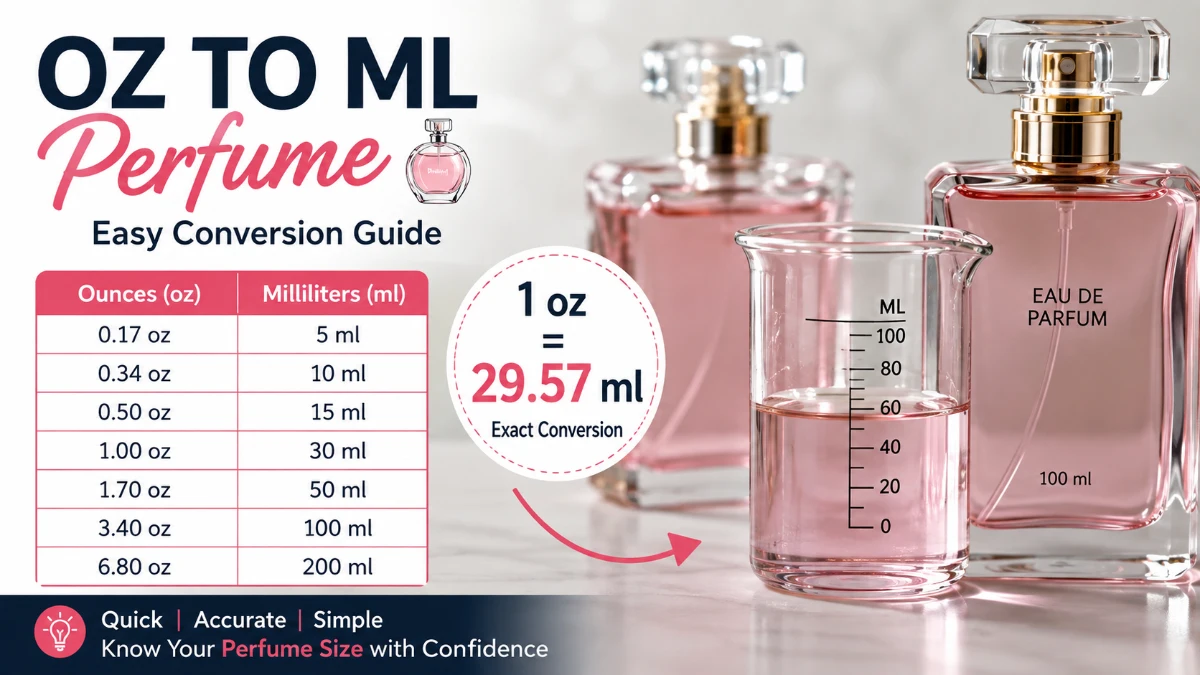
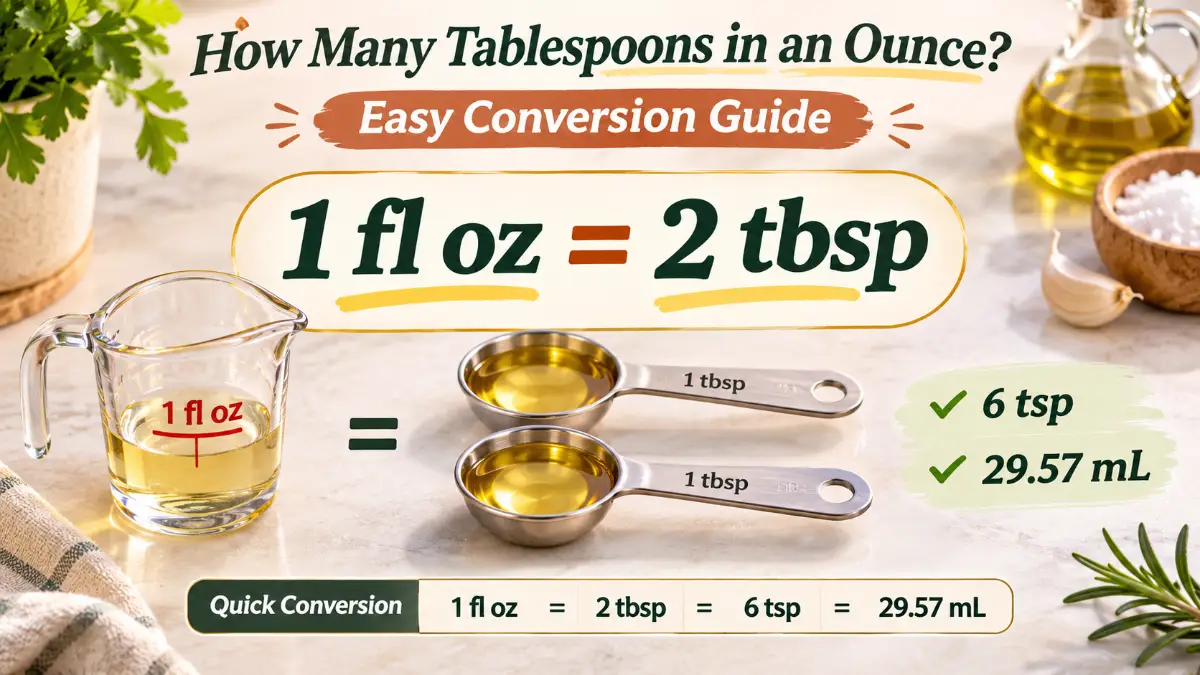
There are 2 tablespoons in a US fluid ounce. This is also equivalent to 6 teaspoons and around 29.57ml. However, it is not always possible to convert this to 2 tablespoons due to the material that is being measured. For everyday American cooking, converting US fluid ounces to tablespoons is appropriate for volume-based items including water, milk, oil, sauces and so on.
How Many Tablespoons in an Ounce?
Two US tablespoons make up one US fluid ounce. These are both measures of volume – the physical space taken up by an item.
The National Institute of Standards and Technology has produced a domestic measurements handbook which validates these conversions. Understanding how these measurements relate to each other helps when interchanging between measuring spoons and liquid measuring cups to maintain recipe accuracy.
Key facts to note include:
- 1 fluid ounce = 2 tablespoons
- 1 tablespoon = 3 teaspoons
- 1 fluid ounce = 6 teaspoons
- 1 tablespoon = 0.5 fluid ounces
- 1 US customary cup = 16 tablespoons
These apply throughout the US customary measurement system.
Ounce to Tablespoon Conversion Table
Refer to this table to convert between fluid ounces, tablespoons and teaspoons. Note that all values are expressed in US customary volume measurements.
| Fluid ounces | Tablespoons | Teaspoons |
| 1/4 | 1/2 | 1.5 |
| 1/2 | 1 | 3 |
| 3/4 | 1.5 | 4.5 |
| 1 | 2 | 6 |
| 1.5 | 3 | 9 |
| 2 | 4 | 12 |
| 3 | 6 | 18 |
| 4 | 8 | 24 |
| 5 | 10 | 30 |
| 6 | 12 | 36 |
| 8 | 16 | 48 |
| 16 | 32 | 96 |
Typically, measuring cups are preferable when measuring larger volumes. Rather than measuring 16 tablespoons, for instance, simply use a US customary cup to measure 8 fluid ounces.
Read Also: The Real Reason Oz to ML Perfume Bottles Never Match Your Calculator
Converting Fluid Ounces to Tablespoons
Just one formula can be used to convert a measurement given in US fluid ounces to tablespoons.
Tablespoons = Fluid ounces x 2
If a salad dressing recipe asks for 2.5 fluid ounces of olive oil, this is equivalent to 2.5 x 2 = 5 tablespoons.
For a lower volume, such as 0.75 fluid ounces of lemon juice, multiply this by 2 to find that it is equal to 1.5 tablespoons. This can then be measured out using a tablespoon plus further 1-1/2 teaspoons.
Converting Tablespoons to Fluid Ounces
Simply divide the tablespoons figure by two to perform this conversion.
Fluid ounces = Tablespoons ÷ 2
Seven tablespoons of milk is equal to 3.5 fluid ounces. Likewise, 10 tablespoons of soup is 5 fluid ounces.
Such a technique can be especially helpful if the measuring jug you are using measures in fluid ounces, but a recipe refers to tablespoons.
Fluid Ounces and Weight Ounces
Whilst both measurements include the term ‘ounce’, it is crucial to recognise that these are not interchangeable; they refer to different properties.
Volume is measured in fluid ounces (fl oz) and mass is measured in weight ounces (oz) under standard kitchen practise. NIST sources tell US that one US fluid ounce is around 29.57ml. Meanwhile, a weight ounce is approximately 28.35g.
Although a tablespoon of flour and a tablespoon of honey will have identical volumes, they will weigh differently. Therefore, one weight ounce of flour will take up a greater volume than one weight ounce of honey.
If weight ounces are referred to within a recipe, weigh the relevant material using a kitchen scale. Do not assume that you can convert weight ounces to tablespoons by multiplying by 2.
Converting Weight Based Ingredients
In order to convert from weight ounces to tablespoons, it is essential to first establish how many grammes fit within a single tablespoon of an item.
Should a tablespoon of an item weigh 8 grammes for example, then 28.35 divided by 8 provides an approximate value of 3.54 tablespoons per weight ounce.
Once again, this conversion will depend on the specific item and the measuring circumstances. Materials can compress or flour can clump. Furthermore, irregularities in air pockets can exist in an item that has been cut into pieces. Thus even the same foodstuff can be slightly variable in the weight of two tablespoons.
Generally, for baking, it is more accurate to measure materials by weight.
Real Life Kitchen Scenarios
Assume that you need 4 fluid ounces of tomato juice for a sauce. Unfortunately you only have measuring spoons. Eight level tablespoons will allow you to achieve the correct volume.
Now, suppose you wish to halve the initial recipe. Halving 4 fluid ounces results in 2 fluid ounces. Correspondingly, you should now measure 4 tablespoons.
This principle can also be deployed for beverages and marinades. Should a drink recipe ask for 0.5 fluid ounces of syrup for example, a single tablespoon will suffice. Likewise, 3 fluid ounces of vinegar for a marinade corresponds to 6 tablespoons.
Nonetheless, if a recipe demands 2 weight ounces of shredded cheese then 4 tablespoons may not be sufficient. This is due to variations in both the size and density of the cheese shreds.
Always check how an item should be measured before selecting an appropriate conversion. Such a process is of particular importance when working with recipes that use both weight and volume.
How to Precisely Measure Tablespoons
Standard spoons are not uniform and so are not ideal for accurately measuring out materials.
Fill a marked measuring spoon appropriately. When measuring liquids, hold the spoon so that it is horizontal and ensure that there is no leakage. With powdery volume-based ingredients, level off the top of the spoon using a straight object (unless a recipe indicates that a spoon should be used in a heaped manner).
With highly viscous items such as honey, endeavour to fully transfer the measured product into the mixing bowl. Failure to do so may cause perceptible leftover material to remain on the spoon.
For volumes of liquid exceeding fluid ounces, use a graduated measuring cup. Rest this on a steady surface and view the meniscus at eye-level. The University of Maryland Extension website provides further guidance about effectively measuring items using measuring cups, spoons and scales.
Are Tablespoons Universally Standard?
Around 14.79ml are in an American customary tablespoon. Metric recipes commonly utilise a 15ml tablespoon though. Although these values are similar, they are not precisely equivalent.
Also, the British imperial fluid ounce differs from the aforementioned US fluid ounce. As a result, a conversion table suitable for American recipes should not necessarily be used for imperial measurements.
Review which measurement system has been employed within a recipe taken from an international cook book. Where possible, rely on millilitre and gramme information to minimise misunderstandings that can occur due to differing definitions of common units.
In Summary
Bear in mind the difference between volume and weight. Within the US fluid measurement system, multiplying by 2 will correctly transform a measurement to its corresponding tablespoon value. If a recipe refers to weight ounces of an item, weigh this out using a scale or alternatively apply a dependable conversion relevant to the item. Ideally, have the conversion table to hand so that you can easily modify recipes.
Frequently Asked Questions
Is one tablespoon equal to one ounce?
No. A US tablespoon holds half a US fluid ounce. You need two tablespoons to reach one fluid ounce. If you mean an ounce of weight, the equivalent depends on the ingredient being measured.
How many tablespoons are in an ounce of water?
One US fluid ounce of water fills exactly two US tablespoons. A weight ounce of water occupies slightly less volume, so the distinction matters when performing precise measurements rather than ordinary kitchen estimates.
How many tablespoons are in 2 ounces of liquid?
Two US fluid ounces equal four tablespoons or twelve teaspoons. They also equal one quarter of a US customary cup, which may be easier to measure when preparing sauces, drinks, or dressings.
Is 30 mL equal to two tablespoons?
For tablespoons defined as 15 milliliters, yes. Two US customary tablespoons measure approximately 29.57 milliliters instead. The difference is small for many recipes, but use the specified measurement system when precision matters.
Can I measure an ounce of flour with tablespoons?
You can measure a volume of one US fluid ounce using two tablespoons of flour. However, if the recipe requests one ounce of flour by weight, use a kitchen scale to measure approximately 28.35 grams.