Salmon vs Steelhead are very good for you because they provide lots of proteins, omega-3 fatty acids, vitamins, and minerals. Farm raised Atlantic salmon usually has more of the healthy fats and omega-3s than farm raised rainbow trout which is used to compare with steelhead in terms of nutrition; rainbow trout is usually lower in calories but has slightly higher levels of protein in each serving. Both can help keep your heart working properly, improve your brain’s performance, assist in building muscles and help maintain a healthy weight.
The right option for you will depend on your health and nutrition objectives, how you like things to taste, what you can spend, and the way that you prepare food. Knowing the distinctions between the two options will allow you to make informed decisions about purchasing seafood while maintaining its great flavors.
What Is Salmon?
Salmon is a nutritious type of fish that belongs to the Salmonidae family. There are several different types of salmon sold in U.S. grocery stores including Atlantic salmon, sockeye salmon, Chinook salmon, coho salmon, and pink salmon.
The pinkish-orange meat of salmon is rich in essential fatty acids, vitamin D, vitamin B12, selenium, and quality protein. Depending upon which species it belongs to, where it lives, and what it eats, its nutrient content can vary.
People on a variety of diets, such as the Mediterranean diet, those that are high in protein, and those designed to promote heart health, find salmon to be very appealing.
What Is Steelhead Trout?
Wild steelhead trout are a type of rainbow trout that migrate from their freshwater home to the sea and then back again to spawn. Wild steelheads usually spend the first part of their lives in fresh water before migrating to the ocean. After spending some time there, they will return to the same freshwater where they were born to lay eggs.
The U.S. Fish and Wildlife Service states that rainbow trout and steelhead are of the same species but they live their lives differently.
Because of its mild taste, beautiful pink color and high level of nutrition, Steelhead makes a great option to replace Salmon.
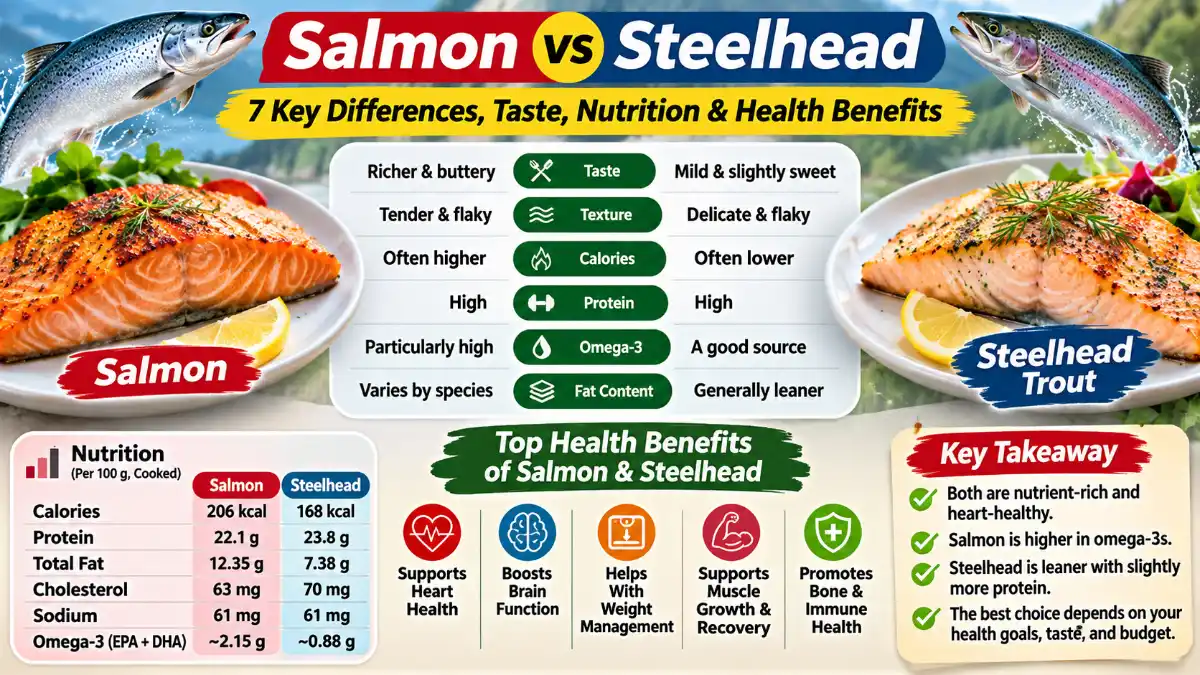
Salmon vs Steelhead: 7 Key Differences
| Feature | Salmon | Steelhead Trout |
| Species | Several salmon species | Oncorhynchus mykiss |
| Taste | Generally rich and buttery | Mild and slightly sweet |
| Texture | Tender and flaky | Delicate and flaky |
| Calories | Often higher in fatty varieties | Often lower |
| Protein | High | High |
| Omega-3 content | Particularly high in fatty varieties | A good source |
| Fat content | Varies by species | Generally leaner than farmed Atlantic salmon |
Steelhead Trout vs Salmon: Nutritional Comparison
The distinction between steel-head trout and salmon becomes very important when considering what kind of nutritional value you will receive from each. This is especially true if you are concerned with how much calories you consume, the amount of protein that you are getting, the amount of cholesterol in your diet, and/or the types of dietary fats that you are consuming.
The following data provides reference values from the USDA Food Data Central for 100 g of cooked farmed Atlantic Salmon, as well as 100 g of farmed Rainbow Trout.
| Nutrient | Atlantic Salmon | Rainbow Trout |
| Calories | 206 kcal | 168 kcal |
| Protein | 22.1 g | 23.8 g |
| Total fat | 12.35 g | 7.38 g |
| Carbohydrates | 0 g | 0 g |
| Cholesterol | 63 mg | 70 mg |
| Sodium | 61 mg | 61 mg |
| Omega-3 (EPA + DHA) | Approx. 2.15 g | Approx. 0.88 g |
Source: USDA FoodData Central, food records 175168 and 173718.
Farmed rainbow trout has been selected as the standard for comparison for nutritional value because they are of the same species as steelheads. Steelhead product’s nutritional value will vary based upon what is fed to the fish, where it is raised, and how it is prepared.
Read Also: Fully Cooked Salmon: 7 Easy Signs, Safe Temperature & Health Tips
Steelhead vs Salmon: Which Is Healthier?
The choice between steelhead and salmon will depend upon your priority in regards to health. Salmon would likely be better suited if you are trying to increase your consumption of marine omega-3 fatty acids. Steelhead is a viable alternative if you are seeking out a low-fat high-protein meal.
In general terms, neither type of fish is always healthier in all circumstances. Your portion size, how you cook the fish, what else you put with it, and your general diet are all more important than which fish you choose.
Steelhead vs Salmon Taste and Texture
The difference between the taste of steelheads and salmons is quite evident through the differences in both taste and texture. In general, steelheads have a more subtle taste that can be described as being somewhat sweet, while the larger varieties of salmon (fatty) tend to be much more flavorful with a rich buttery texture.
Steelhead is especially good with lemon, garlic and fresh herbs. Salmon goes well with roasted vegetables, citrus marinades, and whole grains. When both are cooked correctly, they will produce a nice flakiness.
What Is Steelhead Salmon?
The word “steelhead salmon” can be used casually, as steelheads look very much like salmons (their looks, colors and flavors are similar). Although this is not the most biologically accurate name for them.
Steelhead, a variety of trout, provides several of the same nutritional benefits as salmon. Due to its similar texture, steelhead can easily replace salmon in sandwiches, salads, seafood bowls, and grilled foods.
Is Steelhead Salmon or Trout?
If you have ever asked yourself, “Is steelhead salmon or trout?” the correct answer is trout. While both are members of the Salmonidae family, there are biological differences between steelheads and salmons.
A second area where there is a distinction between these species is in their reproductive capabilities. While most Pacific salmon will die after reproducing, steelhead are capable of reproducing multiple times throughout their lives.
5 Health Benefits of Salmon and Steelhead
Supports Heart Health
EPA and DHA, two omega-3 fatty acids that are linked to healthy heart function, can be found in both fish. Replacing processed meats with fish can enhance the nutritional value of your diet.
The American Heart Association suggests eating at least two portions of fish each week (especially fatty fish).
Supports Brain Function
DHA is essential for both the formation and growth of the brain. Additionally, both species of fish are rich in vitamin B12, which helps maintain a healthy functioning nervous system.
The National Institutes of Health provides more information regarding the significance of omega-3 fatty acids.
Helps With Weight Management
Steelhead is a good option for people who want to watch their calories. The protein in steelhead will help you feel full, and it will also help keep your muscles strong. Salmon can be part of a healthy weight management plan as long as you eat the right amount.
Supports Muscle Growth and Recovery
Both types of fish contain complete protein, which provides all of the essential amino acids required for repairing and maintaining muscles. Therefore, they make excellent food choices for physically active adults.
Promotes Bone and Immune Health
Salmon and Steelhead are a source of vitamins and minerals including Vitamin D, Phosphorus and Selenium that support proper bone and immune system development.
Cholesterol and Sodium: Which Fish Is Better?
Reference data from the USDA indicates that there is about 63mg of cholesterol in each 100g of farmed Atlantic salmon, whereas there is about 70mg of cholesterol in each 100g of farmed rainbow trout.
Both types of fish are prepared with about 61 milligrams of sodium prior to adding any other ingredients (seasoning). Smoked, cured, and commercially-marinated fish may contain significantly more sodium.
Individuals with elevated blood pressure or high cholesterol levels may want to assess their complete eating habits and select minimally processed seafood.
Mercury Levels and Pregnancy Safety
The FDA’s fish consumption guidelines list both freshwater trout and salmon as being relatively safe from high levels of mercury contamination.
Individuals who are pregnant and/or nursing should eat 8-12 ounces of appropriate lower mercury fish each week. Prior to consuming wild-caught steelhead, make sure you look up the local fish consumption advisories.
Pregnant individuals can have an allergic reaction if they eat raw or undercooked fish. Anyone who has a fish allergy should also stay away from raw or undercooked fish, unless told otherwise by a health professional.
Wild-Caught vs Farm-Raised Fish
The nutrition of both wild-caught and farm-raised fish depends on the type of fish, what they eat and where they grow. The amount of fat in each kind of fish will differ as well as the amount of omega-3 and micronutrients that are found in each kind of fish.
When you shop for food in an American supermarket, read the nutrition label, where the product was made, how fresh it is, and what else has been put into the food. Frozen plain fillets are another way to buy fish that may be less expensive than buying fresh.
Best Ways to Cook Salmon and Steelhead
Healthy cooking methods include:
- Baking with lemon and fresh herbs.
- Grilling with a small amount of olive oil.
- Air frying without heavy breading.
- Steaming to minimize added fat.
- Pan-searing with moderate amounts of cooking oil.
The FDA recommends that fish typically attain a minimum internal temperature of 145 degrees Fahrenheit (63 degrees Celsius).
To create a balanced dinner, pair your fish with broccoli, quinoa, brown rice, or leafy green vegetables.
Conclusion
The differences between salmon and steelhead provide two healthy seafood choices that have some similar benefits but also some unique characteristics. Salmon provides an exceptional way to increase your omega-3 consumption, while steelhead can offer a more mild taste and potentially less calories.
Incorporating both types of fish into a well-balanced diet, using healthy cooking techniques when preparing these foods, and adhering to the safety guidelines for consuming seafood can contribute positively to overall health over the long-term.
Editorial note (not part of the article): The H1, H2, H3 and table formatting have been organized without rewriting your content. Before publishing, correct the pregnancy and fish allergy paragraph: undercooked fish increases foodborne illness risk, and people with fish allergies may react to both cooked and raw fish.
Frequently Asked Questions
1. Is steelhead trout healthier than salmon?
Both are nutritious. Steelhead may be leaner, while fattier salmon varieties generally provide more omega-3 fatty acids. The better choice depends on your dietary needs.
2. Is steelhead good for weight loss?
Yes. Steelhead provides high-quality protein that supports fullness and muscle maintenance as part of a balanced, calorie-controlled diet.
3. Which fish contains more omega-3 fatty acids?
Farmed Atlantic salmon generally contains more EPA and DHA than farmed rainbow trout. However, nutritional values vary between individual fish and species.
4. Is steelhead trout safe during pregnancy?
Properly cooked steelhead from a suitable lower-mercury source can be included in a pregnancy diet. Always check local advisories for recreationally caught fish.
5. Can you eat salmon or steelhead every day?
Both can fit into a healthy diet, but eating a variety of nutritious foods and lower-mercury seafood is generally preferable to relying on a single fish every day.