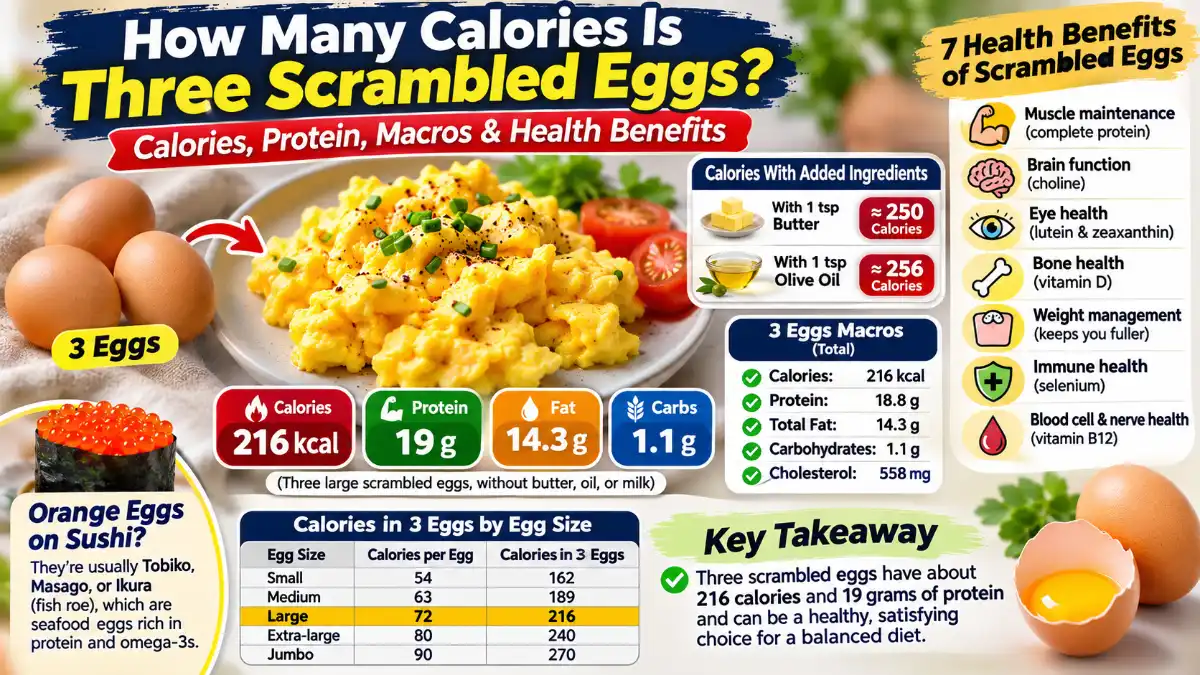
How Many Calories Is Three Scrambled Eggs prepared with out any added ingredients such as butter, oil, or milk have about 216 calories, 19g of protein, 14.3g of fat, and 1.1g of carbohydrate. If you add 1 tsp of butter to those three eggs, then you will have about 250 calories. If you add 1 tsp of olive oil to those three eggs, then you will have about 256 calories.
The nutritional value of eggs is high because they are a source of complete protein, many vitamins and minerals, and also choline. If your goal is to lose weight, gain muscle, or simply have a healthy breakfast, knowing how much to eat (portion size) and what else to add to your eggs (cooking ingredients) will assist in managing your overall daily nutritional intake.
How Many Calories Is Three Scrambled Eggs
The amount of calories in three eggs will depend on the weight/size of each egg. In general, large eggs are typically referred to when people refer to eggs in America for both cooking and nutrient analysis. One large whole egg contains about 72 calories (USDA FoodData Central).
| Egg size | Calories per egg | Calories in 3 eggs |
| Small | 54 | 162 |
| Medium | 63 | 189 |
| Large | 72 | 216 |
| Extra-large | 80 | 240 |
| Jumbo | 90 | 270 |
The estimated values listed above do not include other types of food (such as cooking fats), nor do they account for any additional ingredients. You may wish to consult the nutritional label located on your egg container for more detailed information regarding serving sizes.
How Much Protein in Three Eggs?
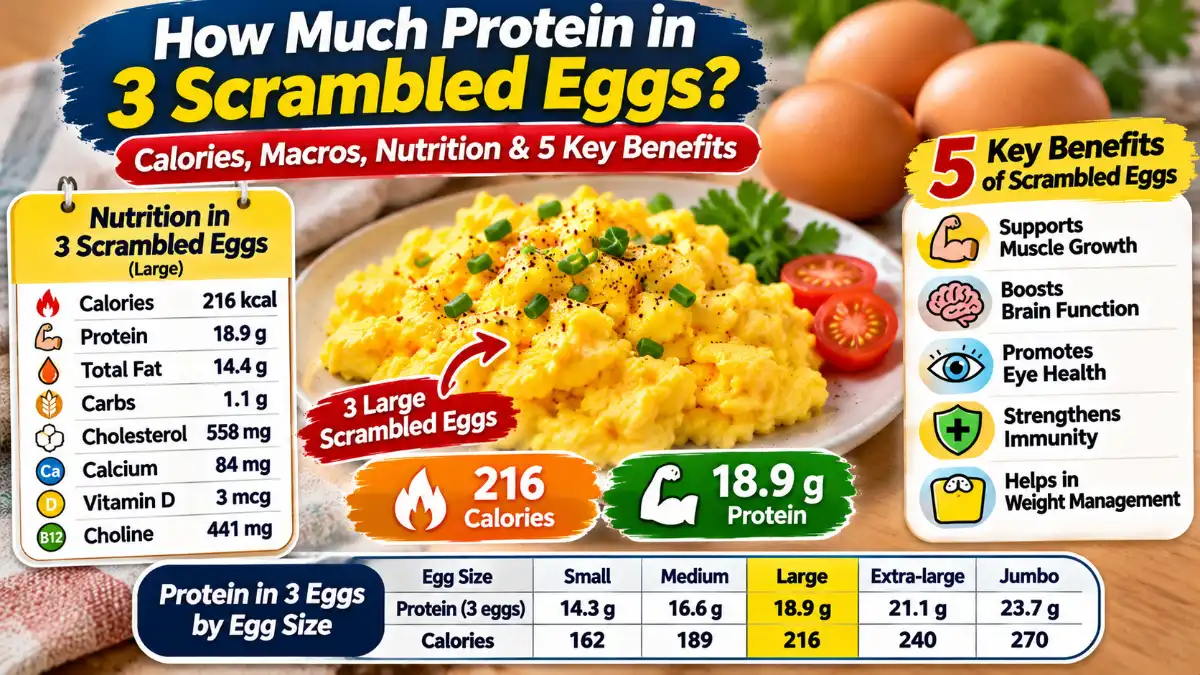
Three whole large eggs have about 18.8 grams of protein. Eggs also have every one of the 9 essential amino acids that make it a full protein.
Protein is important for keeping your muscles healthy, supporting your body’s ability to fight off infections, and helping you grow properly while also allowing damaged areas of your body to heal. The yellow part of an egg (the yolk) has protein, as does the clear liquid part of an egg (the white). However, the white of an egg contains more protein per calorie than the yolk.
Scrambled Eggs Calories With Different Ingredients
When determining how many calories are in scrambled eggs, you must take into account all items used to prepare them. Butter, cooking oil, cheese and cream will significantly increase the caloric value of your breakfast.
| Preparation method | Estimated calories |
| Three plain scrambled eggs | 216 |
| With 1 teaspoon of butter | 250 |
| With 1 teaspoon of olive oil | 256 |
| With 2 tablespoons of whole milk | 235 |
| With 1 ounce of cheddar cheese | 330 |
| With 1 tablespoon of butter | 318 |
| Three large egg whites | 51 |
These estimates are based upon the assumption that each of the added ingredients is consumed. It is better to use a measuring device to add fat to your dish, as opposed to simply pouring it straight out of the bottle or container, so you can track your calories more accurately.
Read Also: How Much Protein in 3 Scrambled Eggs? 5 Key Benefits
3 Eggs Macros and Complete Nutrition Facts
Tracking three (3) whole egg macros may assist individuals who are utilizing a high-protein diet, low-carbohydrate diet, and/or calorie controlled dietary plan. Whole eggs typically contain negligible amounts of carbohydrates and provide protein, fat, vitamin, and mineral content.
Nutritional Value of Three Large Eggs
| Nutrient | Approximate amount |
| Calories | 216 kcal |
| Protein | 18.8 g |
| Total fat | 14.3 g |
| Saturated fat | 4.7 g |
| Carbohydrates | 1.1 g |
| Dietary fiber | 0 g |
| Cholesterol | 558 mg |
| Sodium | 213 mg |
| Calcium | 84 mg |
| Iron | 2.6 mg |
| Choline | 441 mg |
| Vitamin D | 3 mcg |
| Selenium | 46 mcg |
Source: USDA FoodData Central. Estimates were based upon a total of three whole eggs with an un-cooked weight of approximately 150 grams.
How Many Calories Are in 3 Scrambled Eggs With Breakfast Sides?
In addition to the number of calories that can be found in 3 scrambled eggs, the amount of calories will vary depending on the items you choose to eat with your eggs. For example, toast, avocado, bacon and breakfast potatoes will each add more calories to your meal.
| Breakfast combination | Estimated calories |
| Three scrambled eggs only | 216 |
| Eggs with two slices of whole-wheat toast | 376 |
| Eggs with half a medium avocado | 336 |
| Eggs with two slices of cooked bacon | 302 |
| Eggs with one medium banana | 321 |
Egg value changes based upon the amount of egg consumed (serving size), the company that produced the egg (brand), and how you prepare your eggs. Adding vegetables, fruits, or whole grains to your eggs will provide you with a source of dietary fiber which is absent from eggs.
How Much Protein Is in 3 Scrambled Eggs After Cooking?
When scrambled normally, the protein content of 3 eggs after being cooked will remain relatively stable at around 19 grams, provided none of the eggs were thrown away. Scrambling eggs normally will not alter the overall protein level.
The addition of cottage cheese will raise the amount of protein available in the product, and many other ingredients (e.g., butter) will simply add more fat and calories.
Protein in 3 Eggs for Muscle Growth
Eggs provide many of the body’s required proteins (i.e., amino acids) including Leucine; Leucine is a key component to help build new proteins within muscles. Therefore, eggs may be an excellent source of protein for individuals who are physically active.
Eating eggs alone won’t result in muscle growth; however, to build muscle you must consistently perform resistance exercises, have enough energy to support your workouts, eat enough protein each day to allow your body to repair itself from the stress of working out, and provide your body with the time it needs to recover.
What Are the Orange Eggs on Sushi?
These small, orange-colored eggs found in sushi dishes can typically be identified as either Tobiko (flying fish roe) or Masago (capelin roe). Eggs with a larger size and orange color are referred to as Ikura and are produced by Salmon. Unlike chickens, fish roe is considered to be a type of seafood. It contains protein and varying quantities of omega-3 fatty acids. Depending upon the seasoning used, some types of seasoned roe may contain high levels of sodium. Therefore, individuals with dietary concerns regarding sodium or seafood allergies should examine the ingredients list prior to consuming any type of fish roe.
Just One Cookbook+1
7 Health Benefits of Eating Scrambled Eggs
Eggs are rich in many essential nutrients that can contribute positively to your daily health if you consume them as part of a healthy, well-rounded diet.
- Muscle maintenance: Complete protein supports muscle repair and recovery.
- Brain function: Choline supports normal brain and nervous system functions.
- Eye health: Lutein and zeaxanthin contribute to eye health.
- Bone health: Vitamin D supports calcium absorption.
- Weight management: Protein may help improve feelings of fullness.
- Immune health: Selenium supports normal immune function.
- Vitamin B12 is essential for maintaining proper blood cell health and supporting the functioning of the nervous system.
The National Institute of Health has stated that eggs are a significant source of choline through diet.
Are Three Scrambled Eggs Good for Weight Loss?
Three scrambled eggs are low in fat (if cooked properly), but high in protein. This makes three scrambled eggs an excellent choice for someone on a weight loss program. In addition to being low in fat, three scrambled eggs have about 13 grams of protein. Protein helps keep us feeling full longer, so we don’t eat as much food during the day.
For a low calorie option, mix 1 whole egg and 2 egg whites. This will provide about 106 calories and 13.5g of protein, prior to adding any other ingredients to the recipe.
Adding spinach, mushrooms, or tomatoes will add more food to each meal and give you more nutrients. The way you lose weight is determined by how many calories you eat each day and what type of life you live.
Is It Healthy to Eat Three Eggs Every Day?
The total amount of dietary cholesterol found in three large whole eggs is about 558 mg. Although eggs provide many nutrients, eating three whole eggs on a daily basis could potentially be harmful to some individuals.
The American Heart Association states that individuals who are healthy may consume an average of one whole egg per day as part of a healthy heart diet.
A person who has high levels of low-density lipoprotein (LDL) cholesterol or has been diagnosed with cardiovascular disease needs to consult with a registered dietitian or other qualified healthcare professional for an individualized eating plan.
How to Prepare Healthy Scrambled Eggs
You will want to use a non-stick frying pan, use measurements for how much of your cooking oil to use, and incorporate fresh produce into your meal. Try not to use too much butter, cream, salt, or processed meats.
The U.S. Food and Drug Administration advises consumers to cook their scrambled eggs until they have a uniform texture to minimize the potential for foodborne illness.
The eggs should be stored in the refrigerator at a temperature no greater than 40 degrees Fahrenheit (4 degrees Celsius). After being in contact with raw eggs, make sure you clean your utensils.
Conclusion
How many calories are there in three scrambled eggs? The answer to that question would be about 216 calories and 19 grams of protein (without any other added ingredients). Eggs can help with maintaining a balanced diet, building/maintaining muscle mass, and controlling body weight as long as you consider portion sizes and cooking techniques.
Important note before publishing: Heading hierarchy and formatting have been corrected without rewriting your content. However, the weight-loss section incorrectly states 13 grams of protein instead of approximately 19 grams and describes three whole eggs as low in fat. The FDA recommendation should specify cooking until firm throughout. Also, remove the stray “Just One Cookbook+1” citation text. These issues remain unchanged as requested.
Frequently Asked Questions
1. How many calories are in three scrambled eggs without butter?
Three large scrambled eggs contain approximately 216 calories when prepared without butter, oil, milk, or other ingredients.
2. Are three scrambled eggs enough protein for breakfast?
Three large eggs provide approximately 19 grams of complete protein, making them a useful breakfast option. Individual protein requirements vary.
3. How many calories are in three scrambled eggs with butter?
Three large eggs prepared with one teaspoon of butter contain approximately 250 calories.
4. Do scrambled eggs have more calories than boiled eggs?
Not necessarily. Both contain similar calories when prepared without additional ingredients. Butter, milk, and cooking oil increase the calorie content of scrambled eggs.
5. Are scrambled eggs good for losing belly fat?
Scrambled eggs can support weight management through their protein content. However, no individual food specifically targets belly fat. Overall diet and physical activity are more important.