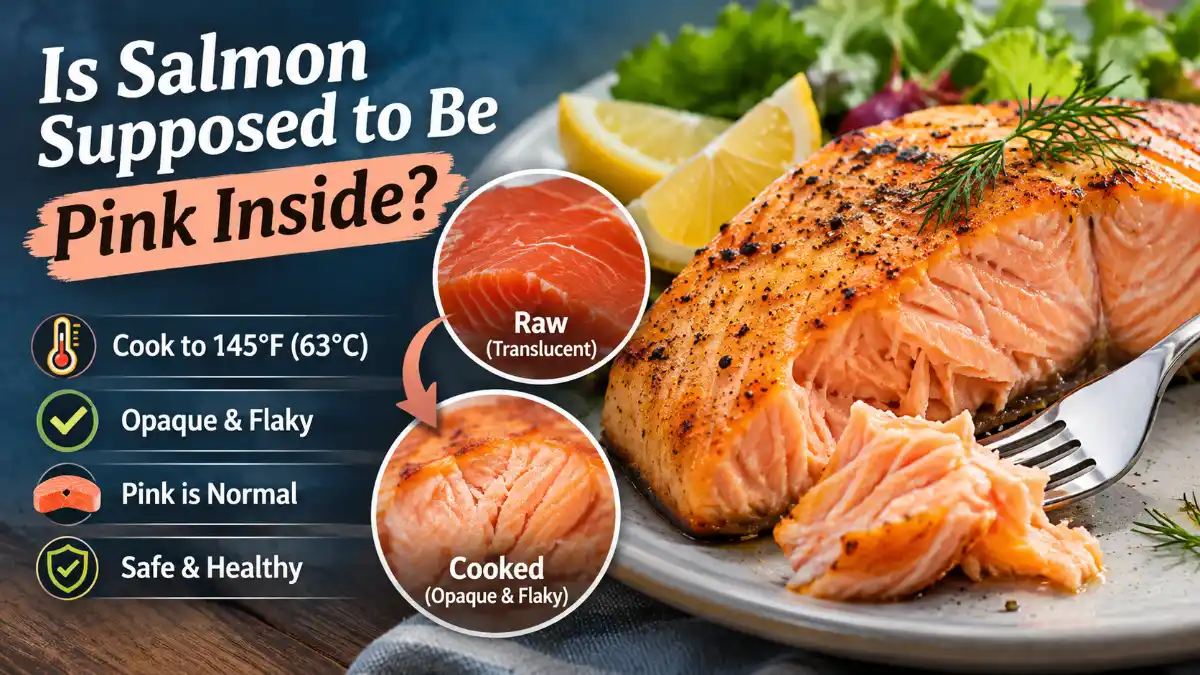
Is salmon supposed to be pink inside? Yes. Salmon can remain pink or orange even after it is fully cooked. Its natural color does not automatically mean the fish is raw or unsafe. However, the safest way to confirm doneness is to check that its internal temperature reaches 145°F (63°C), as recommended by the U.S. Food and Drug Administration (FDA).
Properly cooked salmon generally looks opaque, feels tender but firm, and separates easily into flakes. A glossy, translucent center can suggest that the fish needs more cooking.
The important distinction is between salmon’s natural pink color and the translucent appearance of undercooked flesh. Knowing the difference helps prevent both undercooking and unnecessarily drying out your fish.
Is Salmon Supposed to Be Pink Inside Cooking?
Salmon gets its distinctive pink or orange color from astaxanthin, a naturally occurring carotenoid pigment.
Wild salmon obtains this pigment through its diet, while farm-raised salmon typically receives astaxanthin in its feed.
During cooking, heat changes the structure of the fish’s proteins. This makes the flesh firmer and more opaque, but the pink pigmentation generally remains.
The exact shade varies depending on the species. Sockeye salmon often has deep reddish-orange flesh, whereas Atlantic salmon usually looks lighter pink.
As a result, properly cooked salmon does not need to become completely white. Its appearance should be judged alongside texture and, most importantly, internal temperature.
When Is Salmon Done? 5 Signs of Properly Cooked Fish
Recognizing when is salmon done involves checking several characteristics rather than relying on one visual clue.
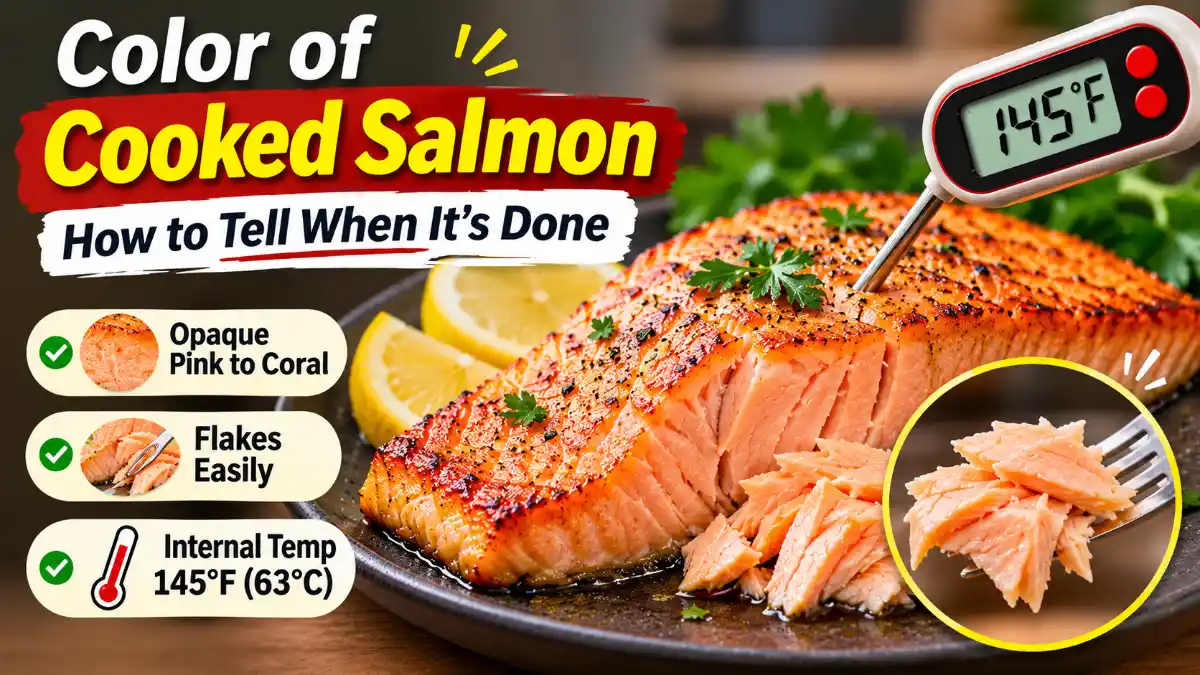
1. The Internal Temperature Reaches 145°F
A digital food thermometer is the most reliable tool for checking salmon doneness.
Insert the probe into the thickest part of the fillet. For a thin fillet, inserting it sideways can help position the probe correctly.
The FDA recommends cooking fin fish to an internal temperature of 145°F.
FDA
2. The Flesh Becomes Opaque
Raw salmon has a glossy, somewhat translucent appearance. As it cooks, the flesh becomes more opaque.
The center may remain pink, but it should no longer have a distinctly raw-looking, transparent appearance when fully cooked.
3. The Fish Flakes Easily
Gently press the thickest portion with a fork.
Cooked salmon should separate into natural flakes without excessive pressure. However, flaking alone does not establish that the fish has reached a safe temperature.
4. The Texture Feels Firm but Moist
Fully cooked salmon should feel tender, moist, and slightly firm.
An unusually slippery or jelly-like center can indicate insufficient cooking, especially when combined with a translucent appearance.
5. The Fish Has No Signs of Spoilage
Fresh salmon should not have a strong sour, rancid, or ammonia-like odor.
A fishy or unpleasant smell can indicate spoilage, but the absence of an odor does not guarantee safety. Cooking does not reliably make spoiled fish safe to eat.
What Temperature Is Salmon Fully Cooked At?
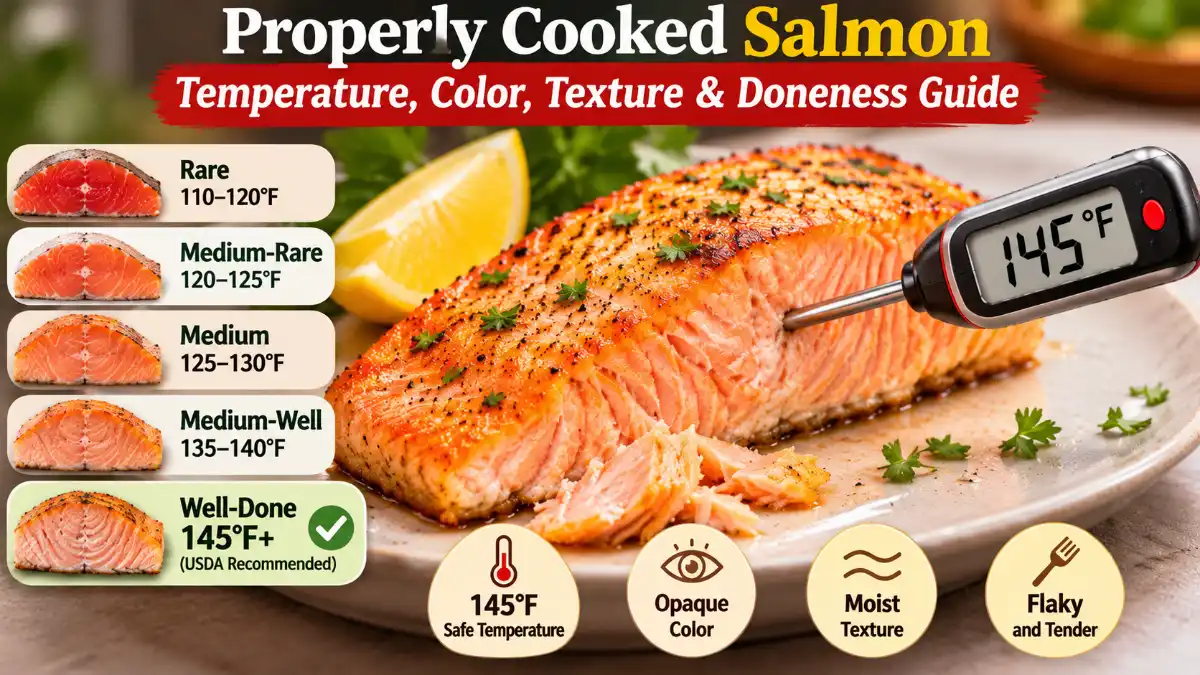
The FDA-recommended minimum internal temperature for salmon is 145°F (63°C).
Some recipes recommend lower temperatures to achieve a softer texture. However, those culinary preferences should not be confused with the FDA’s recommended safe cooking temperature.
Salmon Internal Temperature Chart
| Temperature | Typical appearance | Food safety guidance |
| Below 120°F | Raw-like or highly translucent | Below recommended temperature |
| 120–129°F | Soft, often translucent center | Below recommended temperature |
| 130–139°F | Firmer, sometimes still translucent | Below recommended temperature |
| 140–144°F | Often mostly opaque | Below recommended temperature |
| 145°F (63°C) | Generally opaque and flaky | FDA-recommended minimum reached |
| Above 145°F | Increasingly firm and potentially dry | Exceeds recommended minimum |
These texture descriptions are approximate. Salmon species, thickness, and cooking methods affect its appearance.
The FDA also identifies opaque flesh that separates easily with a fork as an alternative doneness indicator when a thermometer is unavailable.
Read Also: Medium Salmon Temp: Safe Cooking Guide, Health Benefits, and Doneness Chart
Raw vs. Cooked Salmon: How to Tell the Difference
Visual examples of raw and cooked salmon. Appearance can vary; use a thermometer to confirm safe cooking.
| Feature | Raw salmon | Fully cooked salmon |
| Color | Pink, orange, or reddish | Usually remains pink or orange |
| Appearance | Glossy and translucent | More opaque |
| Texture | Soft and slippery | Tender and firmer |
| Flaking | Does not usually separate easily | Separates into flakes |
| Safety | Intended cooking step incomplete | Confirm 145°F internally |
The biggest difference is not whether the salmon looks pink. It is how the flesh changes during cooking.
Can You Eat Salmon That Is Pink in the Middle?
Yes, pink salmon can be safe to eat when it has been cooked to the recommended internal temperature.
However, eating raw or undercooked salmon carries a greater risk of foodborne illness.
Potential hazards include bacteria and parasites associated with raw seafood.
Some restaurants serve salmon at lower temperatures for a softer texture, but this does not mean the preparation meets the FDA’s standard cooking recommendation.
People who are pregnant, older adults, young children, and individuals with weakened immune systems should take particular care to avoid undercooked seafood.
The CDC identifies properly cooked fish as the safer choice during pregnancy.
CDC
How to Cook Salmon Without Drying It Out
Cooking salmon correctly involves balancing heat, thickness, and temperature.
Baking Salmon
Preheat the oven to 400°F (204°C). Place the fillet on a lightly oiled baking tray and season with salt, pepper, herbs, or lemon.
Bake until the thickest portion reaches 145°F. An average fillet may take approximately 10–15 minutes, but thicker cuts require more time.
Pan-Searing Salmon
Heat a little oil in a skillet over medium heat. Place the salmon skin-side down if it has skin.
Cook until the skin becomes crisp, then turn or adjust the heat as needed. Continue cooking until the center reaches 145°F.
Air-Frying Salmon
Preheat the air fryer to approximately 390°F (199°C). Arrange the salmon in a single layer.
Cooking may take around 7–12 minutes, depending on thickness and appliance performance. Check the internal temperature rather than relying only on the timer.
Helpful tip: Avoid repeatedly cutting the fish open to test doneness. A thin-probe food thermometer allows you to measure the temperature with less disruption to the fillet.
What Is the White Stuff on Cooked Salmon?
The white substance sometimes appearing on cooked salmon is called albumin.
Albumin is a naturally occurring protein that moves toward the surface as the fish heats. It becomes visible when the protein coagulates.
It is safe to eat and does not indicate spoilage.
You may notice more albumin when salmon is cooked at high heat or for an extended period. Gentle cooking can sometimes reduce its appearance.
Albumin also does not establish whether salmon has reached 145°F, so it should not replace a temperature check.
Health Risks of Eating Undercooked Salmon
Raw or undercooked salmon can expose consumers to harmful microorganisms or parasites.
Possible symptoms of foodborne illness include:
- Nausea and vomiting
- Diarrhea
- Abdominal pain
- Fever
- Dehydration
Symptoms may appear within hours or take several days, depending on the cause.
Seek medical care for severe symptoms, including bloody diarrhea, dehydration, persistent vomiting, or high fever.
Pregnant people and individuals with weakened immune systems should contact a healthcare professional promptly if they suspect foodborne illness.
Following safe cooking, handling, and storage practices significantly reduces preventable risks.
How to Store Salmon Safely Before and After Cooking
Proper storage is just as important as reaching the correct cooking temperature.
Keep raw salmon refrigerated at 40°F (4°C) or below. If you will not cook it within approximately two days, freeze it.
Thaw frozen salmon in the refrigerator. For faster thawing, place it in a sealed bag in cold water, changing the water regularly.
Cooked salmon should be refrigerated within two hours, or within one hour when the surrounding temperature exceeds 90°F (32°C).
Refrigerated cooked salmon generally keeps for 3–4 days when stored properly. Reheat leftovers to 165°F (74°C).
Never taste salmon to determine whether it has spoiled. When storage conditions are uncertain, discarding it is safer.
FDA+1
Is Fully Cooked Salmon Healthy?
Salmon is a nutritious food that provides high-quality protein, omega-3 fatty acids, vitamin B12, and other important nutrients.
Omega-3 fats are associated with cardiovascular benefits when fish is included in an overall healthy dietary pattern.
Salmon is also considered a lower-mercury seafood choice by the FDA and Environmental Protection Agency.
For people who are pregnant or breastfeeding, the FDA recommends 2–3 weekly servings from its lower-mercury “Best Choices” category, which includes salmon.
FDA+1
Baking, grilling, and gentle pan-cooking are practical preparation methods. The healthiest approach depends on the ingredients used and the individual’s dietary needs.
Frequently Asked Questions
1. Is salmon supposed to be pink when cooked?
Yes. Salmon naturally retains pink or orange pigmentation after cooking. Its color alone cannot confirm safety. Use a food thermometer to check that the thickest section reaches 145°F (63°C).
2. Can undercooked salmon cause food poisoning?
Yes. Undercooked salmon may contain harmful bacteria or parasites. Possible symptoms include nausea, diarrhea, vomiting, and abdominal discomfort. Proper cooking helps reduce these risks.
3. Is salmon safe to eat during pregnancy if it is pink inside?
Yes, provided it reaches the recommended internal temperature of 145°F. Pregnant people should avoid raw or undercooked fish because foodborne infections can cause serious complications.
4. Is salmon cooked when the center is slightly translucent?
Not necessarily. A translucent center may indicate that the salmon is undercooked. Appearance is not a reliable substitute for temperature measurement, so check the thickest portion with a thermometer.
5. How long does cooked salmon last in the refrigerator?
Properly refrigerated cooked salmon generally lasts 3–4 days at 40°F (4°C) or below. Store it promptly in a sealed container and reheat leftovers to 165°F (74°C).
Final Thoughts
Salmon does not have to lose its pink color to be fully cooked. A naturally pink center can be perfectly normal, but color and texture alone cannot consistently establish whether the fish is safe.
For the most reliable result, cook salmon until its thickest portion reaches 145°F (63°C). Following proper food handling and storage practices helps you enjoy tender, nutritious salmon while reducing foodborne illness risks.