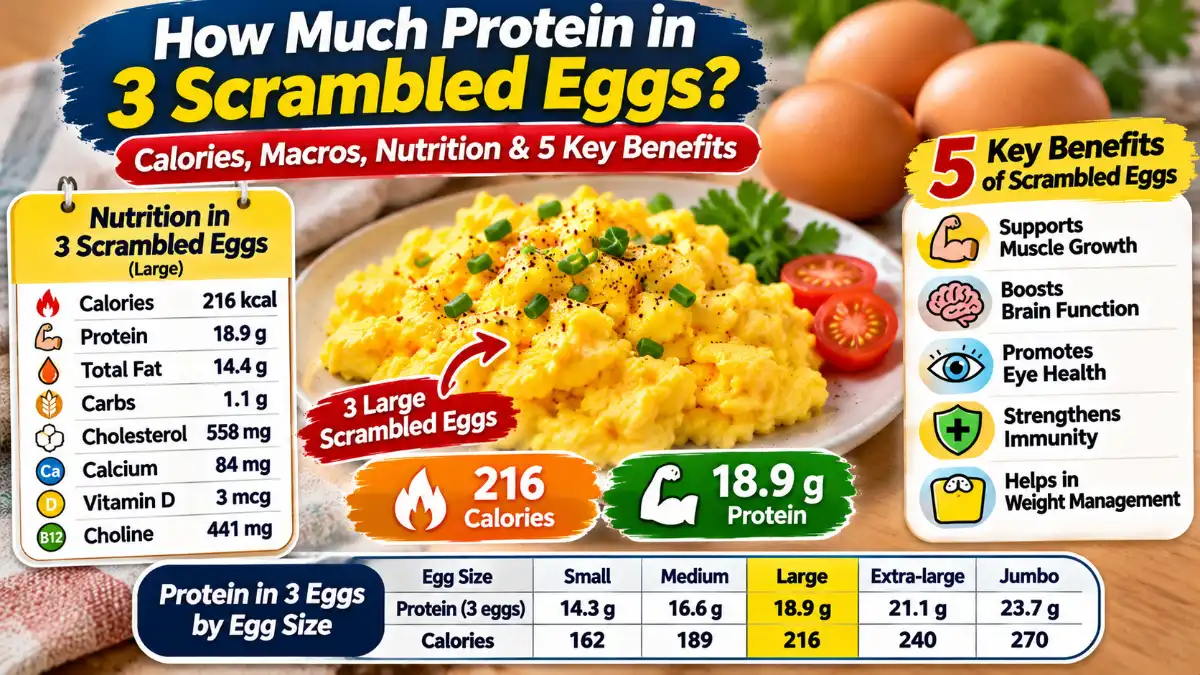
How Much Protein in 3 Scrambled Eggs prepared with no butter, oil, milk, or cheese will provide you with about 18.9 grams of protein, 216 calories, and 14.4 grams of fat. Because these three large scrambled eggs have all nine of the essential amino acids, they are a great way to get your daily intake of complete protein for muscle development, tissue repair, and overall healthy eating.
The precise nutritional content will depend upon how large the egg is, and the manner in which it was prepared. Butter and/or cheese added to an egg will increase the calorie count, but other ingredients like vegetables and/or egg whites may provide a better nutritional balance for your morning meal.
Nutritional Value of 3 Scrambled Eggs
Eggs contain many of the key nutrients needed by the human body within a single serving. According to the United States Department of Agriculture’s FoodData Central, a three-egg serving of large whole eggs will contain the approximate amounts of the various nutrient components listed below.
| Nutrient | Amount |
| Calories | 216 kcal |
| Protein | 18.9 g |
| Total fat | 14.4 g |
| Saturated fat | 4.7 g |
| Carbohydrates | 1.1 g |
| Dietary fiber | 0 g |
| Cholesterol | 558 mg |
| Sodium | 213 mg |
| Choline | 441 mg |
| Vitamin D | 3 mcg |
| Calcium | 84 mg |
| Iron | 2.6 mg |
These numbers are based upon 3 large, whole eggs prior to adding other ingredients during preparation. The actual nutritional values of the eggs will differ slightly from what is shown here.
How Much Protein in 3 Scrambled Eggs Based on Egg Size?
The amount of protein in each egg is not consistent. In general, larger eggs will have a higher concentration of protein and calories due to their greater volume of edible content.
| Egg size | Protein in 3 eggs | Calories |
| Small | 14.3 g | 162 |
| Medium | 16.6 g | 189 |
| Large | 18.9 g | 216 |
| Extra-large | 21.1 g | 240 |
| Jumbo | 23.7 g | 270 |
A large egg can serve as a reference point for daily protein intake and caloric intake. If you consistently buy other sized eggs, then look on the outside of the package.
Read Also: 3 Eggs Macros: Calories, Protein, Fat, and Carbs
Understanding Egg Calories and Protein Content
How Many Calories Is 3 Eggs?
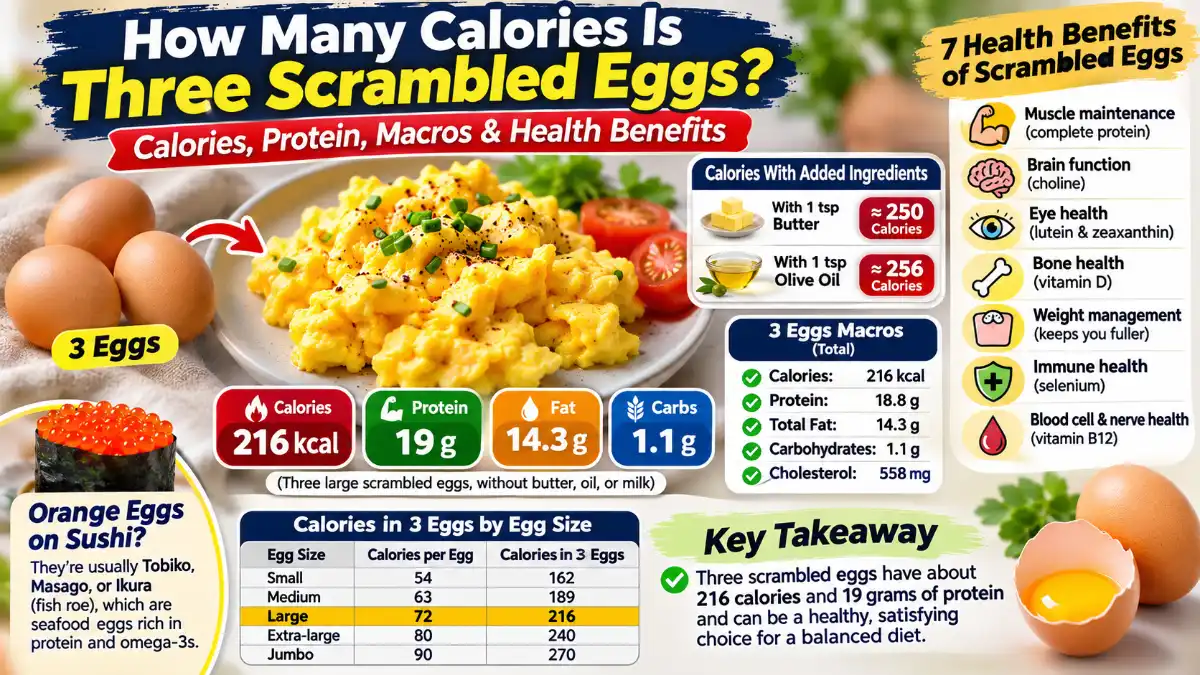
A frequent nutritional query is “what amount of calories does 3 eggs contain?” Three whole large eggs will provide about 216 calories prior to adding anything to them. As such, they are an easy breakfast choice for individuals looking to control their calorie intake, and yet still consume enough protein.
3 Eggs Calories
When counting the calories in 3 eggs, be sure to take into consideration any fats used for cooking or as toppings. One teaspoon of olive oil contains about 40 calories, whereas one teaspoon of butter contains approximately 34 calories. Both types of fat will significantly increase the overall caloric value of the food you consume.
2 Eggs Calories
If you are watching your calorie intake and have questions about the nutritional value of two large whole eggs, there are about 144 calories in those two eggs. There is also 12.6g of protein, and 9.6g of fat. Since this is a small portion size, it can be combined with oatmeal, whole-grain toast, or fresh fruit for a healthy start to your day.
3 Eggs Protein
On average, the amount of protein provided by three large eggs is approximately 18.9 grams. In addition to providing protein, eggs are a good source of all nine essential amino acids. One of these amino acids is leucine, which is particularly useful for helping muscles synthesize protein and recover from exercise.
How Much Protein in 3 Eggs?
In order to find out the amount of protein in 3 eggs that is provided by each part of the egg (the white vs. the yolk), you can expect to find approximately 10.8 grams of protein in the egg white and 8.1 grams in the egg yolk. While both contribute to the total amount of protein in the egg, the egg yolk contains the majority of the fat, as well as many of the essential vitamins and minerals.
3 Scrambled Eggs Calories Without Butter
A person who counts the calories in 3 scrambled eggs (without butter) will have an approximate calorie count of 216. If they use a non-stick pan to make those eggs, without adding any fat to it, they should be able to keep their calorie intake within a similar range as what was previously mentioned. Adding herbs and/or vegetables to your eggs can add flavor.
3 Scrambled Eggs Calories With Butter and Milk
When you are figuring out the calorie count for three scrambled eggs made with butter and milk, be sure to count each of those ingredients. If you add one teaspoon of butter, and two tablespoons of whole milk to the eggs, then the total number of calories will be around 269. The more dairy or cooking fat you use, the higher that number will go.
How Many Calories in 3 Eggs With Different Cooking Methods?
Knowing how much of your calorie intake from 3 eggs is due to cooking ingredients will help you track your meals accurately. There is no added fat needed for boiling and poaching, however, when making fried eggs or scrambled eggs, there may be an addition of butter or oil. The way you prepare the eggs will have an effect on the nutritional value.
Calories and Protein in 1–5 Eggs
The below comparison will assist in choosing a serving size to meet your dietary needs.
| Number of large eggs | Calories | Protein |
| 1 egg | 72 | 6.3 g |
| 2 eggs | 144 | 12.6 g |
| 3 eggs | 216 | 18.9 g |
| 4 eggs | 288 | 25.2 g |
| 5 eggs | 360 | 31.5 g |
All estimates exclude additional cooking ingredients.
Scrambled Eggs With Different Ingredients
Adding various ingredients to your scrambled egg preparation will dramatically alter the nutritional value of those eggs in terms of both calories and proteins.
| Preparation | Calories | Protein |
| 3 plain scrambled eggs | 216 | 18.9 g |
| With 1 tsp butter | 250 | 18.9 g |
| With 1 tsp olive oil | 256 | 18.9 g |
| With 2 tbsp whole milk | 235 | 19.9 g |
| With 1 oz cheddar cheese | 330 | 25.9 g |
| With 2 additional egg whites | 250 | 26.1 g |
Egg whites are an excellent way to get additional protein into your diet without drastically increasing your calorie intake.
5 Health Benefits of Eating Scrambled Eggs
Supports Muscle Growth and Recovery
Eggs provide high-quality protein to assist with maintaining and repairing damaged muscle fibers. Consuming eggs in conjunction with adequate daily protein intake, and performing resistance exercises regularly will help promote muscle growth, as well as enhance post-workout recovery.
Helps With Weight Management
Eating protein-rich foods can assist you with staying full for longer periods of time during the day. Eggs alone will not result in weight loss. It is your total calorie intake, the amount of exercise that you do, and what you eat on a regular basis that will impact how much weight you lose or gain in the long run.
Supports Brain and Nervous System Function
Eggs contain a high level of choline, a vital nutrient that is required for healthy brain function. The National Institutes of Health state that choline helps regulate memory processes, supports the overall functioning of our nervous system and maintains the structural integrity of cell membranes.
Contributes to Eye Health
Eggs are a source of lutein and zeaxanthin. These two carotenoids are part of the retina. Both of these nutrients support the healthy function of your eyes; however, consuming eggs will not protect you from developing eye disorders nor will they treat existing eye problems.
Supports Bone and Immune Health
The National Institutes of Health (NIH) Vitamin D Fact Sheet states that the vitamin D found in egg yolks is necessary for the absorption of calcium by the body, as well as for the maintenance of healthy bones. In addition, the NIH Vitamin D Fact Sheet explains how vitamin D contributes to proper immune and muscular functions.
Whole Eggs vs. Egg Whites
Whole eggs and egg whites offer different nutritional advantages.
| Nutrient | 3 whole eggs | 3 egg whites |
| Calories | 216 | 51 |
| Protein | 18.9 g | 10.8 g |
| Fat | 14.4 g | Less than 0.2 g |
| Cholesterol | 558 mg | 0 mg |
Eggs contain a higher amount of both overall protein and other essential vitamins/minerals than just the egg white. Egg whites contain a greater percentage of protein than the whole egg.
Combining one complete egg with three egg whites gives you about 123 calories and 17.1 grams of protein.
Are 3 Scrambled Eggs Good for Weight Loss?
Plain scrambled eggs are a good addition to an overall healthy weight-loss program. The high level of protein in the eggs will help to keep you full longer if they are consumed with other high fiber foods.
Since there is no dietary fiber in eggs, try to serve them with spinach, tomato, whole wheat toast, or fresh fruit. You may also want to limit your use of butter, cream, and cheese to help you control how many calories you consume.
Are 3 Eggs Enough Protein for Muscle Building?
Approximately 19 grams of complete protein are provided by three eggs, which can be an excellent addition to meet your daily requirement for protein. Your specific needs will vary based upon your body weight, age, activity levels, and personal fitness goals.
Increasing the amount of protein in your morning meal can be done by adding greek yogurt, cottage cheese, or extra egg whites.
Is Eating 3 Eggs Every Day Healthy?
Eating three whole eggs on occasion can be included in most well-balanced diets. On the other hand, if you plan to consume this number of eggs each day, you should take into account that three large eggs provide about 558 mg of cholesterol.
The American Heart Association has stated that most adults are able to eat one whole egg per day and still maintain a heart healthy diet.
Persons who have high levels of “bad” cholesterol (LDL), are diabetic, or suffer from heart disease should consult with their physician or registered dietician regarding their intake of eggs.
How to Prepare Healthy Scrambled Eggs
A simple, healthy breakfast can be made using few ingredients. Beat three eggs together, then place 1 tsp. of olive oil into a heated non-stick frying pan, and combine the chopped spinach and tomato.
Slowly add the eggs, then continue cooking on low to medium heat while stirring occasionally, until the eggs are completely cooked. Add black pepper and a little salt for flavor.
Eggs need to be kept cold (under 40 degrees) and cooked completely in order to help decrease the likelihood of getting sick from eating them, as stated by the U.S. Food and Drug Administration. Individuals who are allergic to eggs must not eat them unless told to do so by their doctor.
Conclusion
Knowing the amount of protein in three scrambled eggs will allow you to create a healthy breakfast. Three large eggs will contain about 18.9 grams of protein and 216 calories with no additional ingredients.
Eggs eaten with vegetables, whole grains, etc., help to create a balanced diet and assist in controlling both caloric intake and protein consumption.
Frequently Asked Questions
1. Do 3 scrambled eggs contain 30 grams of protein?
No. Three large scrambled eggs contain approximately 18.9 grams of protein. Adding four large egg whites increases the total to approximately 33.3 grams.
2. Does scrambling eggs reduce protein?
Normal cooking does not significantly reduce the total protein content. Cooking changes the protein structure and can improve its digestibility.
3. Are scrambled eggs healthier than boiled eggs?
Both provide valuable nutrients. Boiled eggs require no added cooking fat, while scrambled eggs may contain additional calories depending on preparation.
4. Are three scrambled eggs good for a low-carb diet?
Yes. Three large whole eggs contan approximately 1.1 grams of carbohydrates before additional ingredients, making them suitable for many low-carb eating patterns.
5. Can eating three eggs raise cholesterol?
Regularly consuming three whole eggs may increase LDL cholesterol in some individuals. The response depends on genetics, overall dietary habits, and existing health conditions.