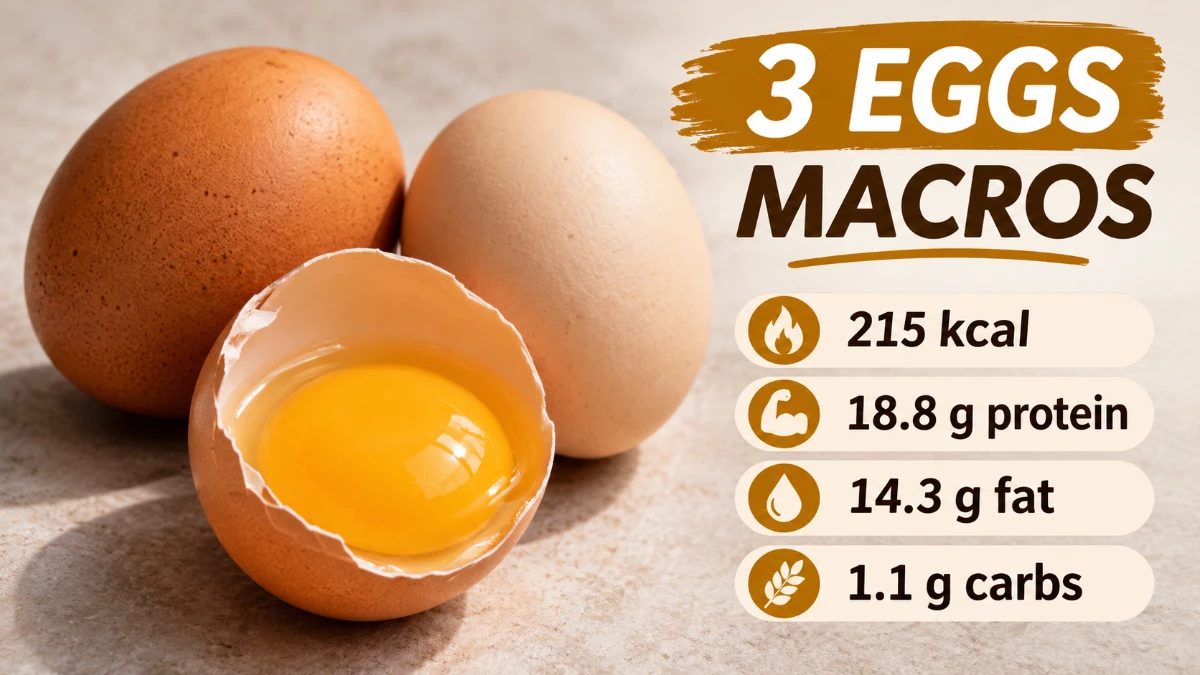
3 Eggs Macros Three large, raw chicken eggs weigh approximately 150 g and contain about 215 calories, 18.8g protein, 14.3g fat and 1.1g carbohydrate. If you calculate the calories for each egg separately (then round), you will likely find 216 calories. Nutritional content of eggs will vary based upon their size, how they were cooked, and what else was added during preparation.
Eggs are a simple way to obtain a full supply of protein while having a small amount of carbohydrate. Knowing the nutritional values of eggs helps make food tracking easier whether you are looking at your daily macro-nutrient consumption, keeping an eye on calories consumed each day, or making plans for protein-rich meals. In addition to being aware of how boiled, scrambled, and fried eggs differ in terms of nutrition; it is helpful to know that how eggs are prepared will determine what is entered into your nutrition database.
3 Large Eggs Nutrition Facts
In addition to being a rich source of protein (about 19 grams) and fat (about 14 grams), each of the three whole eggs has most of its caloric value provided by these two primary nutrient groups. Carbohydrates make up a very small percentage of the total caloric content.
The following table lists the nutritional content of raw, whole eggs that have not been altered with additional components.
| Nutrient | 1 Large Egg (50 g) | 3 Large Eggs (150 g) |
| Calories | 71.5 kcal | 214.5 kcal |
| Protein | 6.28 g | 18.84 g |
| Total fat | 4.76 g | 14.27 g |
| Carbohydrates | 0.36 g | 1.08 g |
| Saturated fat | 1.56 g | 4.69 g |
| Cholesterol | 186 mg | 558 mg |
| Edible weight | 50 g | 150 g |
Using a single value for each nutrient based on a constant edible weight. To track these items on an ongoing basis, you can use the rounded total (215 calories, 18.8g of protein, 14.3g of fat, and 1.1g of carbohydrates) as your guide.
Where Do the Calories in Three Eggs Come From?
Whole eggs derive almost all of their calorie content from protein and fat. Protein provides about 4 calories for each gram of protein consumed. Fat provides about 9 calories for each gram of fat consumed. Carbohydrates do not provide much energy since eggs have such low levels of carbohydrates.
All of the 9 essential amino acids are present in egg protein, which makes it a complete protein. Both egg whites and egg yolks contain protein; however, egg whites have significantly less fat than egg yolks.
The majority of fat, cholesterol, and other important nutrients including choline, vitamin A, vitamin D, and vitamin B12 are contained in the yolk of an egg. When you remove the yolk, there is a change to more than just the number of calories.
How Do Cooking Methods Affect 3 Eggs Macros?
The cooking process changes both the amount of water in an egg and the makeup of that egg. This can result in differences between the nutritional reference values of a raw versus a cooked egg. Additionally, adding ingredients like butter, oil, milk, etc., will also affect the overall total.
3 Boiled Eggs Macros
The nutritional value of three (3) large hard boiled eggs, which equates to about 150 grams of cooked edible egg, include:
Calories: 233 kcal
Protein: 18.9 g
Fat: 15.9 g
Carbohydrates: 1.7 g
Boiling doesn’t increase calorie intake via water. Differences in nutritional value of raw vs. boiled foods are due to the fact that they have different nutritional measurement techniques used on each, i.e., differences in moisture content and the composition of the sample.
Hard-boiled eggs make tracking macros easy since there is no cooking fat needed to prepare them. But, keep in mind that mayo, dressings, and other toppings/sauces need to be tracked separately.
The actual weight of the cooked egg may be different from its original raw weight. Therefore, measuring the edible portion will increase the level of accuracy.
3 Scrambled Eggs Macros
Eggs that have been scrambled and are free of additional ingredients will contain a similar amount of nutrition as the original egg. However, there may be some difference in the way that cooked foods are evaluated.
Additional ingredients create the most noticeable changes.
For example, one teaspoon of butter provides about 34 calories and 3.8 grams of fat. When you combine this amount of butter with three large uncooked eggs, you have provided an estimated calorie/fat count for these ingredients of approximately 249 calories and 18.1 grams of fat.
Adding milk can change the calorie, carbohydrate and/or protein content of a recipe based on how much you add and what kind of milk you use.
For a precise way to monitor your intake, you should record each ingredient in the meal as opposed to assuming that all servings of scrambled eggs will provide the same nutritional value.
3 Fried Eggs Macros
Fried eggs may contain more calories than eggs cooked without added fat.
One teaspoon of olive oil contains about 40 calories and 4.5 grams of fat. When one consumes this with three large eggs, the total calories provided by the two ingredients are about 255 and the total fat content is about 18.8 grams.
The amount of cooking oil left in the pan can vary. This variation is determined by how you prepare your food.
When using a nonstick pan with little oil you will be able to decrease the amount of added fat, however when frying with larger quantities of either butter or oil your caloric intake will increase significantly.
Read more: Pinto Beans vs Black Beans Nutrition
3 Egg Whites vs. 3 Whole Eggs: Macro Comparison
When you remove the yolk from three whole eggs to leave only three egg whites, those three egg whites will have fewer calories and far less fat than the three whole eggs. However, by removing the yolk, you will be lowering your intake of protein for that same amount of eggs.
This table shows how much protein is in both the whites of 3 large raw whole eggs and the whites of 3 large eggs.
| Nutrient | 3 Whole Eggs | 3 Egg Whites |
| Calories | 215 kcal | 51 kcal |
| Protein | 18.8 g | 10.8 g |
| Total fat | 14.3 g | 0.2 g |
| Carbohydrates | 1.1 g | 0.7 g |
| Cholesterol | 558 mg | 0 mg |
The use of three whole eggs provides approximately eight grams more protein than the use of three egg whites. However, the use of three whole eggs contains significantly more calories and fat.
Egg whites can be a great option for people who want protein and as little fat as possible. Whole eggs provide more protein in each egg, as well as many other vitamins and minerals that can be found in the yolk.
In addition to combining whole eggs with extra egg whites for the purpose of adjusting the calorie content, protein content, and fat content while still being able to consume at least some of the yolk in your meal.
Both options are not necessarily better for all people. Your diet needs, calorie targets, and personal health factors will determine which option is best.
Does Egg Size Change the Macros?
Yes, larger eggs contain more food, so they provide more energy (calories), protein, and fat.
In the U.S., eggs are classified according to their shell-on weight, however, the majority of nutrition calculations are based on the egg’s edible weight excluding the shell.
Approximate edible weights include:
| Egg Size | Edible Weight per Egg |
| Medium | 44 g |
| Large | 50 g |
| Extra-large | 56 g |
| Jumbo | 63 g |
The weight of edible egg in three large eggs is roughly 150 grams, and the weight of edible egg in three extra-large eggs is approximately 168 grams.
The effect may alter the amount of protein and calories, especially if you monitor what you eat on an ongoing basis.
Egg sizes are labeled differently by country. If you require exact measurements, it is better to rely on the edible weight (in grams) of an egg rather than just the label of a carton.
How to Track 3 Eggs in Your Daily Macros
For accurate food tracking, start with the egg size and preparation method.
If you consume three whole raw eggs, use about 215 calories, 18.8 grams of protein, 14.3 grams of fat and 1.1 grams of carbohydrates as your baseline.
When selecting the proper way to cook your eggs (boiled), please choose the correct option from the “cooked egg” options. If you plan on making either scrambled or fried eggs, please list any additional ingredients you will be using such as butters, oils, milks, etc.
If you use a prepared-food entry which has included oil or butter, then do not record that cooking fat again.
The estimate of nutritional value is based on the measurement of a food’s composition. Because of the inherent variations in each egg and the convention of rounding, there will be some discrepancies among different tracking app measurements.
For the most part, being consistent in how you measure your portion sizes and the way you record your ingredients is going to be more beneficial to you than trying to find small differences in decimal numbers.
Frequently Asked Questions
1. How Much Protein Is in 3 Eggs?
Three large whole raw eggs contain approximately 18.8 grams of protein. Both the egg whites and yolks contribute protein. The exact amount depends on egg size, with larger eggs generally containing more protein.
2. How Many Calories Are in 3 Eggs?
Three large raw whole eggs contain approximately 215 calories, often reported as 216 calories when individual egg values are rounded. Three large hard-boiled eggs provide approximately 233 calories using a standard 150-gram cooked-food reference. Added cooking ingredients can increase the total.
3. Are 3 Eggs Low in Carbohydrates?
Yes. Three large whole raw eggs contain approximately 1.1 grams of carbohydrates. This makes eggs naturally low in carbs, although bread, potatoes, sauces, and other foods served with them can considerably increase the carbohydrate content of the meal.
4. Can I Eat 3 Eggs While Trying to Lose Weight?
Three eggs can fit into a weight-loss diet when their calories are included in your overall daily intake. Their protein content may help support fullness, but weight management depends on total calorie balance, dietary patterns, and individual needs rather than eating one particular food.
5. Are 3 Whole Eggs Better Than 3 Egg Whites?
Three whole eggs provide more total protein, calories, fat, and several nutrients found in the yolks. Three egg whites offer protein with substantially fewer calories and almost no fat. The better option depends on your nutritional goals, dietary preferences, and any personal medical guidance.