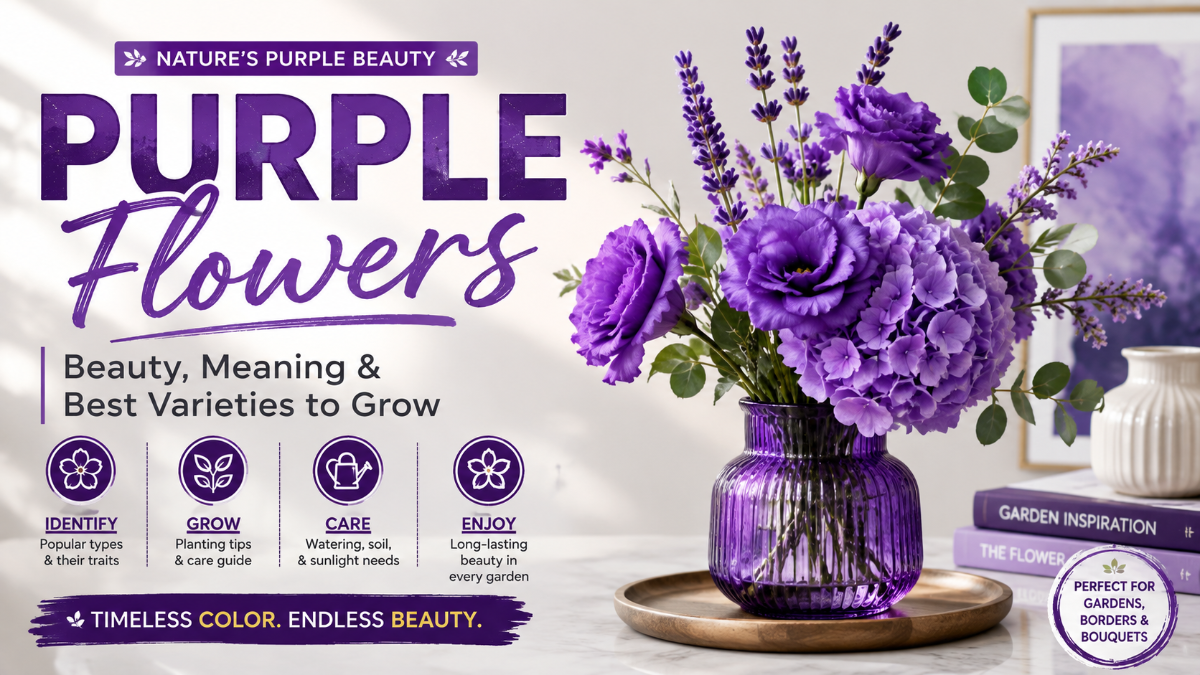
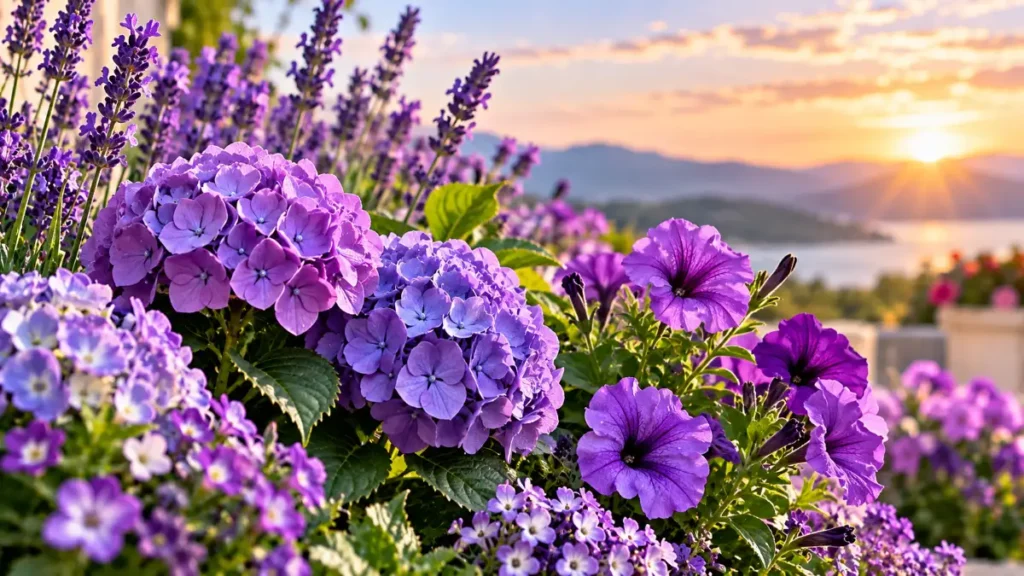
Purple flowers span annuals, perennials, shrubs, bulbs, vines, and wildflowers that bloom across every season of the year. Popular choices include lavender, salvia, iris, allium, catmint, and wisteria, each suited to different climates and garden conditions. This guide helps you identify an unfamiliar bloom, choose the right violet-hued plants for your specific site -whether that’s full sun, deep shade, a container, or a pollinator garden -and keep them thriving season after season.
Quick Care Summary
Before exploring individual plants, use this reference table for the general needs of the most common purple-flowering species. Treat it as a baseline, then check individual sections for exceptions.
| Care Factor | Typical Requirement | Notable Exceptions |
| Sunlight | Full sun (6+ hours) for most true purple bloomers | Astilbe, hosta, hellebore, and bugleweed tolerate shade |
| Soil drainage | Well-draining soil is critical for most species | Bergamot and lobelia tolerate consistently moist soil |
| Water | Moderate; drought-tolerant once established for Mediterranean natives | Verbena bonariensis and lobelia prefer regular moisture |
| Soil pH | Slightly acidic to neutral (6.0–7.0) for most perennials | Lilac and clematis prefer neutral to slightly alkaline soil |
| Fertilizer | Light feeding in spring; avoid over-fertilizing drought-tolerant natives | Container-grown plants need more frequent feeding |
Best Purple Blooms by Purpose
Matching a plant to a specific goal, rather than choosing from a general list, is the fastest route to a garden that actually performs.
Best Purple Flowers for Full Sun
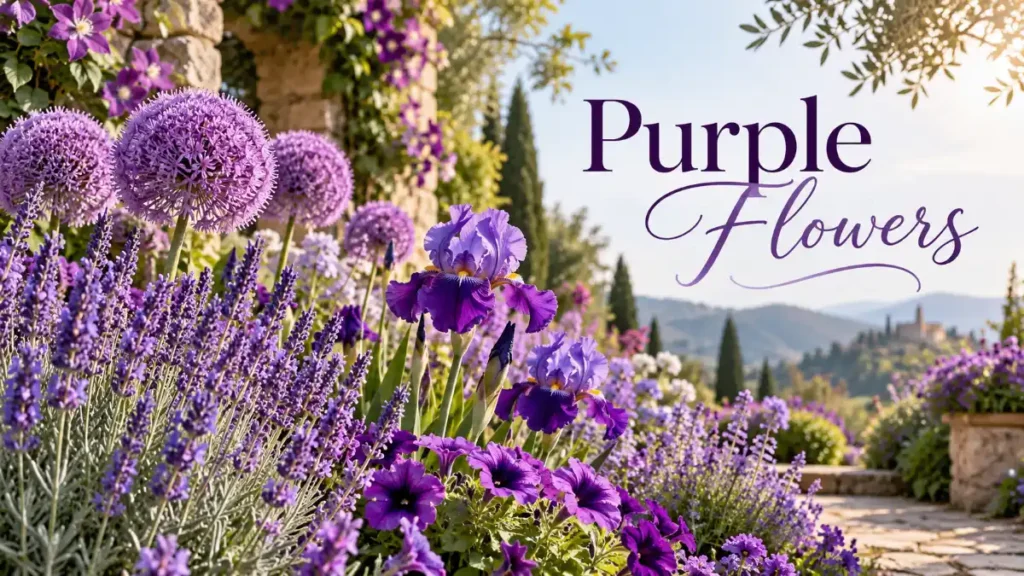
Most true purple-blooming plants need abundant direct light to produce their deepest color, and six or more hours of sun daily is the general benchmark. Reliable full-sun choices include lavender, allium, delphinium, Russian sage, catmint, salvia, morning glory, statice, and liatris (blazing star). Purple coneflower (Echinacea purpurea) and agapanthus also perform well in bright, open beds with good drainage.
Read More: Bubbles
Best Options for Shade
True violet blooms in shade are less common, since pigment intensity depends heavily on light exposure, but several species reliably flower with only partial sun. Good options include astilbe, hosta (grown mainly for foliage but with lavender-toned flower spikes), hellebore, lungwort, spotted deadnettle, columbine, corydalis, toad lily, Jacob’s ladder, and woodland phlox. Spiderwort and wild geranium also tolerate partial to full shade in woodland settings.
Best Options for Containers
Compact, well-branching varieties adapt best to pot culture. Top choices include petunias, pansies, calibrachoa, verbena bonariensis, dwarf lavender, and smaller salvia cultivars. Containers need excellent drainage -multiple drainage holes and a loose, well-aerated potting mix -since a common mistake is assuming these plants tolerate shade by default; most still need substantial sun even in pots.
Best Options for Pollinators
Bee balm (bergamot), butterfly bush, Russian sage, lavender, catmint, purple coneflower, blazing star, and purple prairie clover are especially effective at attracting bees, butterflies, and hummingbirds. Native species tend to support a wider range of local pollinators than ornamental cultivars, since many native bees and butterflies co-evolved with specific native plants.
Best Options for Beginners
Catmint, salvia, pansies, and petunias are forgiving choices for new gardeners because they tolerate a range of soil conditions, resist most common pests, and bloom reliably with minimal intervention. Balloon flower is another low-maintenance perennial that’s also deer-resistant.
Longest-Blooming Varieties
Salvia, catmint, verbena bonariensis, and scabiosa often flower from late spring through the first frost when deadheaded regularly. Among annuals, petunias and calibrachoa provide similarly extended color through an entire growing season.
Deer-Resistant Choices
Lavender, Russian sage, catmint, balloon flower, and salvia are widely reported as deer-resistant, largely due to their strong scent or fuzzy, aromatic foliage that deer tend to avoid.
Most Fragrant Varieties
Lavender, wisteria, lilac, and heliotrope are among the most fragrant options, with heliotrope specifically prized for a vanilla-like scent.
Comparing Popular Choices
When choosing between commonly confused or competing plants, a side-by-side comparison speeds up the decision.
| Plant | Height | Bloom Time | Sun Needs | Pollinator Friendly | Difficulty |
| Plant | Height | Bloom Time | Sun Needs | Pollinator Friendly | Difficulty |
| Lavender | 1–3 ft | Late spring–summer | Full sun | Yes | Easy |
| Salvia | 1–3 ft | Summer–fall | Full sun | Yes | Easy |
| Catmint | 1–2 ft | Late spring–fall | Full sun | Yes | Easy |
| Bearded iris | 1.5–3 ft | Late spring | Full sun | Moderate | Moderate |
| Allium | 1–4 ft | Late spring–early summer | Full sun | Yes | Easy |
| Delphinium | 3–6 ft | Early–mid summer | Full sun | Yes | Difficult |
| Wisteria | Vine, 15–30+ ft | Spring | Full sun | Yes | Moderate |
| Clematis | Vine, 6–12 ft | Spring–summer | Full sun to part shade | Moderate | Moderate |
| Purple coneflower | 2–4 ft | Summer–fall | Full sun | Yes | Easy |
| Spiderwort | 1–2 ft | Late spring–summer | Part shade to shade | Moderate | Easy |
Lavender vs. Salvia
Both thrive in similar full-sun, well-drained conditions, but lavender is more drought-tolerant and better suited to hot, dry climates, while salvia tends to bloom longer through summer and adapts to slightly moister soil. Lavender also carries a stronger fragrance and is more commonly used in culinary or aromatic applications.
Catmint vs. Lavender
Catmint generally blooms earlier and more continuously through the season with less pruning, while lavender has a shorter, more concentrated bloom window but a more distinct, woody scent. Catmint also spreads more readily, making it useful for filling in border edges.
Wisteria vs. Clematis
Wisteria is a heavier, woodier vine that needs a very sturdy structure and can take several years to reach full bloom, whereas clematis is lighter, flowers sooner after planting, and comes in a wider range of shapes and repeat-blooming cultivars.
Annuals vs. Perennials
Annuals like petunias and pansies bloom for a single season but often flower more continuously and offer more predictable color, while perennials such as lavender, salvia, and iris return each year but may have shorter, more defined bloom windows. Combining both types allows continuous color with less annual replanting cost.
Bloom Seasons at a Glance
Planning for continuous color means layering plants with staggered bloom times throughout the year.
Spring: Hyacinth, crocus, wisteria, iris, columbine, wild geranium, and early allium varieties bloom from late winter through late spring.
Summer: Lavender, salvia, delphinium, catmint, balloon flower, bergamot, purple coneflower, and most allium varieties bloom from early to late summer.
Fall: Aster, Russian sage (continuing from summer), New England aster, and ironweed extend color into September and October.
Winter: True outdoor blooms in this color family are rare in winter across most climates, though in mild, frost-free zones, pansies and violas continue flowering through cooler months.
How to Identify an Unfamiliar Bloom
Identifying an unknown flower is easier when you work through a few key characteristics systematically rather than relying on color alone.
By petal shape: Bell-shaped blooms suggest bellflower, hyacinth, or foxglove; star-shaped flowers point to spiderwort, clematis, or morning glory; spiky clusters on a single stem suggest salvia, liatris, delphinium, or lupine; and globe-shaped flower heads are characteristic of allium.
By bloom season: Early spring narrows the field to bulbs like hyacinth and crocus; late spring to early summer points toward iris, allium, and columbine; midsummer suggests lavender, salvia, and delphinium; and fall blooms are most likely aster or continuing Russian sage.
By leaf type: Narrow, grass-like leaves suggest crocus, iris, or blue-eyed grass; silvery, aromatic foliage points to lavender or Russian sage; broad, deeply lobed leaves are typical of geraniums or hellebores.
By plant height: Low, mounding growth under two feet suggests catmint, pansy, or violet; mid-height plants from two to four feet include salvia, balloon flower, and purple coneflower; tall spikes over four feet point to delphinium, foxglove, or lupine.
Organized by Height
- Under 1 foot: Pansy, viola, crocus, blue-eyed grass
- 1–2 feet: Catmint, lavender, spiderwort, columbine
- 2–4 feet: Salvia, purple coneflower, balloon flower, bearded iris, allium (varies by cultivar)
- 4–6 feet: Delphinium, foxglove, lupine, Russian sage
- Vines and climbers: Wisteria, clematis, morning glory
Native Wildflower Options
Native species tend to require less maintenance once established and typically provide stronger ecological value for local pollinators. Notable native wildflowers in this color range across North America include purple coneflower, wild bergamot, blazing star, purple prairie clover, New England aster, great blue lobelia, wild geranium, and spiderwort. Checking with a regional native plant society or extension office is the most reliable way to confirm which species are native to your specific area, since status varies by region.
Additional Notable Species
Beyond the plants already covered, several others add useful options to the palette:
- Foxglove (Digitalis purpurea) – tall spikes of tubular blooms, biennial or short-lived perennial; note that all parts are toxic if ingested
- Lupine – dense, spiky flower clusters, thrives in cooler climates
- Monkshood (Aconitum) – late-season spikes; highly toxic and should be planted away from pets and children
- Agapanthus – globe-shaped flower clusters on tall stems, thrives in full sun
- Penstemon – tubular blooms attractive to hummingbirds, tolerates poor soil
- Phlox – both tall garden phlox and low-growing woodland phlox offer violet-toned blooms
- Globe thistle (Echinops) – spiky, spherical flower heads, drought-tolerant and pollinator-friendly
- Lilac (Syringa) – fragrant flower clusters on a large shrub, blooms in mid-spring
Regional and Climate Guidance
Climate compatibility has a bigger impact on success than any other single factor, since even the most attractive plant will struggle if it’s mismatched to local temperature and moisture patterns.
Cold climates (USDA zones 3–5): Bearded iris, lupine, delphinium, catmint, and Russian sage tolerate hard winters well and return reliably each spring.
Hot climates (USDA zones 8–10): Lavender, agapanthus, salvia, and Mexican petunia handle heat and intense sun better than cooler-climate perennials, though afternoon shade can help preserve bloom color in extreme heat.
Dry climates: Russian sage, lavender, globe thistle, and purple prairie clover are naturally adapted to low-water conditions and generally suffer more from overwatering than drought.
Humid climates: Salvia, verbena bonariensis, and purple coneflower tolerate humidity better than lavender, which is prone to root and crown rot in consistently damp conditions.
Planting and Care Guidance
- Match sunlight to the plant’s needs -most bloomers in this color range need at least six hours of direct sun for full color intensity.
- Prioritize drainage over soil richness for Mediterranean natives like lavender and Russian sage; amend heavy clay with compost and coarse sand.
- Plant bulbs in fall for spring bloom, since hyacinths, crocuses, and most alliums need a cold dormancy period before flowering.
- Deadhead spent blooms on salvia, catmint, and scabiosa to encourage continued flowering through the season.
- Support tall or climbing plants like delphinium, wisteria, and clematis with stakes or trellises before they reach full height.
- Divide crowded perennials, such as bearded iris, every three to four years to maintain vigorous blooming.
- Mulch in early spring to conserve moisture and suppress weeds, keeping mulch a few inches away from plant crowns to prevent rot.
Common Pests and Diseases
Powdery mildew affects bee balm, phlox, and delphinium in humid conditions with poor air circulation; adequate spacing and watering at the base rather than overhead help prevent it. Aphids commonly target lupine, delphinium, and salvia and can typically be managed with insecticidal soap or a strong water spray. Root rot is the most common issue for drought-tolerant species like lavender and Russian sage when planted in poorly draining soil or overwatered.
Common Mistakes to Avoid
- Overwatering drought-tolerant species like lavender and Russian sage, leading to root rot
- Planting spring bulbs too late in fall for adequate root establishment
- Assuming shade tolerance by default -most true violet-toned bloomers need substantial sun for their deepest color
- Crowding plants without accounting for mature size and airflow, increasing disease risk
- Skipping a soil test before amending, leading to over-fertilizing plants that prefer lean soil
Garden Design Ideas
Cottage gardens benefit from a loose mix of foxglove, lupine, delphinium, and catmint planted in informal drifts alongside pastel companions. Pollinator gardens pair well with purple coneflower, bee balm, and blazing star combined with native grasses to support bees and butterflies through the season. Rock gardens and dry landscapes suit low-water plants like lavender, globe thistle, and Russian sage planted among gravel mulch. Border planting often layers low catmint or pansies in front, mid-height salvia or balloon flower in the middle, and tall delphinium or allium at the back. Small gardens and balconies work well with container combinations of petunias, calibrachoa, and dwarf lavender for continuous color in a compact footprint.
This color pairs naturally with yellow or orange for high contrast, and with white, silver foliage, or soft pink for a calmer, classic look. Grouping plants in odd-numbered clusters of three or five tends to look more natural than single specimens scattered through a bed.
Frequently Asked Questions
What is the most common purple flower grown in home gardens?
Lavender is among the most widely grown, thanks to its fragrance, drought tolerance, and adaptability across many climates. Salvia and petunias are also extremely common, particularly for their long bloom periods and low maintenance requirements
Which variety smells the best?
Lavender is the most recognized fragrant option, prized for its calming, herbal scent used in essential oils and sachets. Heliotrope, with its vanilla-like fragrance, and lilac, known for its sweet spring scent, are also popular choices for fragrance-focused gardens.
Which varieties bloom all summer?
Salvia, catmint, verbena bonariensis, and scabiosa are among the most reliable options that flower continuously from late spring through the first frost, especially with regular deadheading.
Which are easiest to grow for beginners?
Catmint, salvia, pansies, and petunias are forgiving, low-maintenance options that tolerate a range of soil types and require minimal specialized care, making them ideal starting points for new gardeners.
Which varieties attract butterflies?
Butterfly bush, purple coneflower, blazing star, bee balm, and lavender are especially effective at attracting butterflies due to their nectar-rich blooms.
Which varieties grow well in shade?
Astilbe, hosta, hellebore, spotted deadnettle, and woodland phlox are among the more shade-tolerant options, though their color and bloom volume are usually less intense than sun-grown varieties.
Which are native to North America?
Purple coneflower, wild bergamot, blazing star, purple prairie clover, and spiderwort are native wildflowers commonly found across various regions of North America, though exact native ranges vary by state and ecosystem.
Which varieties spread quickly and may need containment?
Catmint and creeping bellflower are known for spreading readily, sometimes to the point of becoming difficult to contain in small beds; planting them in root barriers or containers can help manage their spread.
Which varieties attract hummingbirds?
Penstemon, salvia, delphinium, and bee balm produce tubular flower shapes that are well-suited to hummingbird feeding and commonly attract them to the garden
Are any common varieties toxic to pets or children?
Yes -foxglove, monkshood, wisteria, and certain iris species are toxic if ingested and should be planted away from areas accessible to pets or young children. If ingestion is suspected, contact a veterinarian or poison control center immediately rather than waiting for symptoms to appear.
.