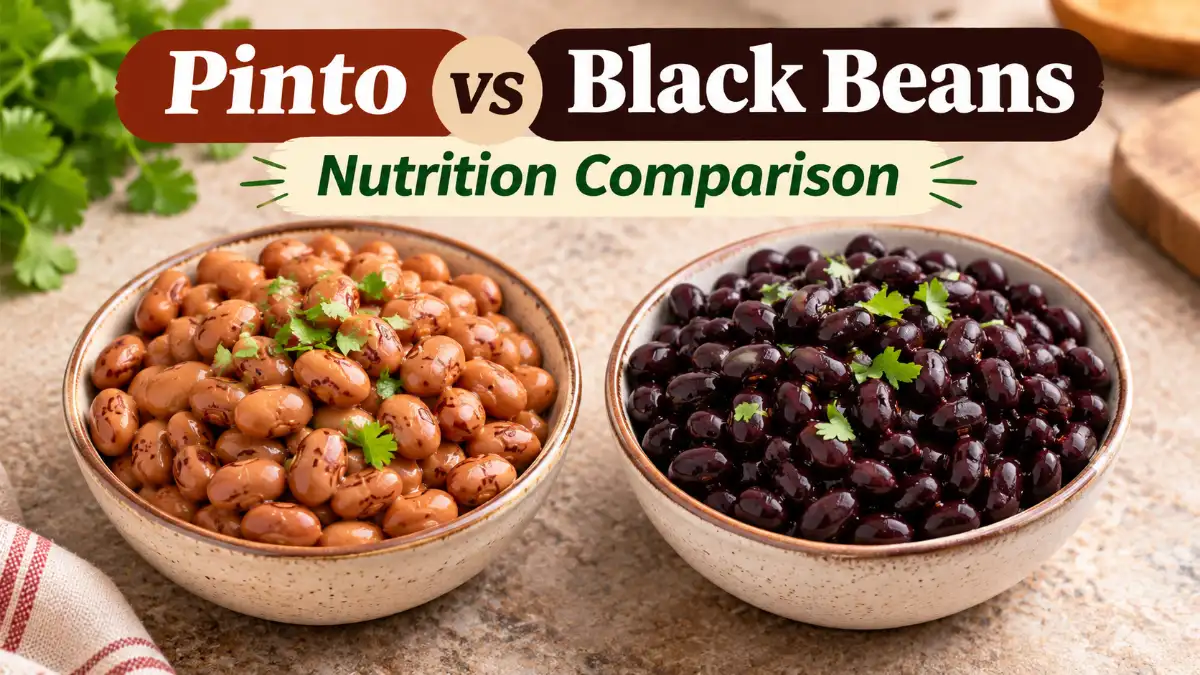
When comparing the nutritional benefits of pinto vs black beans, black beans have a few less calories and carbohydrates than pinto beans. On the other hand, pinto beans provide slightly more protein, fiber, potassium, and folate. In addition to being slightly lower in calories and carbs than pinto beans, black beans are higher in magnesium. Pinto beans are a good source of potassium and folate. Both types of beans are great options for heart health, digestion, and weight management.
In one cup of cooked pinto beans there are about 245 calories, 15.4 grams of protein, and 15.4 grams of fiber. For comparison, a single serving of black beans has 227 calories, 15.2 grams of protein, and 15 grams of fiber.
There isn’t one type of meal that’s always better for everyone. Your diet, what you want to achieve with your health, and the kinds of food you enjoy will help determine which option works best for you.
Pinto vs Black Beans Nutrition Facts
Pinto and black beans are members of the exact same plant group, Phaseolus vulgaris. They each provide inexpensive plant-based protein, complex carbohydrate, dietary fiber and vital micronutrients.
The following table compares cooked, boiled beans without added salt.
| Nutrient | Pinto Beans (100 g) | Black Beans (100 g) |
| Calories | 143 | 132 |
| Protein | 9.01 g | 8.86 g |
| Carbohydrates | 26.22 g | 23.71 g |
| Dietary fiber | 9 g | 8.7 g |
| Total fat | 0.65 g | 0.54 g |
| Calcium | 46 mg | 27 mg |
| Iron | 2.09 mg | 2.10 mg |
| Magnesium | 50 mg | 70 mg |
| Phosphorus | 147 mg | 140 mg |
| Potassium | 436 mg | 355 mg |
| Zinc | 0.98 mg | 1.12 mg |
| Folate | 172 mcg | 149 mcg |
| Sodium | 1 mg | 1 mg |
| Cholesterol | 0 mg | 0 mg |
Sources: USDA FoodData Central — Pinto Beans and Black Beans.
Nutrition Per Cup of Cooked Beans
| Nutrient | Pinto Beans (1 cup) | Black Beans (1 cup) |
| Serving weight | 171 g | 172 g |
| Calories | 245 | 227 |
| Protein | 15.4 g | 15.2 g |
| Carbohydrates | 44.8 g | 40.8 g |
| Fiber | 15.4 g | 15.0 g |
| Fat | 1.1 g | 0.9 g |
| Potassium | 746 mg | 611 mg |
| Magnesium | 86 mg | 120 mg |
| Folate | 294 mcg | 256 mcg |
Nutritional comparison per cooked cup
| Nutrient | Pinto beans | Black beans |
| Calories | 245 kcal | 227 kcal |
| Protein | 15.4 g | 15.2 g |
| Carbohydrates | 44.8 g | 40.8 g |
| Fiber | 15.4 g | 15 g |
| Magnesium | 86 mg | 120 mg |
| Potassium | 746 mg | 611 mg |
Each nutrient uses its own scale. Values are rounded USDA reference amounts.
The United States Food and Drug Administration has set a Daily Value for dietary fiber at 28 grams. A single cup of either bean will provide you with about 53-55 percent of your daily requirement.
Read Also: Pinto Beans vs Black Beans Nutrition: Which Is Healthier?
Black vs Pinto Beans Nutrition: Key Differences
Calories and Protein
Black beans have 18 fewer calories per cooked cup than pinto beans. Therefore, black beans are a slightly lower-calorie food option. The amount of protein offered by both types of beans is essentially identical, with a difference of approximately 0.2 grams.
Both offer plant-based proteins that assist in maintaining muscles and repairing tissues. Eating beans with other protein-rich foods such as whole grains, nuts, seeds, etc. at different times during the day can help you obtain your body’s requirement for essential amino acids.
Carbohydrates and Fiber
Black beans have slightly less carbs and fiber than pinto beans. They both contain complex carbohydrates which are used for energy, and both contain dietary fiber that helps maintain healthy digestion.
A single half-cup serving has about 20.4 grams of carbohydrates in black beans and about 22.4 grams in pinto beans.
Both varieties are relatively high in carbohydrates; however, both are suitable for use within a balanced, carbohydrate-controlled meal plan.
Vitamins, Minerals, and Antioxidants
Pinto beans have higher levels of potassium, calcium, phosphorus, and folate. On the other hand, black beans have higher levels of magnesium and zinc. Both types of beans contain about the same amount of iron per 100g.
The natural plant compound that makes black beans so dark, is called anthocyanin. Pinto beans also contain many of these healthy plant compounds.
Although the nutritional differences between these two varieties are worth taking into consideration, there is no difference that makes one variety a clear winner over the other for everyone.
Health Benefits of Pinto and Black Beans
Support Heart Health
The two types of beans are both naturally cholesterol free, have a small amount of saturated fat, and contain a lot of fiber. The soluble fiber found in each type of bean may help reduce your LDL (bad) cholesterol levels, and the potassium and magnesium found within both types of beans can support the healthy functioning of your heart.
The American Heart Association suggests that people add beans and other legumes to their diet, which is part of a heart healthy eating plan.
Replacing some processed and/or high fat meats with beans is another way you can lower your consumption of saturated fats.
American Heart Association+1
Help Manage Blood Sugar
The two types of foods have protein, fiber and complex carbohydrates. These types of food are digested more slowly than the processed carbohydrate versions. They also provide a slower response in terms of blood glucose levels than the refined carbohydrates.
Beans are recognized by the American Diabetes Association as a nutritionally dense food that can fit into a healthy diet for people with diabetes.
People with diabetes need to consider how many total carbohydrates they consume each day, how much they eat per meal (portion size), and how their bodies react to food by measuring their blood sugar levels. Black beans have a slightly lower amount of carbohydrates than some other types of beans.
Support Digestion and Weight Management
Pinto and black beans are rich sources of dietary fiber and resistant starch, both of which support a healthy environment for your body’s beneficial gut microorganisms and regular bowel movements.
The high protein and fiber content of these foods may also give you the feeling of fullness for a longer period of time. This can make controlling how many calories you consume easier.
Both beans do not directly burn body fat. To manage your weight healthily you must have a healthy diet and be physically active as well as maintain an energy balance.
Support Bone Health and Red Blood Cell Production
Both forms of this food have iron, phosphorus, magnesium, and many other nutrients that are necessary for proper functioning of your body.
Eating iron from plants and vitamin C from other types of foods together will help you better absorb iron, according to the National Institute of Health.
Try combining beans with tomatoes, bell peppers, broccoli, or fresh lime juice.
Pinto vs Black Beans: Which Is Better for Your Health Goals?
| Health Goal | Recommended Choice |
| Lower calorie intake | Black beans |
| Higher protein intake | Pinto beans, slightly |
| Higher fiber intake | Pinto beans, slightly |
| Lower carbohydrate intake | Black beans |
| Higher magnesium intake | Black beans |
| Higher potassium intake | Pinto beans |
| Higher folate intake | Pinto beans |
| Heart health | Both |
| Blood sugar management | Both |
| Digestive health | Both |
| Weight management | Both |
| Vegetarian and vegan diets | Both |
Most healthy adults will have very little difference in their nutrient intake based on which type of produce they choose. The way that you prepare your food and how much of each food item you eat are more important than what kind of produce you purchase.
Canned vs Dried Beans: Which Is Healthier?
Canned beans and dried beans both provide nutritional value. Canned beans can save time in a fast paced household. Dried beans allow individuals to better manage the amount of sodium they consume.
When shopping for beans at U.S. supermarkets, look for items that have labels indicating “no salt added” or “low sodium”.
The process of draining and rinsing canned beans will lower the amount of sodium that is found within the beans. When shopping for canned baked, seasoned, or refried beans, be sure to read the label for additional sugars, sodium, or fats that could have been added to the product during manufacturing.
For those who wish to have more control of what they eat, the use of unadorned (plain) beans is usually a much better choice.
Potential Side Effects and Precautions
Although there are nutritional advantages to both types, some individuals could suffer from gastrointestinal issues.
- Gas and Bloat: Beans contain a type of carbohydrate (fermentable) that can increase the amount of gas produced by the body.
- Smaller portions may be tolerated better than larger portions by individuals suffering from Irritable Bowel Syndrome (IBS).
- Phytic Acid: Phytates are a naturally occurring form of phytic acid that may interfere with the body’s ability to absorb some types of minerals.
- The individual should obtain specific nutritional guidance if they are on a medically directed diet that restricts their intake of both potassium and/or phosphorus.
- Undercooked beans: Always cook dried beans thoroughly before eating.
Begin with small amounts of food, gradually increase your fiber intake, and make sure you are drinking enough water to help with digestion.
Healthy Ways to Include Beans in Your Diet
Pinto beans are creamier and have a milder, more earth-like taste. Black beans are a little harder, making them better for use in salad, soup and grain dishes.
Here are some nutritious meal ideas:
- Black bean and avocado salad with lime dressing.
- Homemade pinto bean and vegetable soup.
- Whole-wheat tacos with beans and fresh vegetables.
- Brown rice bowls with beans and roasted bell peppers.
- Turkey and black bean chili.
- Homemade pinto bean dip with minimal added salt.
A half cup of this food will provide you with about 7.5 grams of fiber. This can be used as a reasonable start to your daily intake.
Conclusion
Comparing pinto bean vs black bean nutrition reveals both types of beans have high levels of nutrients, are inexpensive, and can help to provide a healthy addition to a well-balanced diet.
Black beans provide a little less energy (calories) and a little less starch (carbohydrates) than pinto beans. They also contain a bit more magnesium than pinto beans. Pinto beans offer a little bit more dietary fiber, potassium, and folic acid (folate) than black beans.
Alternating between these two types of vegetables will give most people a chance to try out new flavors, get a variety of different nutrients, and prepare healthy meals.
Frequently Asked Questions
1. Are black beans healthier than pinto beans?
Neither variety is universally healthier. Both provide substantial amounts of protein, fiber, vitamins, and minerals, with only minor nutritional differences.
2. Are pinto beans or black beans better for weight loss?
Black beans contain slightly fewer calories, but both can support weight management when eaten in appropriate portions.
3. Is it healthy to eat beans every day?
Most healthy adults can enjoy beans daily as part of a varied diet. Adjust serving sizes according to digestive tolerance and individual nutritional needs.
4. Are black beans and pinto beans gluten-free?
Yes. Both are naturally gluten-free, although packaged or seasoned products may contain gluten through additional ingredients or cross-contact.
5. Are black beans and pinto beans keto-friendly?
Neither is particularly suitable for a strict ketogenic diet in standard serving sizes because both contain considerable amounts of carbohydrates. Smaller portions may fit into some less restrictive low-carbohydrate diets.